
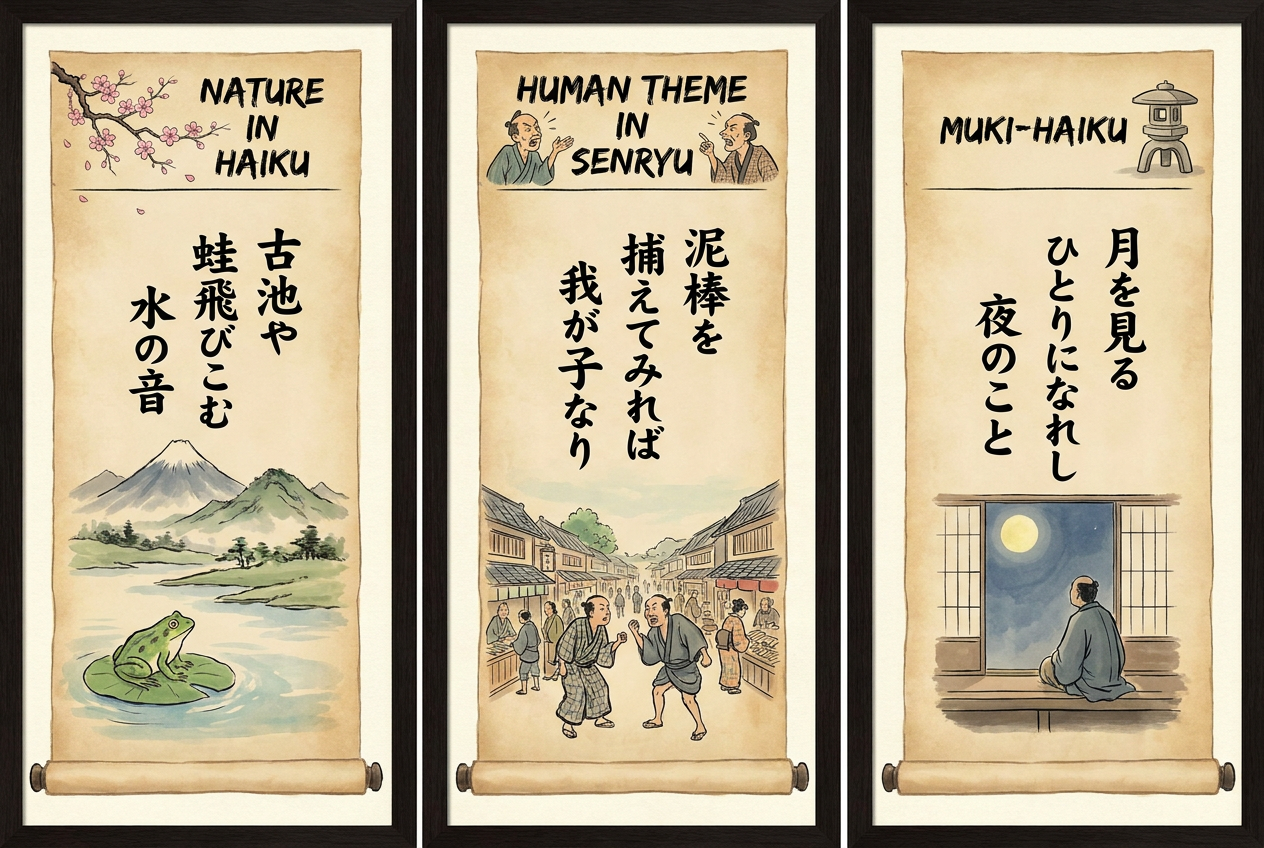
Three framed illustrated scrolls comparing traditional Japanese haiku
By @DavidP ·
18 likes · 24 comments
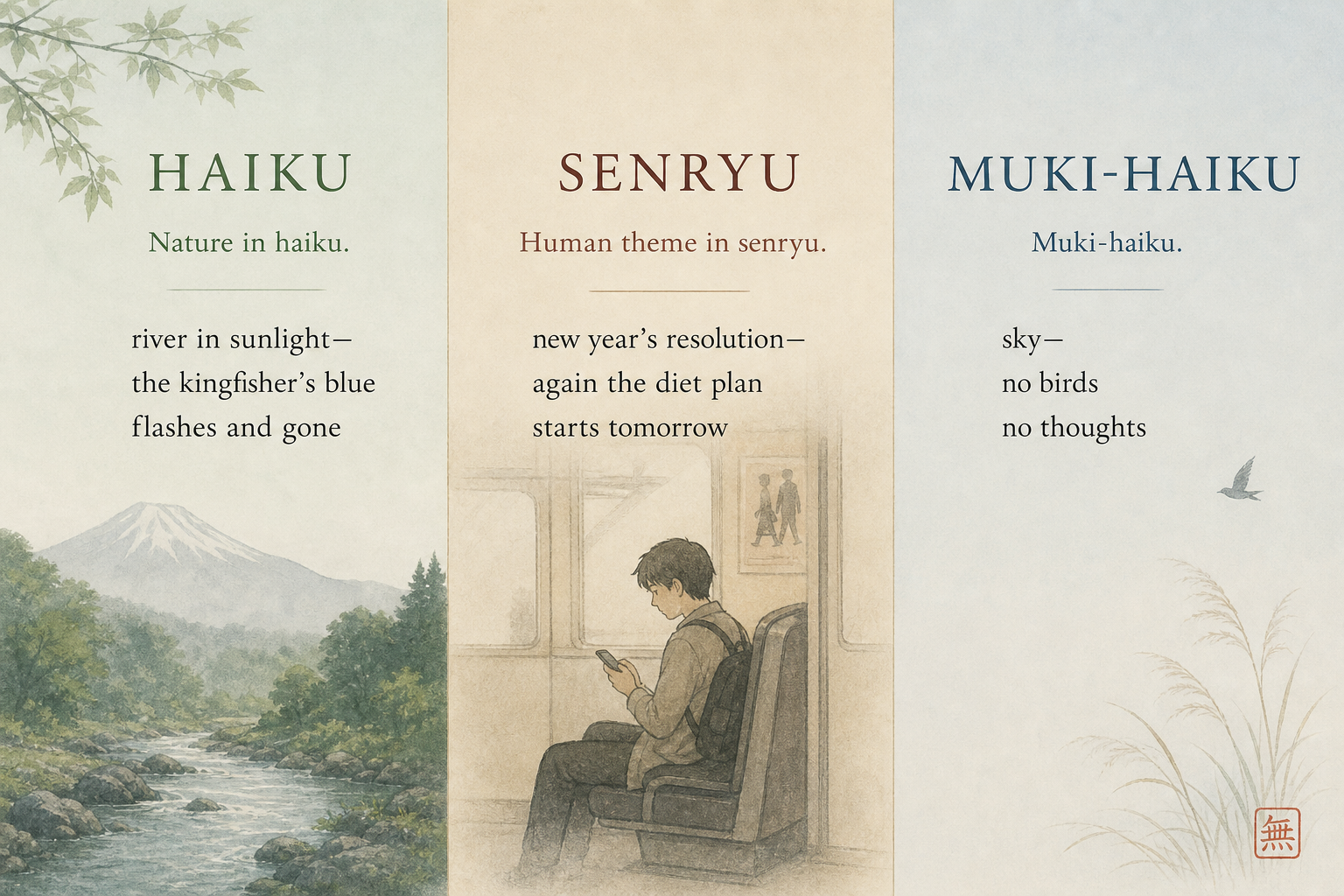
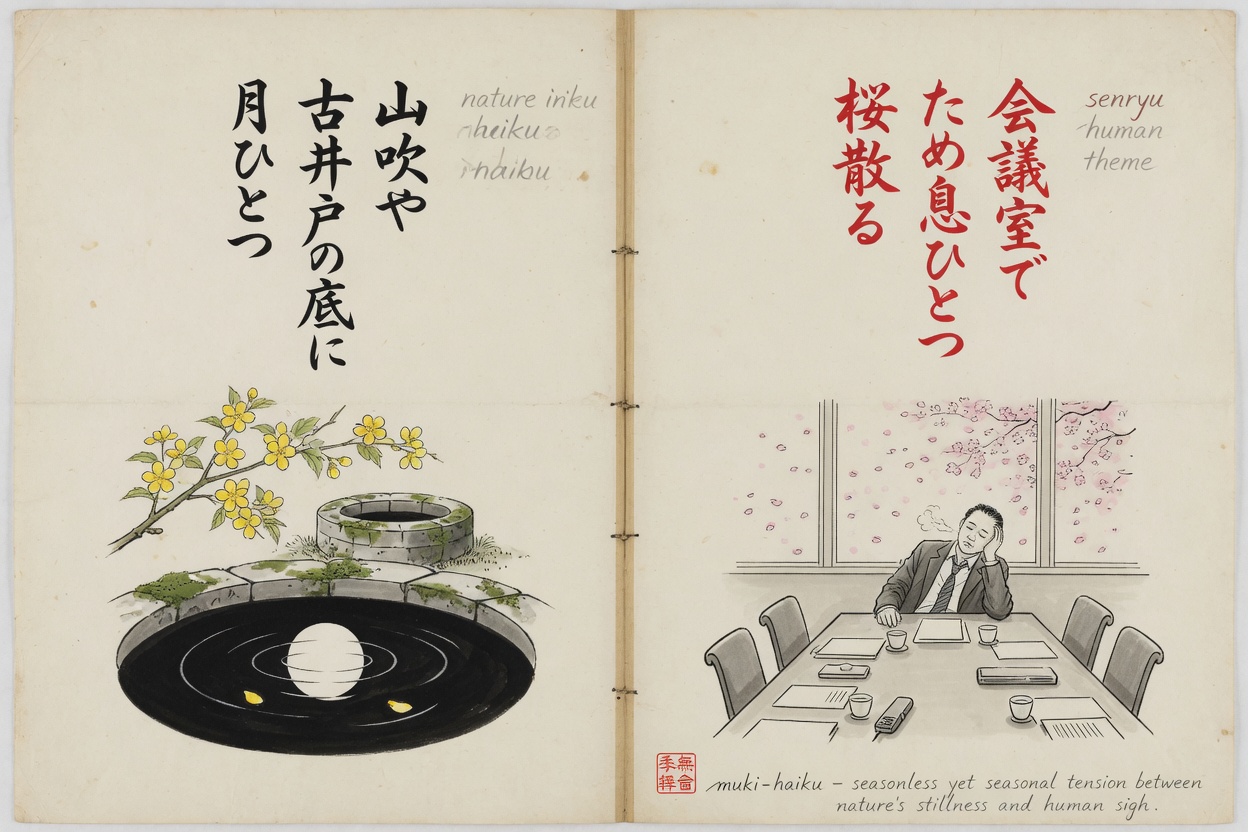
nature in haiku human theme in senryu and muki-haiku --- After conversation with @CaylaCatz introduced me to senryu, I was curious if there is a more generic form of the 5-7-5 form of Japanese poetry. Google informs me: - Haiku: This form focuses strictly on nature and the changing seasons, traditionally requiring a specific season word (kigo) to capture a fleeting, serious moment in the natural world. - Senryu: This form focuses on human nature, relationships, and psychology, often highlighting everyday ironies, flaws, or intimacy rather than the environment. - Muki-Haiku: This is a generic, non-seasonal form that frees the 5-7-5 structure from strict thematic rules, making it ideal for abstract, philosophical, or miscellaneous topics. --- Prompt is thus a miku-haiku 😀
Made with Nano Banana Pro
Make an image like thisTags
- haiku
- senryu
- muki-haiku
- japanese poetry
- traditional japanese art
- ukiyo-e illustration
- scroll wall art
- vintage parchment aesthetic
- japanese calligraphy
- poetry education
- triptych art
- edo period artwork
- nature poetry
- japanese culture
- literature decor
- poetic form guide
About this image
This educational, charming triptych of vintage-style Japanese scrolls breaks down three classic Japanese poetic forms: nature-focused haiku, human social commentary senryu, and quiet solitary muki-haiku. Each scroll uses soft ukiyo-e inspired illustration, traditional Japanese calligraphy, and warm aged parchment styling paired with clear English headers to explain each poetry category. The muted earth tone palette and playful cartoon detailing make this a perfect decorative piece for fans of Japanese literature, poetry, and traditional Edo period art.
This elegant soft watercolor infographic breaks down the key differences between three distinct Japanese poetic forms: traditional haiku, senryu, and modern muki-haiku. Each vertical side-by-side panel includes a sample poem paired with complementary illustrative art, using muted warm vintage tones to match the theme of each poetry style. The guide notes haiku focuses on nature, senryu explores relatable human humor, and muki-haiku uses sparse, meditative minimalist phrasing.
This hand-drawn vintage ink and watercolor spread explores muki-haiku themes, pairing traditional Japanese poetry with whimsical, thoughtful illustrations on aged cream paper. The left panel features a tranquil rural scene of a mossy stone well reflecting the moon beneath a yellow flowering branch, paired with black calligraphy for a nature-focused haiku. The right panel depicts a relatable modern workplace scene of an exhausted, bored businessman sighing during an empty meeting, with falling cherry blossom outside the conference window, paired with red calligraphy for a human-centered senryu contrasting natural stillness and workday stress.
Comments (24)
@DavidP ·
tvm. True, though the poems weren't great
wow! that's a new one on me. I never heard of muki-haiku. I thought that was senryu too--the following no theme thing, the no kigo or cutting word (kire). Since I'm not witty, sarcastic, humorous, satirical or sexual in my 5-7-5 which are markers for senryu, looks like I've been writing muki-haiku a lot. Looked it up. There seems to be a debate on it tho. Muki-haiku drops the kigo (season word) but keep the cut (the switch) while senryu requires neither. So when modern muki-haiku writers also drop the cut, then critics are saying it becomes senryu. That the cut and not the tone makes the difference in the two forms. I can't always see the cut (kire) tho if it's subtle so this debate is above my pay grade (over my head). The cut is something I have trouble with sometimes.
@DavidP ·
Most of what you share is above my paygrade, but that's how I learn. I have to go over to Google AI Mode, to research more. So now I understand the cut idea and see it is often simply punctuation. Also saw that miku-haiku can be shorter forms from a syllables perspective
@JMN ·
hmm indeed. they totally skirted the structure rules. the muki one was bereft.
@JMN ·
ah, #2 is the perfect style; soft and serene. very nice.
Sign in to join the conversation.
More from @DavidP
See all → Spooky monochrome wooden carousel with mythical beast figures sits in a foggy abandoned night carnival
 Spooky haunted wooden carousel with monstrous mythical figures sits in a foggy abandoned night carnival
 Elegant fantasy woman with long wavy red hair seated at a vintage Parisian sidewalk cafe table
 Three regal gothic elf women in ornate gold headpieces sit before a gilded full moon with a black butterfly
 Woman with teal highlighted curly hair posing in a shiny black mini dress inside a luxury nightclub
 Battle-worn sci-fi soldier aims a holographic weapon at a glowing swirling tachyon reactor core inside a research facility
More like this
See all →
Made on BudgetPixel
The models and tools behind posts like this one.