


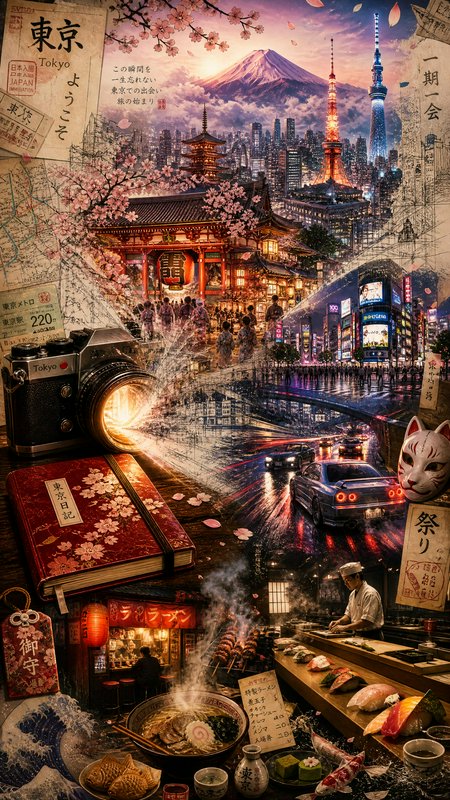
Collage of Japanese dishes and city scenes highlighting Kyoto, Tokyo
By @thewhiskeyjack ·
234 likes · 72 comments
QT - Universal Travel-Food Tourism Poster by @HappyPerson https://budgetpixel.com/p/41734 A taste of Japan
Prompt
Create an ultra-premium 9:16 vertical culinary tourism poster of Japan, designed like a world-class luxury travel and food campaign by an elite graphic designer. The poster should celebrate Japan through its regional food culture, blending iconic cuisine, famous cities, subtle symbolism, and an emotional sense of place. The overall feeling should be rich, elegant, immersive, appetizing, artistic, and unforgettable. The composition should center on three signature ramen bowls arranged prominently along the bottom foreground, forming the culinary foundation of the poster. These bowls should be large, luxurious, and visually irresistible, with side dishes and drinks surrounding them in a premium food-travel presentation. The three ramen are: Hokkaido-style miso ramen with a rich golden-brown broth, a generous pat of melting butter, sweet corn, noodles, scallions, chashu, and steam rising heavily from the bowl Osaka tonkotsu ramen, creamy and deeply savory, with silky broth, chashu slices, green onions, soft egg, and a hearty indulgent appearance Tokyo shoyu ramen, darker soy-based broth, clear and elegant, topped with sliced pork, bamboo shoots, nori, scallions, and curled noodles Around these bowls, place crispy gyoza, small dishes, chopsticks, ceramic spoons, and drinks such as nihonshu, Japanese beer, and lemon sour, arranged in a visually rich but refined way. Add additional supporting food details in the lower area such as beautiful glossy white rice, small dishes of pickles, and subtle izakaya-style table accents. The key visual idea is that the steam and heat rising from the ramen bowls flows upward and transforms into a rich layered journey through Japan. The steam should swirl elegantly through the poster, becoming clouds, mist, brush-like trails, glowing aromas, and dreamlike transitions that develop into a mixed tapestry of Japanese cities, regional food culture, and symbolic landmarks. The steam should not link each ramen bowl to a specific city. Instead, all three bowls together should feed into one large unified rising composition of Japan. Use a soft faded map of Japan as a subtle background structure, integrated into the composition rather than shown like a flat educational map. The map should feel atmospheric, layered, and artistic, gently visible behind the food and city scenes, with highlighted areas emerging naturally through smoke, mist, and light. The map can be littered with subtle Japanese symbolism and travel ephemera. Build the middle and upper sections as a layered culinary journey through Kyoto, Tokyo, and Osaka, while also celebrating broader Japanese food culture beyond any single city. For Kyoto, create a refined and elegant cultural-food section with a traditional atmosphere. Include matcha, matcha ice cream, shojin ryori, and soba, arranged in a serene, graceful, temple-adjacent setting. Suggest Kyoto through refined presentation, traditional architecture, calm beauty, and a delicate culinary tone. Include subtle tea-house or temple-district ambiance. For Tokyo, create a vibrant yet polished culinary-city section. Feature Edo-style sushi, tempura, and yakitori, presented with a balance of classic and metropolitan Tokyo energy. Include subtle Tokyo city imagery such as glowing urban density, sophisticated restaurant culture, or elegant street-food atmosphere, while keeping the food central and luxurious. For Osaka, create a lively, fun, street-food-rich section filled with warmth and energy. Feature kushi katsu, okonomiyaki, and takoyaki, with a bustling, playful, food-market character. This part should feel bold, social, and full of delicious movement, reflecting Osaka’s vibrant food identity. In addition to the city-specific foods, weave in iconic Japanese culinary elements that are not tied to just one city: yakiniku, Kobe beef teppanyaki, and beautiful white rice. These can appear as supporting premium food moments throughout the poster, integrated elegantly between regions or near the lower-middle composition. Make the Kobe beef teppanyaki especially luxurious, glossy, and dramatic, with sizzling highlights and refined plating. Scatter tasteful beverage elements throughout: nihonshu, Japanese beer, and lemon sour, rendered attractively in glasses, cups, or bottles, enhancing the celebratory food-tourism feel. Layer the poster with Japanese symbolism and travel atmosphere. Include details such as Mount Fuji, torii gates, omamori charms, traditional lanterns, sakura petals, subtle calligraphy, temple silhouettes, noren curtains, paper textures, washi-inspired accents, and elegant Japanese travel ephemera. These should enrich the design without distracting from the food. Mount Fuji can appear softly in the distance or upper background as an iconic national anchor. The overall composition should feel like a culinary map of Japan brought to life through steam, flavor, and memory. The viewer’s eye should begin at the three ramen bowls and drinks at the bottom, then travel upward through rising steam into a layered mix of cities, dishes, cultural symbols, and Japanese atmosphere. The smoke should act as the visual connector, elegantly unifying the whole poster. Use a luxurious color palette of deep crimson, warm amber, lacquer red, charcoal black, antique ivory, soy-brown, golden broth tones, matcha green, sakura pink, soft cream, and subtle cool blue accents. The lighting should be cinematic and mouthwatering: glowing lantern warmth, soft steam diffusion, glossy food highlights, rich shadows, urban evening glows, and delicate atmospheric haze. Food should look incredibly appetizing and premium, with detailed textures and realistic surface quality. The overall poster should feel like a museum-quality mixed-media culinary travel artwork and a luxury Japan tourism food campaign — emotional, beautiful, highly detailed, culturally rich, and visually cohesive. Style references: cinematic culinary travel poster, luxury tourism branding, Japanese food editorial design, premium mixed-media poster art, watercolor travel ephemera, atmospheric map-based composition, high-end food photography styling, handcrafted cultural collage, ultra-detailed masterpiece, emotional storytelling composition. Create the image like a professional graphic designer with the best lighting, best color scheme, elegant visual hierarchy, highly appetizing food rendering, and a unique unforgettable Japanese culinary identity.
Made with GPT-Image-2
Use this promptTags
- japan cuisine
- japanese food
- ramen
- sushi
- Kobe beef
- Osaka
- Kyoto
- Tokyo
- food poster
- culinary journey
- traditional dishes
- street food japan
- Japanese dining
- izakaya style
- travel japan
- food photography
About this image
A vibrant collage poster showcasing diverse Japanese cuisine—from ramen bowls and yakitori to sushi and Kobe beef—alongside iconic city skylines of Kyoto, Tokyo, and Osaka. Rich in warm tones and steam-filled imagery, it conveys a culinary journey through Japan with a focus on traditional flavors, regional specialties, and street-food charm.
A lavish Japanese food spread featuring ramen, bowls of noodles, sushi, sashimi, skewers, tempura, gyoza, gobo, and a glass of beer. The image blends traditional Kyoto and Osaka vibes with a modern Tokyo skyline, cherry blossoms, torii gate, and Mount Fuji, creating an inviting culinary ambiance rich in culture and flavor.
Comments (72)
Yeah! I just put "beer" in the prompt, and it went with Sapporo. 😅
GPT prefers sapporo to kirin~ so sad~
@mazd ·
That looks yummy and coolll
WOW these are amazing
I want to eat now!
smells good of a food
Wow, this is fabulous!
@EternaSky @antares @aqualemonade @archangeltara @base451121 @beastsg @Belinda @bic_revelation @Biscuit @bleepunc @CaylaCatz @charlypalermo @Cheinia @ChildNerd @chris70 @cocoayoc @Colossus @DavidP @dirty_biker @dovonko @elkanthe @elysian @EternaSky @fantasydesignink @germancowboy @gman @gummiefish @humtum8182 @IndoAIArtist @justrob @King @kirito @mim86 @nametaker @NickWolf @NielsCarlsen @panos @PabloArtStation @paulie @pocahontas @Sealine @sonny001 @southamericanmyth @standartis @sr92 @strixowl-47 @suga2309 @TheBard @thedreamcatcher @thewhiskeyjack @To4kawa @Troxley @TTRPG_Player @TesaranJ @underman @Unleashed @vrieming @winter_witch @archangeltara Interested to join or wish to be removed from this list? Leave a comment in for inclusion or exclusion https://budgetpixel.com/blog/enjoy-creating-and-join-the-qt-masterlist
did u ruyn this on 1k high?
dunno, I ran in GPT direct.
Sign in to join the conversation.
More from @thewhiskeyjack
See all → Fairy patissier with translucent iridescent wings decorates a chocolate cake inside a cozy enchanted vintage pastry shop
 Gothic fairy artist with translucent iridescent wings holds a paintbrush in a worn night city view art studio
 Ethereal oil portrait of a pale woman with long black hair, bright blue eyes, sheer silver gown, moody dark background wi...
 Ethereal oil portrait of a young woman with a braided blonde updo, hand resting on her chest, against a moody dark blue b...
 Warm sunlit portrait of a young woman with long curly brown hair, wearing a beige ribbed camisole, looking softly at the v...
 Close-up portrait of young woman with crown braid, cream off-shoulder top, lit by soft natural window light looking at the...
More like this
See all →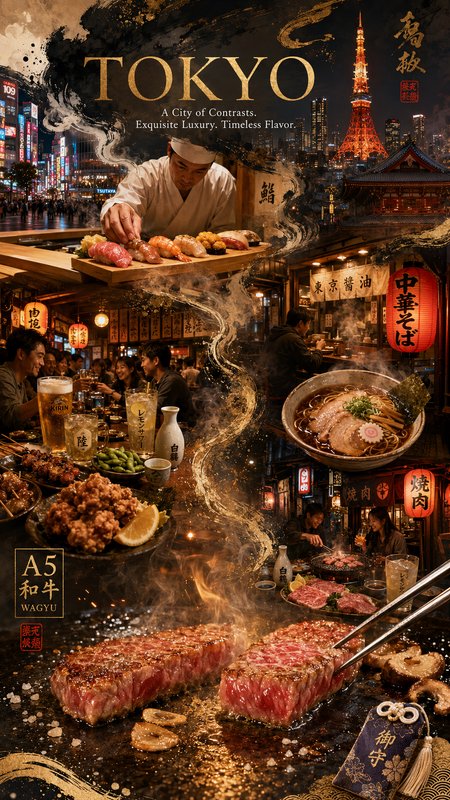
Made on BudgetPixel
The models and tools behind posts like this one.