Vibrant Tokyo night collage featuring Mt. Fuji, Tokyo Tower — AI art by @thewhiskeyjack
@thewhiskeyjack · 5/24/2026
QT: Your City Tokyo is a fun city to live in! original QT by @EternaSky https://budgetpixel.com/p/40975
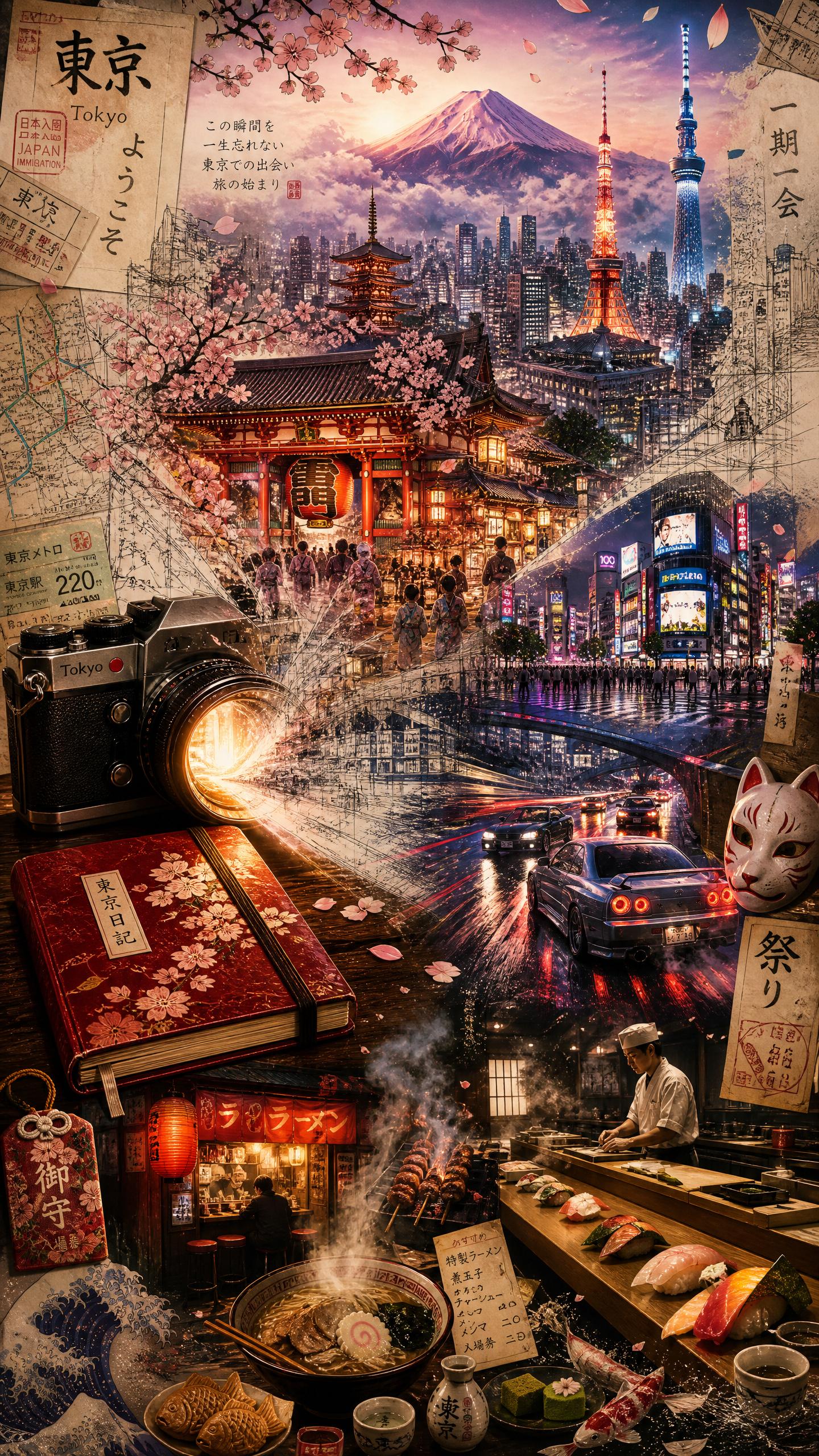
Tags: Tokyo, Japan, Mt. Fuji, Tokyo Tower, cherry blossoms, temple, ramen, sushi, nightlife, neon streets, travel photography, Japanese culture, cityscape, traditional meets modern, Japan travel, Japanese landmarks
AI Model: GPT-Image-2
Prompt: Create an ultra-premium handmade sketch-style tourism poster representing Tokyo, designed like a world-class luxury travel campaign by an elite graphic designer. The central concept is a vintage Japanese film camera and lacquered travel journal resting on a dark polished wooden desk, with the camera lens glowing like a portal. From the lens, Tokyo bursts into reality, transforming from rough pencil sketches, ink lines, watercolor strokes, and parchment textures into a breathtaking cinematic cityscape. Make the poster feel like a magical collision of old and new Tokyo. In the far background, show Mount Fuji glowing softly beneath a lavender-pink sunrise, partly hidden by mist and drifting sakura petals. Fuji should feel distant, sacred, and iconic. In the center, build a layered Tokyo skyline where the lower half remains unfinished as architectural sketches and blueprint fragments, while the upper half becomes hyper-detailed and alive with light. Include a beautiful Asakusa temple scene inspired by Sensō-ji, with traditional rooftops, the great red lantern, incense smoke, paper lanterns, festival stalls, yukata silhouettes, warm gold lighting, and sakura branches sweeping across the composition. Sakura petals should drift through the poster, transforming into glowing particles, paper fragments, and tiny stars. Blend in Tokyo’s modern icons: Tokyo Tower glowing in amber-red, Tokyo Skytree rising in cool silver-blue, and Shibuya Crossing filled with tiny human silhouettes, giant neon screens, taxi lights, rain reflections, and cinematic motion blur. Add stylish fragments of Omotesando, with luxury storefronts, glass architecture, fashion pedestrians, and tree-lined evening streets. Contrast this with Takeshita Street, full of colorful signage, Harajuku fashion, crepes, character shops, and playful street energy, but keep the overall design refined and premium. Add a dynamic Tokyo street racer scene sweeping diagonally through the lower right: sleek modified cars racing along a rain-slick neon expressway at night, with headlights, red and silver light trails, tunnel glow, mist, and speed lines. This should add adrenaline and nightlife energy without overpowering the poster. Create a rich Tokyo food layer in the lower section. Show a tiny hole-in-the-wall ramen shop in a narrow alley with noren curtains, steam rising from bowls, glowing vending machines, red stools, handwritten menus, and warm lantern light on wet pavement. Nearby, contrast it with an elegant Michelin-star sushi counter, featuring polished hinoki wood, a chef silhouette, jewel-like sushi, ceramic plates, quiet golden lighting, and calm luxury. Add small food details such as taiyaki, yakitori smoke, matcha desserts, sake cups, chopsticks, sushi knives, and floating handwritten menu scraps. Surround the composition with authentic Tokyo ephemera: vintage train tickets, old subway maps, JR station stamps, handwritten kanji calligraphy, ukiyo-e wave patterns, festival masks, omamori charms, ema prayer plaques, washi paper textures, shrine seals, and old Tokyo postcards. Integrate subtle Japanese text naturally into the design, such as “東京,” “祭り,” “一期一会,” and “ようこそ”, as handwritten travel notes rather than large distracting typography. Include surreal magical transitions: sakura petals turning into neon signs, paper cranes unfolding into city lights, temple incense smoke becoming clouds around Mount Fuji, ramen steam forming the silhouette of Tokyo Tower, sushi reflections becoming tiny koi fish, and unfinished ink sketches transforming into realistic skyscrapers. The glowing camera lens should spill golden light across the desk, as if Tokyo is being developed from memory, dream, and imagination. Use a luxurious color palette of deep crimson, sakura pink, charcoal black, warm amber, antique ivory, lacquer red, neon magenta, Fuji lavender, and cool Skytree blue. Lighting should be dramatic and cinematic: glowing lanterns, wet neon reflections, golden sunrise behind Fuji, temple warmth, cool city highlights, and high-contrast shadows. The overall poster should feel emotional, iconic, artistic, luxurious, and unforgettable. Style references: cinematic sketch art, luxury Japanese travel branding, handcrafted architectural illustration, surreal editorial poster design, premium Tokyo tourism campaign, museum-quality mixed-media artwork, ink-wash urban fantasy, watercolor travel ephemera, cinematic neon realism, ultra-detailed masterpiece, emotional storytelling composition. Create the image like a professional graphic designer with the best lighting, best color scheme, attractive composition, and a unique unforgettable Tokyo identity.
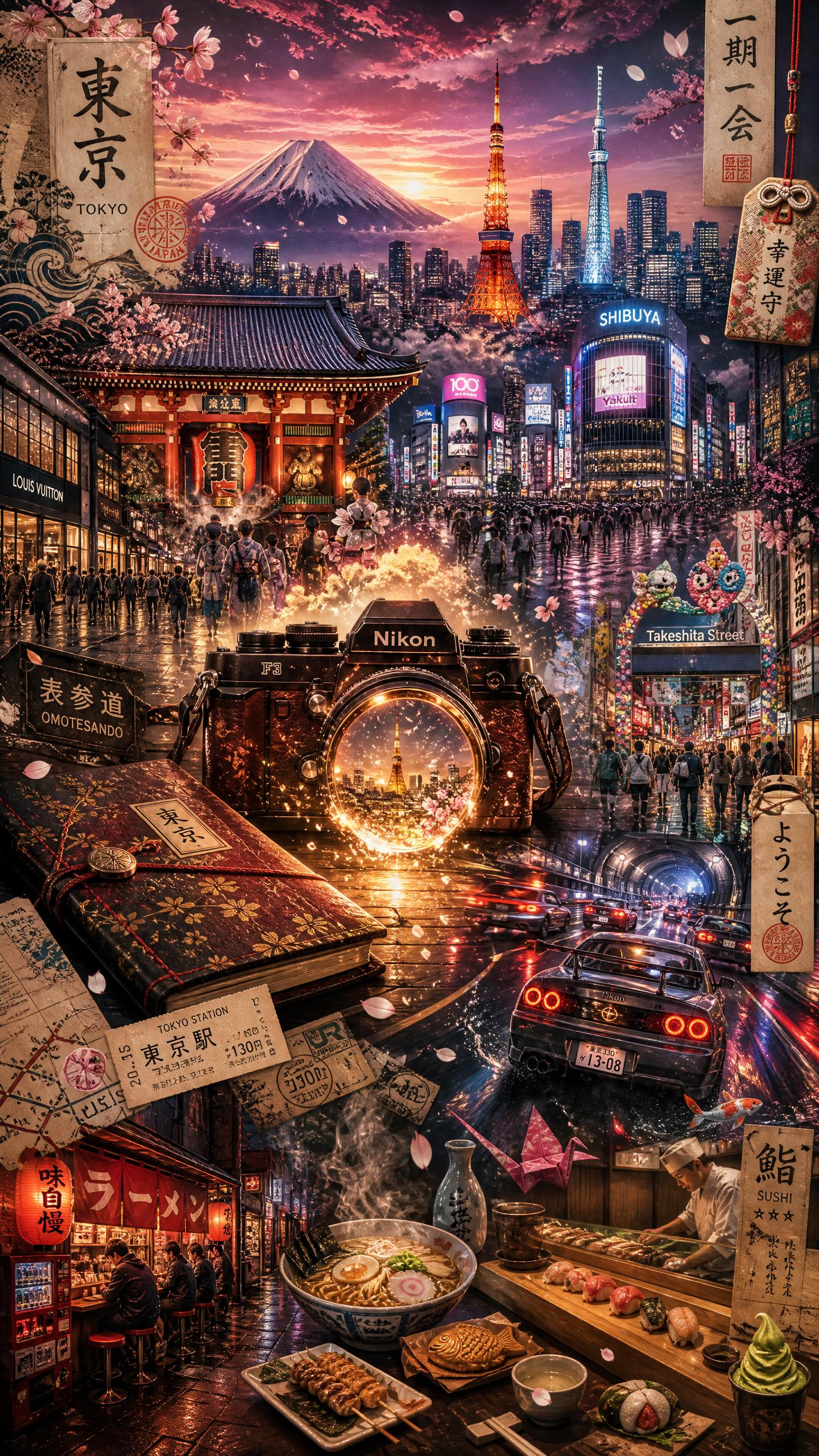
Tags: Tokyo, Shibuya, Mount Fuji, Nikon camera, neon city, cherry blossoms, Japanese culture, travel photography, night markets, ramen, sushi, Tokyo Tower, travel Tokyo, Japanese landmarks
AI Model: GPT-Image-2
Prompt: Create an ultra-premium handmade mixed-media tourism poster representing Tokyo, designed like a world-class luxury travel campaign by an elite graphic designer. The central concept is a vintage Japanese film camera and lacquered travel journal resting on a dark polished wooden desk, with the camera lens glowing like a portal. From the lens, Tokyo bursts into reality, emerging through subtle watercolor strokes, faint ink accents, delicate travel-note textures, and cinematic light into a breathtaking cityscape. Make the poster feel like a magical collision of old and new Tokyo. In the far background, show Mount Fuji glowing softly beneath a lavender-pink sunrise, partly hidden by mist and drifting sakura petals. Fuji should feel distant, sacred, and iconic. In the center, build a layered Tokyo skyline that feels mostly finished, cinematic, and alive with light. Any pencil sketches, ink lines, blueprint fragments, or parchment textures should be minimal, delicate, and secondary, used only as small accents around the camera lens, borders, travel ephemera, and soft transition areas. Do not allow large architectural sketch sections, blank parchment zones, or unfinished drawing areas to dominate the poster. Include a beautiful Asakusa temple scene inspired by Sensō-ji, with traditional rooftops, the great red lantern, incense smoke, paper lanterns, festival stalls, yukata silhouettes, warm gold lighting, and sakura branches sweeping across the composition. Sakura petals should drift through the poster, transforming into glowing particles, paper fragments, and tiny stars. Blend in Tokyo’s modern icons: Tokyo Tower glowing in amber-red, Tokyo Skytree rising in cool silver-blue, and Shibuya Crossing filled with tiny human silhouettes, giant neon screens, taxi lights, rain reflections, and cinematic motion blur. Add stylish fragments of Omotesando, with luxury storefronts, glass architecture, fashion pedestrians, and tree-lined evening streets. Contrast this with Takeshita Street, full of colorful signage, Harajuku fashion, crepes, character shops, and playful street energy, but keep the overall design refined and premium. Add a dynamic Tokyo street racer scene sweeping diagonally through the lower right: sleek modified cars racing along a rain-slick neon expressway at night, with headlights, red and silver light trails, tunnel glow, mist, and speed lines. This should add adrenaline and nightlife energy without overpowering the poster. Create a rich Tokyo food layer in the lower section. Show a tiny hole-in-the-wall ramen shop in a narrow alley with noren curtains, steam rising from bowls, glowing vending machines, red stools, handwritten menus, and warm lantern light on wet pavement. Nearby, contrast it with an elegant Michelin-star sushi counter, featuring polished hinoki wood, a chef silhouette, jewel-like sushi, ceramic plates, quiet golden lighting, and calm luxury. Add small food details such as taiyaki, yakitori smoke, matcha desserts, sake cups, chopsticks, sushi knives, and floating handwritten menu scraps. Surround the composition with authentic Tokyo ephemera: vintage train tickets, old subway maps, JR station stamps, handwritten kanji calligraphy, ukiyo-e wave patterns, festival masks, omamori charms, ema prayer plaques, washi paper textures, shrine seals, and old Tokyo postcards. Integrate subtle Japanese text naturally into the design, such as “東京,” “祭り,” “一期一会,” and “ようこそ”, as handwritten travel notes rather than large distracting typography. Include surreal magical transitions: sakura petals turning into neon signs, paper cranes unfolding into city lights, temple incense smoke becoming clouds around Mount Fuji, ramen steam forming the silhouette of Tokyo Tower, sushi reflections becoming tiny koi fish, and tiny ink marks dissolving into realistic city lights. The glowing camera lens should spill golden light across the desk, as if Tokyo is being developed from memory, dream, and imagination. Any sketch-to-reality effect should be subtle and atmospheric, not a major visual block. Use a luxurious color palette of deep crimson, sakura pink, charcoal black, warm amber, antique ivory, lacquer red, neon magenta, Fuji lavender, and cool Skytree blue. Lighting should be dramatic and cinematic: glowing lanterns, wet neon reflections, golden sunrise behind Fuji, temple warmth, cool city highlights, and high-contrast shadows. The overall poster should feel emotional, iconic, artistic, luxurious, and unforgettable. Style references: cinematic luxury travel collage, premium Japanese travel branding, subtle ink-wash accents, surreal editorial poster design, premium Tokyo tourism campaign, museum-quality mixed-media artwork, watercolor travel ephemera, cinematic neon realism, ultra-detailed masterpiece, emotional storytelling composition. Create the image like a professional graphic designer with the best lighting, best color scheme, attractive composition, and a unique unforgettable Tokyo identity.
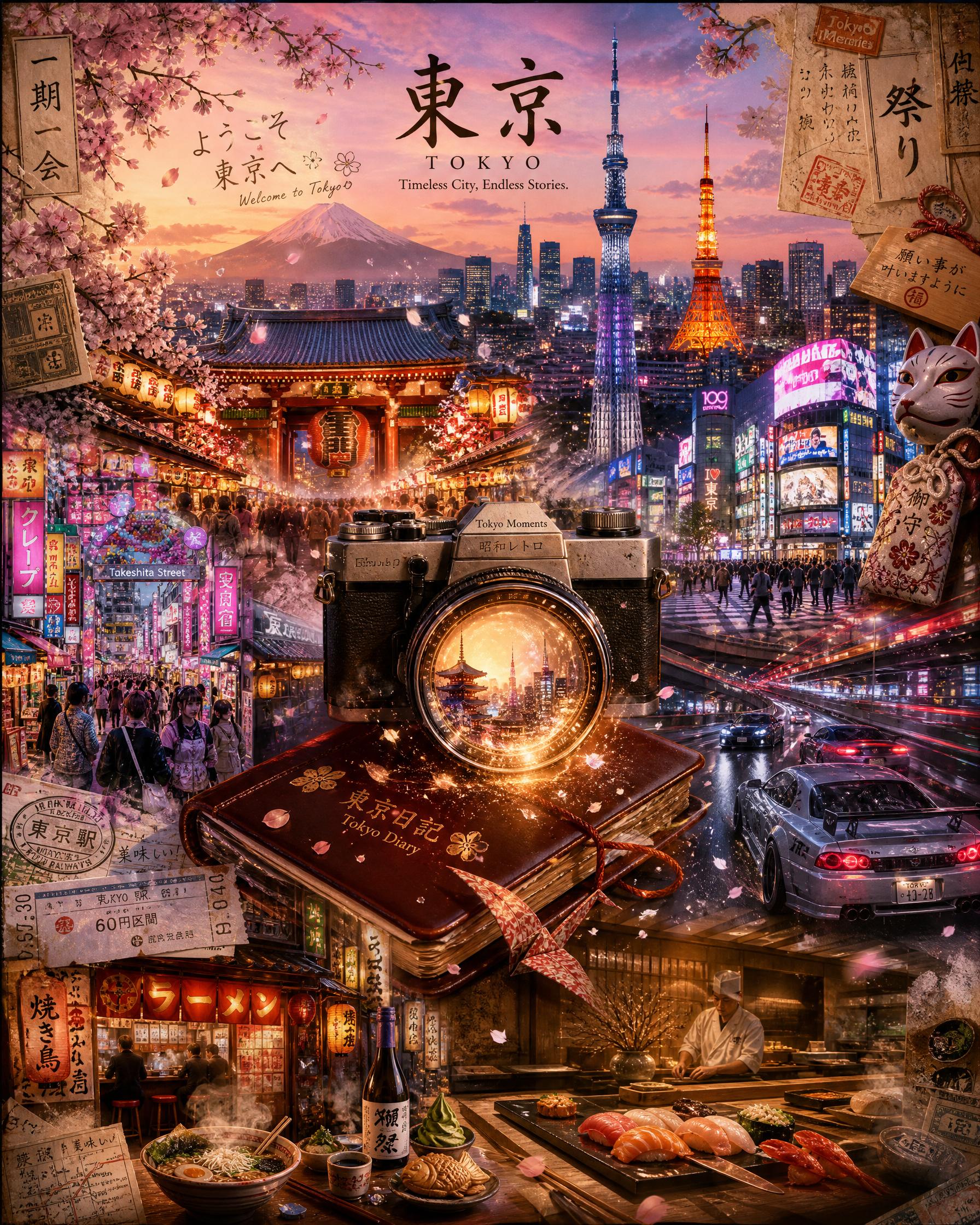
Tags: Tokyo, Tokyo photography, travel collage, neon city, Tokyo Tower, Skytree, cherry blossoms, street food, Japanese culture, travel Tokyo, nightlife, camera art, Tokyo imagery, ramen, urban Japan
AI Model: GPT-Image-2
Prompt: Create an ultra-premium handmade mixed-media tourism poster representing Tokyo, designed like a world-class luxury travel campaign by an elite graphic designer. The central concept is a vintage Japanese film camera and lacquered travel journal resting on a dark polished wooden desk, with the camera lens glowing like a portal. From the lens, Tokyo bursts into reality, emerging through subtle watercolor strokes, faint ink accents, delicate travel-note textures, and cinematic light into a breathtaking cityscape. Make the poster feel like a magical collision of old and new Tokyo. In the far background, show Mount Fuji glowing softly beneath a lavender-pink sunrise, partly hidden by mist and drifting sakura petals. Fuji should feel distant, sacred, and iconic. In the center, build a layered Tokyo skyline that feels mostly finished, cinematic, and alive with light. Any pencil sketches, ink lines, blueprint fragments, or parchment textures should be minimal, delicate, and secondary, used only as small accents around the camera lens, borders, travel ephemera, and soft transition areas. Do not allow large architectural sketch sections, blank parchment zones, or unfinished drawing areas to dominate the poster. Include a beautiful Asakusa temple scene inspired by Sensō-ji, with traditional rooftops, the great red lantern, incense smoke, paper lanterns, festival stalls, yukata silhouettes, warm gold lighting, and sakura branches sweeping across the composition. Sakura petals should drift through the poster, transforming into glowing particles, paper fragments, and tiny stars. Blend in Tokyo’s modern icons: Tokyo Tower glowing in amber-red, Tokyo Skytree rising in cool silver-blue, and Shibuya Crossing filled with tiny human silhouettes, giant neon screens, taxi lights, rain reflections, and cinematic motion blur. Add stylish fragments of Omotesando, with luxury storefronts, glass architecture, fashion pedestrians, and tree-lined evening streets. Contrast this with Takeshita Street, full of colorful signage, Harajuku fashion, crepes, character shops, and playful street energy, but keep the overall design refined and premium. Add a dynamic Tokyo street racer scene sweeping diagonally through the lower right: sleek modified cars racing along a rain-slick neon expressway at night, with headlights, red and silver light trails, tunnel glow, mist, and speed lines. This should add adrenaline and nightlife energy without overpowering the poster. Create a rich Tokyo food layer in the lower section. Show a tiny hole-in-the-wall ramen shop in a narrow alley with noren curtains, steam rising from bowls, glowing vending machines, red stools, handwritten menus, and warm lantern light on wet pavement. Nearby, contrast it with an elegant Michelin-star sushi counter, featuring polished hinoki wood, a chef silhouette, jewel-like sushi, ceramic plates, quiet golden lighting, and calm luxury. Add small food details such as taiyaki, yakitori smoke, matcha desserts, sake cups, chopsticks, sushi knives, and floating handwritten menu scraps. Surround the composition with authentic Tokyo ephemera: vintage train tickets, old subway maps, JR station stamps, handwritten kanji calligraphy, ukiyo-e wave patterns, festival masks, omamori charms, ema prayer plaques, washi paper textures, shrine seals, and old Tokyo postcards. Integrate subtle Japanese text naturally into the design, such as “東京,” “祭り,” “一期一会,” and “ようこそ”, as handwritten travel notes rather than large distracting typography. Include surreal magical transitions: sakura petals turning into neon signs, paper cranes unfolding into city lights, temple incense smoke becoming clouds around Mount Fuji, ramen steam forming the silhouette of Tokyo Tower, sushi reflections becoming tiny koi fish, and tiny ink marks dissolving into realistic city lights. The glowing camera lens should spill golden light across the desk, as if Tokyo is being developed from memory, dream, and imagination. Any sketch-to-reality effect should be subtle and atmospheric, not a major visual block. Use a luxurious color palette of deep crimson, sakura pink, charcoal black, warm amber, antique ivory, lacquer red, neon magenta, Fuji lavender, and cool Skytree blue. Lighting should be dramatic and cinematic: glowing lanterns, wet neon reflections, golden sunrise behind Fuji, temple warmth, cool city highlights, and high-contrast shadows. The overall poster should feel emotional, iconic, artistic, luxurious, and unforgettable. Style references: cinematic luxury travel collage, premium Japanese travel branding, subtle ink-wash accents, surreal editorial poster design, premium Tokyo tourism campaign, museum-quality mixed-media artwork, watercolor travel ephemera, cinematic neon realism, ultra-detailed masterpiece, emotional storytelling composition. Create the image like a professional graphic designer with the best lighting, best color scheme, attractive composition, and a unique unforgettable Tokyo identity.
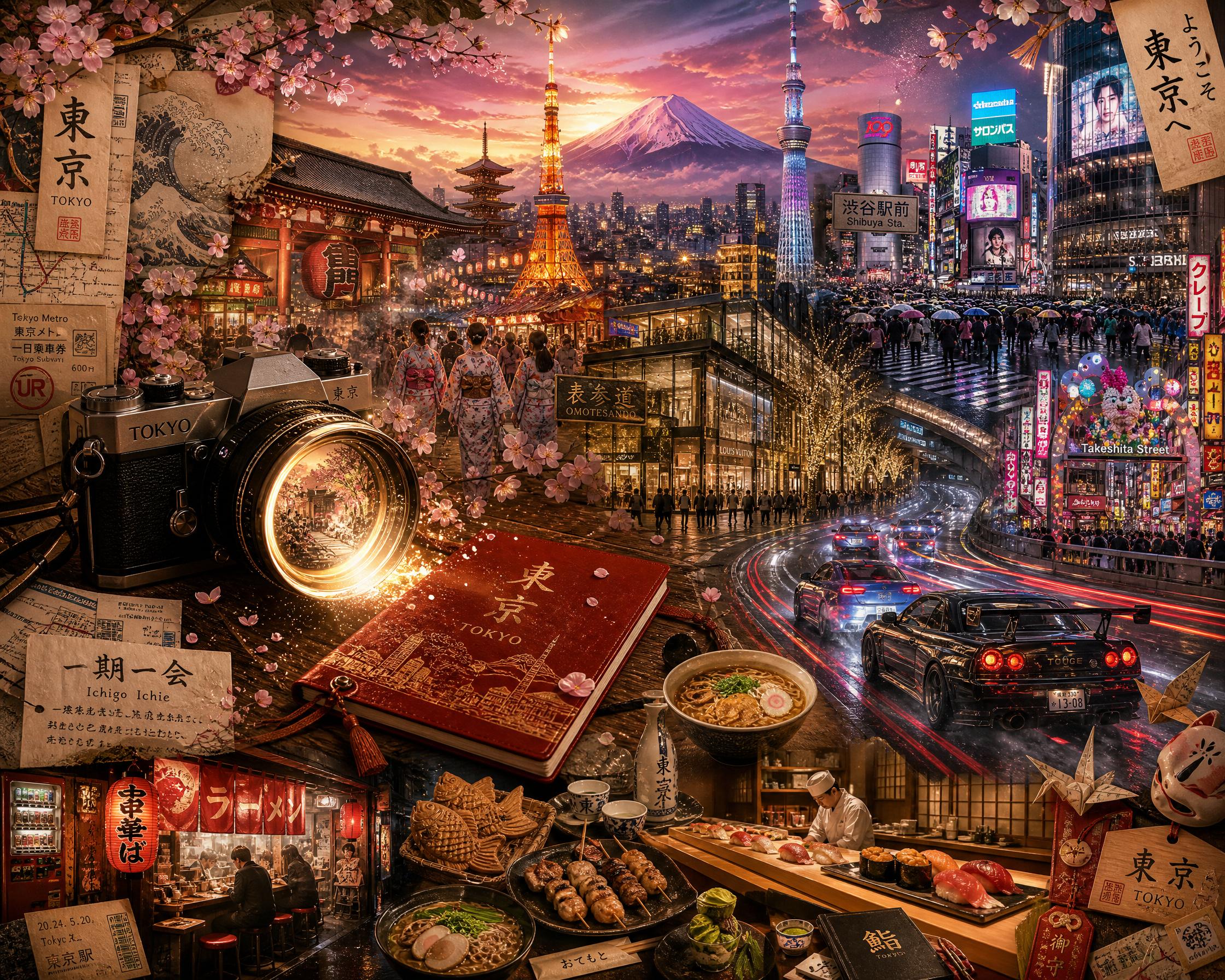
Tags: Tokyo, Tokyo Tower, Mount Fuji, cherry blossoms, neon city, nightlife Tokyo, street food, ramen, sushi, Japanese cuisine, travel photography, urban landscape, Shibuya, night market
AI Model: GPT-Image-2
Prompt: Create an ultra-premium handmade mixed-media tourism poster representing Tokyo, designed like a world-class luxury travel campaign by an elite graphic designer. The central concept is a vintage Japanese film camera and lacquered travel journal resting on a dark polished wooden desk, with the camera lens glowing like a portal. From the lens, Tokyo bursts into reality, emerging through subtle watercolor strokes, faint ink accents, delicate travel-note textures, and cinematic light into a breathtaking cityscape. Make the poster feel like a magical collision of old and new Tokyo. In the far background, show Mount Fuji glowing softly beneath a lavender-pink sunrise, partly hidden by mist and drifting sakura petals. Fuji should feel distant, sacred, and iconic. In the center, build a layered Tokyo skyline that feels mostly finished, cinematic, and alive with light. Any pencil sketches, ink lines, blueprint fragments, or parchment textures should be minimal, delicate, and secondary, used only as small accents around the camera lens, borders, travel ephemera, and soft transition areas. Do not allow large architectural sketch sections, blank parchment zones, or unfinished drawing areas to dominate the poster. Include a beautiful Asakusa temple scene inspired by Sensō-ji, with traditional rooftops, the great red lantern, incense smoke, paper lanterns, festival stalls, yukata silhouettes, warm gold lighting, and sakura branches sweeping across the composition. Sakura petals should drift through the poster, transforming into glowing particles, paper fragments, and tiny stars. Blend in Tokyo’s modern icons: Tokyo Tower glowing in amber-red, Tokyo Skytree rising in cool silver-blue, and Shibuya Crossing filled with tiny human silhouettes, giant neon screens, taxi lights, rain reflections, and cinematic motion blur. Add stylish fragments of Omotesando, with luxury storefronts, glass architecture, fashion pedestrians, and tree-lined evening streets. Contrast this with Takeshita Street, full of colorful signage, Harajuku fashion, crepes, character shops, and playful street energy, but keep the overall design refined and premium. Add a dynamic Tokyo street racer scene sweeping diagonally through the lower right: sleek modified cars racing along a rain-slick neon expressway at night, with headlights, red and silver light trails, tunnel glow, mist, and speed lines. This should add adrenaline and nightlife energy without overpowering the poster. Create a rich Tokyo food layer in the lower section. Show a tiny hole-in-the-wall ramen shop in a narrow alley with noren curtains, steam rising from bowls, glowing vending machines, red stools, handwritten menus, and warm lantern light on wet pavement. Nearby, contrast it with an elegant Michelin-star sushi counter, featuring polished hinoki wood, a chef silhouette, jewel-like sushi, ceramic plates, quiet golden lighting, and calm luxury. Add small food details such as taiyaki, yakitori smoke, matcha desserts, sake cups, chopsticks, sushi knives, and floating handwritten menu scraps. Surround the composition with authentic Tokyo ephemera: vintage train tickets, old subway maps, JR station stamps, handwritten kanji calligraphy, ukiyo-e wave patterns, festival masks, omamori charms, ema prayer plaques, washi paper textures, shrine seals, and old Tokyo postcards. Integrate subtle Japanese text naturally into the design, such as “東京,” “祭り,” “一期一会,” and “ようこそ”, as handwritten travel notes rather than large distracting typography. Include surreal magical transitions: sakura petals turning into neon signs, paper cranes unfolding into city lights, temple incense smoke becoming clouds around Mount Fuji, ramen steam forming the silhouette of Tokyo Tower, sushi reflections becoming tiny koi fish, and tiny ink marks dissolving into realistic city lights. The glowing camera lens should spill golden light across the desk, as if Tokyo is being developed from memory, dream, and imagination. Any sketch-to-reality effect should be subtle and atmospheric, not a major visual block. Use a luxurious color palette of deep crimson, sakura pink, charcoal black, warm amber, antique ivory, lacquer red, neon magenta, Fuji lavender, and cool Skytree blue. Lighting should be dramatic and cinematic: glowing lanterns, wet neon reflections, golden sunrise behind Fuji, temple warmth, cool city highlights, and high-contrast shadows. The overall poster should feel emotional, iconic, artistic, luxurious, and unforgettable. Style references: cinematic luxury travel collage, premium Japanese travel branding, subtle ink-wash accents, surreal editorial poster design, premium Tokyo tourism campaign, museum-quality mixed-media artwork, watercolor travel ephemera, cinematic neon realism, ultra-detailed masterpiece, emotional storytelling composition. Create the image like a professional graphic designer with the best lighting, best color scheme, attractive composition, and a unique unforgettable Tokyo identity.
Comments
Sealine
Amazing images! My son recently took a solo trip to Japan after college graduation. He really enjoyed Tokyo. I recognize some things like Tokyo tower and Shibuya crossing from his pics.
thewhiskeyjack
Thanks a lot! Yes, I like living here. I wish I had more time to enjoy it however, work culture is annoying.
CaylaCatz
very cool. I really miss the little ramen shops and street stalls and matsuri food. Very cool poster.
thewhiskeyjack
Nice! Yeah, Shibuya Crossing, Skytree, Tokyo Tower, and Sanso-Ji Temple are all pretty recognizable landmarks.
archangeltara
WOW these are fantastic amazing work
thewhiskeyjack
And not to far from Singapore
EternaSky
I wanna visit tokyo for sure
thewhiskeyjack
QT: Your City. Original QT by @EternaSky . Join if you want. @antares @aqualemonade @archangeltara @base451121 @beastsg @Belinda @bic_revelation @Biscuit @bleepunc @CaylaCatz @charlypalermo @Cheinia @ChildNerd @chris70 @cocoayoc @Colossus @DavidP @dirty_biker @dovonko @elkanthe @elysian @EternaSky @fantasydesignink @germancowboy @gman @gummiefish @humtum8182 @IndoAIArtist @justrob @King @kirito @mim86 @nametaker @NickWolf @NielsCarlsen @panos @PabloArtStation @paulie @pocahontas @Sealine @sonny001 @southamericanmyth @standartis @sr92 @strixowl-47 @suga2309 @TheBard @thedreamcatcher @thewhiskeyjack @To4kawa @Troxley @TTRPG_Player @TesaranJ @underman @Unleashed @vrieming @winter_witch
CaylaCatz
Yeah, that's the flipside of Tokyo. Not many escape that.