Tokyo street food collage with teppanyaki grilling, ramen, lanterns — AI art by @thewhiskeyjack
@thewhiskeyjack · 5/26/2026
QT - Universal Travel-Food Tourism Poster by @HappyPerson https://budgetpixel.com/p/41734 A taste of Japan—Tokyo, Kyoto, Osaka
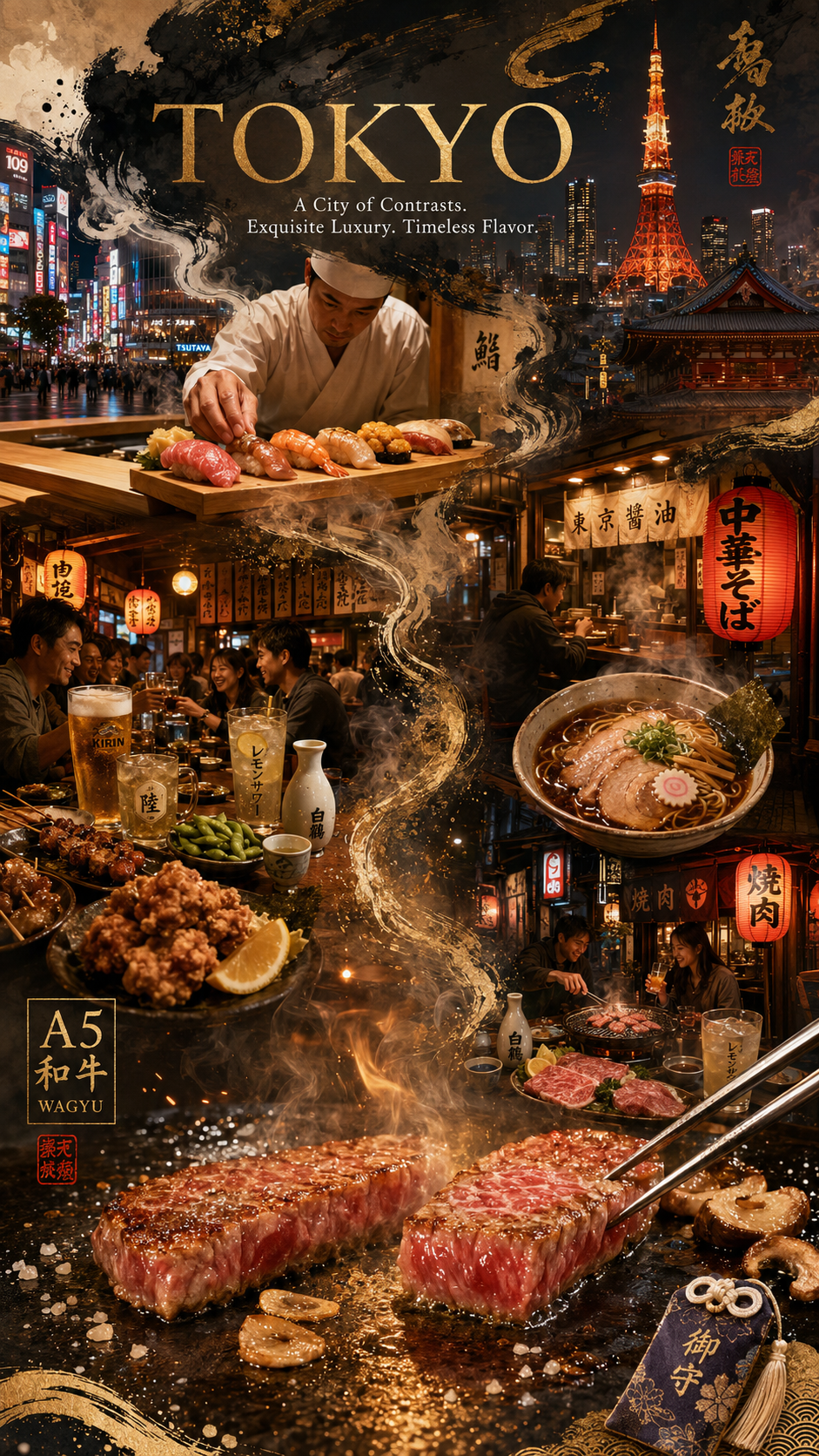
Tags: Tokyo food scene, teppanyaki, street food, Japanese cuisine, ramen, sushi, izakaya, night market, Tokyo Tower, lanterns, neon lights, culinary travel, gourmet photography, Asian street food, food collage
AI Model: GPT-Image-2
Prompt: Create an ultra-premium 9:16 vertical culinary tourism poster of Tokyo, designed like a world-class luxury Japan food campaign and museum-quality travel artwork. The poster should feel like a cinematic food journey through Tokyo, beginning with one powerful signature dish in the foreground and rising upward into elegant food moments, high-rise city lights, old temple atmosphere, neon nightlife, and Japanese visual symbolism. The image must be a tall vertical poster, not square and not horizontal. Build the composition from bottom to top like a refined cinematic scroll. The bottom foreground begins with A5 wagyu teppanyaki, then the journey rises through Tokyo dining culture, ramen alleys, sushi craftsmanship, izakaya warmth, neon streets, and old temple silhouettes. At the bottom foreground, make A5 wagyu teppanyaki the clear anchor of the poster. Show beautifully marbled wagyu sizzling on a black teppan grill, glossy with rendered fat, salt crystals, garlic chips, mushrooms, and warm golden smoke. The beef should look luxurious, rich, tactile, and incredibly appetizing. This is the starting point of the Tokyo journey. From the teppanyaki, let smoke, steam, heat shimmer, and golden reflections rise upward like Japanese brush strokes. The smoke should guide the viewer through the poster, weaving between food, architecture, lanterns, and city lights. It should feel like flavor becoming atmosphere. As the journey rises, integrate Tokyo’s contrast of luxury and homey comfort. Include one refined Michelin-star Edo-style sushi moment with a sushi chef at a polished counter, jewel-like nigiri, warm wood, and quiet precision. Include one cozy Tokyo shoyu ramen shop moment with noren curtains, lanterns, counter seating, steam, and a rich soy-based bowl. Do not repeat multiple ramen bowls. Suggest Tokyo’s wider ramen culture through small background noren signs or menu hints only, not extra full bowls. Include one lively izakaya scene woven into the middle of the poster, with karaage, yakitori, edamame, Kirin beer, a highball, lemon sour, and warm sake. The drinks and small plates should be naturally placed around the izakaya table and counter, not grouped into one separate display. Include a small yakiniku evening moment with glowing grill warmth, sliced beef, lemon sour, and warm sake, integrated into a side alley or lower-middle restaurant scene. Keep it secondary to the teppanyaki anchor. The food and drinks should be layered into Tokyo itself, near streets, rooftops, alleys, temple silhouettes, high-rise reflections, lantern-lit corners, and restaurant windows. Do not place all food at the bottom. Do not create a menu layout. Food should feel discovered along a journey through the city. Use Tokyo landmarks and vistas as atmosphere, not as the main subject. Include Tokyo Tower glowing amber-red, subtle high-rise silhouettes, faint Shibuya neon, upscale restaurant windows, a traditional temple roof, lantern streets, and a soft old-meets-new skyline. The landmarks should frame the food and give Tokyo identity without overpowering the cuisine. Add Japanese art influence throughout: subtle ukiyo-e wave patterns, sumi-e smoke, gold-leaf texture, washi paper grain, brush-stroke arcs, small omamori charms, restrained calligraphy, red seal stamps, and refined ink splashes. For Tokyo, the art style should feel polished and cinematic, blending neon realism with elegant ink, gold, and modern luxury. Text should be minimal and elegant. Include a large refined city title: TOKYO. Include one short tasteful tagline such as A City of Contrasts. Exquisite Luxury. Timeless Flavor. Do not include vertical side text. Do not place English labels beside every dish. Avoid cluttered typography. Small Japanese calligraphy, stamps, or seals may appear as decorative atmosphere only. The mood should be premium Tokyo dining meets neighborhood warmth, high-rise sophistication versus old temples, whisky amber versus lantern glow, teppanyaki luxury versus ramen and izakaya intimacy. The color palette should use whiskey amber, lacquer red, deep charcoal, warm gold, soy brown, sake ivory, neon crimson, soft steam white, and subtle city blue. Lighting should be cinematic and mouthwatering: glossy teppan highlights, rising steam, lantern glow, wet neon reflections, warm restaurant windows, polished whisky amber, rich shadows, and soft atmospheric haze. The overall poster should feel like a Tokyo food dream unfolding upward from A5 wagyu: elegant, immersive, warm, premium, atmospheric, and unforgettable. Style references: luxury Japanese culinary travel poster, cinematic food journey composition, ukiyo-e inspired urban collage, sumi-e brush smoke, gold-leaf travel artwork, premium Tokyo tourism campaign, refined food editorial design, museum-quality mixed-media poster, emotional storytelling composition, ultra-detailed masterpiece. Create the image like a professional graphic designer with elegant visual hierarchy, warm cinematic lighting, highly appetizing food rendering, balanced negative space, strong city atmosphere, and a distinctive unforgettable Tokyo culinary identity.
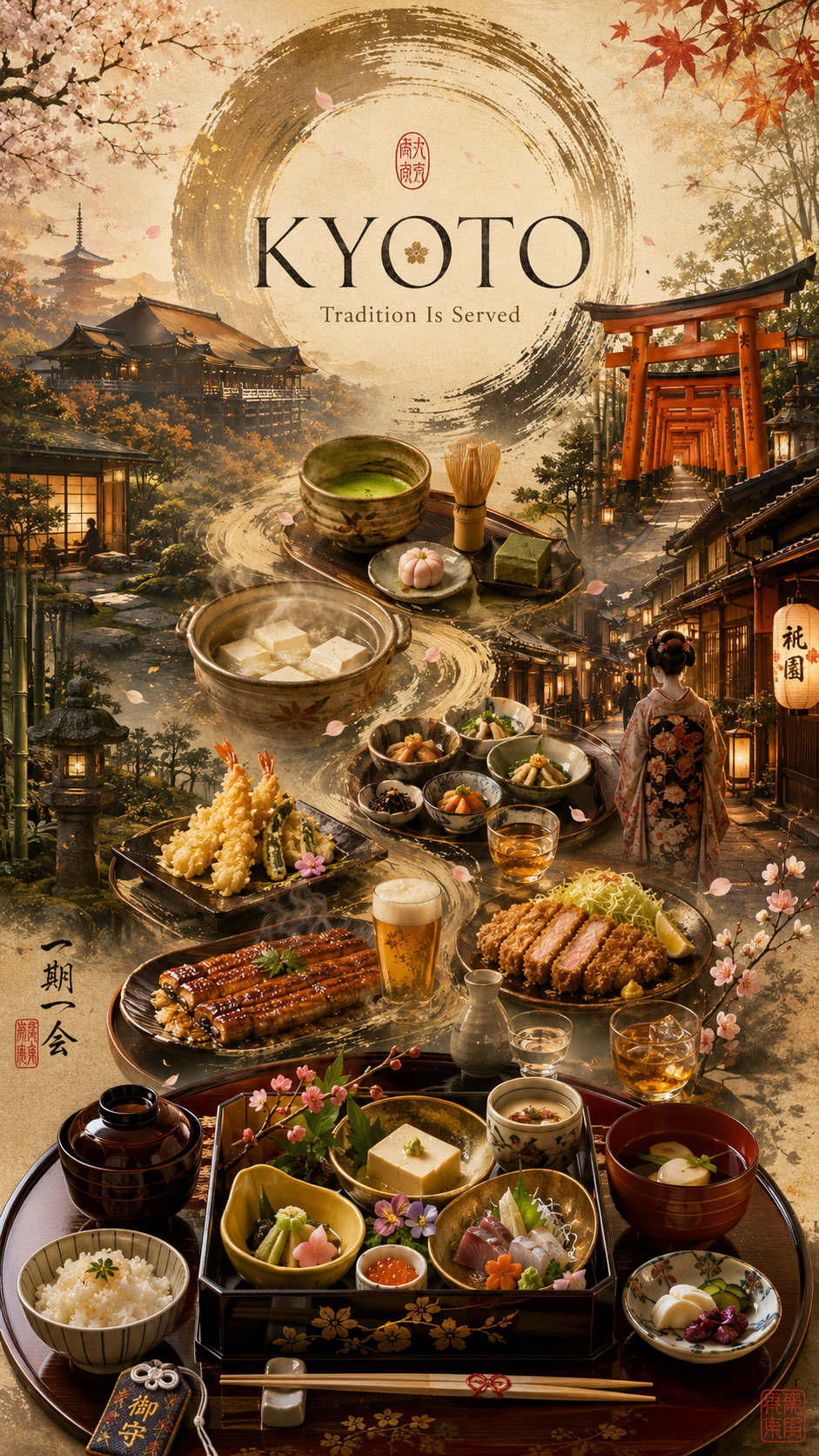
Tags: Kyoto, Kyoto cuisine, traditional Japanese food, kaiseki, Japanese tea ceremony, temple, torii gate, autumn in Kyoto, travel poster, Japanese dining, Japanese culture, culinary travel
AI Model: GPT-Image-2
Prompt: Create an ultra-premium 9:16 vertical culinary tourism poster of Kyoto, designed like a world-class luxury Japan food campaign and museum-quality travel artwork. The poster should feel like a serene culinary journey through Kyoto, beginning with refined seasonal cuisine in the foreground and rising upward into tea culture, temple paths, bamboo, traditional streets, quiet gardens, and Japanese art symbolism. The image must be a tall vertical poster, not square and not horizontal. Build the composition from bottom to top like an elegant Japanese scroll. The bottom foreground begins with kaiseki, then the journey rises through Kyoto’s traditional food culture, matcha, temple cuisine, lantern streets, bamboo shadows, and quiet heritage vistas. At the bottom foreground, make kaiseki the clear anchor of the poster. Show a beautifully arranged seasonal kaiseki tray with delicate small dishes, lacquerware, ceramic bowls, edible flowers, seasonal vegetables, tofu, rice, soup, pickles, and refined plating. The kaiseki should look poetic, balanced, luxurious, and deeply Kyoto. This is the starting point of the Kyoto journey. From the kaiseki, let soft steam, tea vapor, incense smoke, and pale golden light rise upward like graceful brush strokes. The rising motion should guide the viewer through Kyoto’s cuisine and atmosphere, creating a quiet visual journey rather than a food catalog. As the journey rises, integrate Kyoto’s traditional cuisine into the scenery. Include one elegant matcha tea culture moment with a chawan bowl, bamboo whisk, deep green matcha foam, wagashi, and a small matcha dessert. Include yudofu softly steaming in a ceramic pot, obanzai arranged in small home-style bowls, shojin ryori with temple-cuisine restraint, vegetable tempura crisp and golden, unagi kabayaki glossy with rich tare sauce, and tonkatsu presented warmly but not too heavily. Include Kyoto drinks naturally within the journey: sake in ceramic cups or elegant glassware, umeshu glowing amber, and craft beer with soft foam. Place drinks near the food moments where they feel natural, not grouped together in a separate display. The food and drinks should be layered into Kyoto itself, near tatami textures, teahouse interiors, temple paths, stone lanterns, bamboo shadows, wooden machiya streets, garden vistas, and soft lantern glow. Do not place all food at the bottom. Do not create a clean menu layout. Food should feel discovered along a peaceful walk through Kyoto. Use Kyoto landmarks and vistas as atmosphere, not as the main subject. Include restrained impressions of Kiyomizu-dera, Fushimi Inari torii gates, Gion streets, Arashiyama bamboo, stone lanterns, wooden temple roofs, and old teahouse alleys. The landmarks should support the food and tradition, not dominate the poster. For Kyoto, emphasize Japanese art symbolism more strongly. Include a refined ensō zen brush circle placed naturally behind or above the Kyoto atmosphere, like a spiritual moon or brush-painted symbol of harmony. Add pale gold wash, sumi-e ink shadows, ukiyo-e-inspired landscape texture, washi paper grain, soft maple leaves, sakura petals, red shrine seals, omamori charms, and restrained calligraphy. Text should be minimal and elegant. Include a large refined city title: KYOTO. Include one short tasteful tagline such as Tradition Is Served or A Culinary Journey Through Japan’s Ancient Capital. Do not include vertical side text. Do not place English labels beside every dish. Avoid cluttered typography. Small Japanese calligraphy, stamps, or seals may appear as decorative atmosphere only. The mood should be tradition, serenity, seasonal beauty, temple calm, tea ceremony warmth, and refined hospitality. The color palette should use matcha green, antique ivory, cedar brown, warm amber, muted gold, soft cream, pale tofu white, plum amber, lacquer red, bamboo green, and gentle lantern orange. Lighting should be cinematic but quiet: teahouse glow, soft lantern warmth, delicate steam diffusion, polished lacquer reflections, glossy unagi highlights, crisp tempura texture, rich matcha foam, temple haze, and gentle evening shadows. The overall poster should feel like a Kyoto food journey unfolding upward from kaiseki: serene, refined, warm, traditional, premium, atmospheric, and unforgettable. Style references: luxury Japanese culinary travel poster, Kyoto temple food journey, kaiseki editorial art, ukiyo-e inspired landscape collage, ensō zen brush circle, sumi-e ink atmosphere, washi paper travel artwork, premium Kyoto tourism campaign, refined food styling, museum-quality mixed-media poster, emotional storytelling composition, ultra-detailed masterpiece. Create the image like a professional graphic designer with graceful visual hierarchy, warm traditional lighting, highly appetizing food rendering, peaceful negative space, rich city atmosphere, and a distinctive unforgettable Kyoto culinary identity.
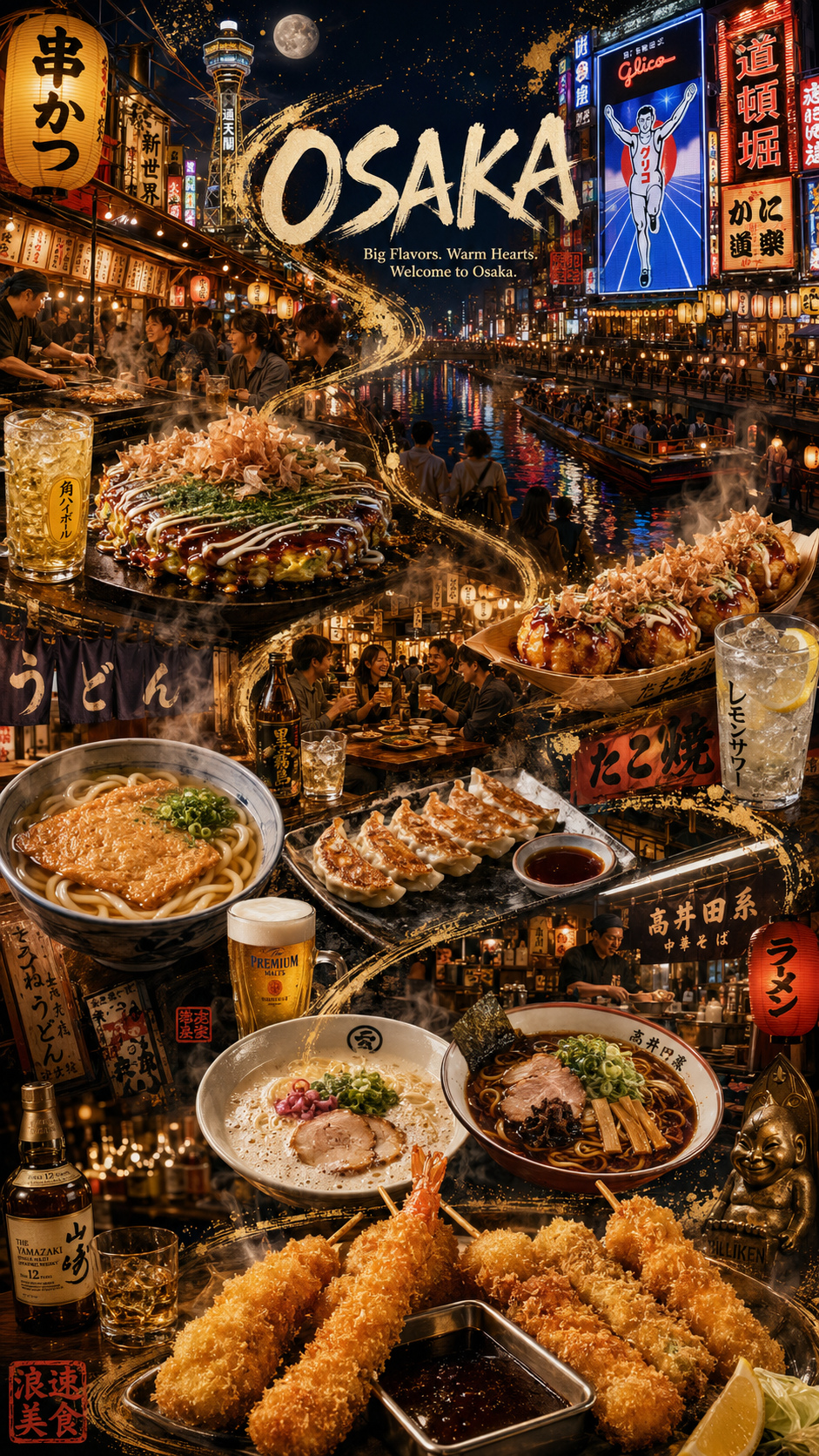
Tags: Osaka, Japan street food, night market, neon signage, ramen, takoyaki, kushiyaki, tempura, fried shrimp, izakaya dining, food photography, travel photography, nightlife, lanterns, street eats
AI Model: GPT-Image-2
Prompt: Create an ultra-premium 9:16 vertical culinary tourism poster of Osaka, designed like a world-class luxury Japan food campaign and museum-quality travel artwork. The poster should feel like a lively but elegant culinary journey through Osaka, beginning with bold street food in the foreground and rising upward through izakaya warmth, canal reflections, neon nightlife, ramen culture, shared drinks, street-food stalls, and Kansai hospitality. The image must be a tall vertical poster, not square and not horizontal. Build the composition as one continuous vertical journey, not a divided poster. Avoid a clear split where the top half is only city scenery and the bottom half is only food. Food, drinks, people, canal reflections, neon signs, landmarks, lanterns, steam, and brush strokes must all blend together from bottom to top. The core visual structure should be a winding golden steam-and-brush path that begins at the kushi katsu in the lower foreground, curves upward through the middle of the poster, passes through Osaka food scenes, crosses canal reflections, flows past izakaya counters and ramen shops, and finally dissolves into Dotonbori-style neon, Tsutenkaku, warm city lights, and night sky. This path should make the image feel like a journey, not a food display. At the bottom foreground, make kushi katsu the clear anchor of the poster. Show golden fried skewers with crisp textured coating, arranged around a dark glossy dipping sauce container. The skewers should feel generous, crunchy, hot, and irresistible, with steam, sauce shine, and warm izakaya lighting. Keep this as the largest food element, but do not make it fill the entire lower half. It should start the journey, not become a separate food-table section. From the kushi katsu, let fryer steam, sauce reflections, lantern glow, and golden brush strokes rise upward in an S-shaped path. Along this path, place smaller, carefully spaced Osaka food moments as if the viewer is walking through the city and discovering them one by one. Include okonomiyaki sizzling on a griddle, glossy with sauce, mayonnaise lines, aonori, and dancing bonito flakes. Place it naturally beside a warm street stall or izakaya counter, not isolated as a floating dish. Include takoyaki steaming under sauce and bonito flakes, tucked into a lively Dotonbori-style street-food moment with lantern light and passing silhouettes. Include gyoza with crisp golden bottoms and dipping sauce, placed near an izakaya table with beer or highball nearby. Include kitsune udon with thick noodles, clear golden broth, and sweet simmered aburaage, shown as a quiet comfort-food moment inside a small warm shop or along a lantern-lit alley. Include one bowl of Espuma / Awase-style creamy ramen, modern and foamy, inside a stylish small ramen shop scene. Include one bowl of Takaida-kei ramen, dark soy-heavy and soul-warming, inside a grittier local ramen counter. Keep both ramen bowls smaller than the kushi katsu and clearly different in appearance. Do not repeat ramen bowls or create multiple similar noodle dishes. Do not include shabu-shabu in this version. Make drinks part of the journey, not a separate drink display. Sprinkle Japanese shochu, highball, whiskey, Japanese beer, and lemon sour naturally beside the foods and bar scenes. Beer can sit beside kushi katsu or gyoza, highball beside takoyaki or okonomiyaki, lemon sour beside fried foods, whiskey near a glowing bar counter, and shochu near izakaya plates. The drinks should feel lived-in and social, with condensation, foam, ice, citrus slices, amber reflections, and warm bar light. Add people and hospitality subtly. Include small silhouettes or softly detailed figures laughing at izakaya counters, sharing drinks, eating near food stalls, walking beside the canal, and gathering under lanterns. The people should add warmth and Kansai friendliness without stealing focus from the food. Use Osaka landmarks and vistas as integrated atmosphere, not a separate upper panel. Include Dotonbori neon, canal reflections, warm signboards, narrow nightlife alleys, glowing izakaya entrances, and a subtle Tsutenkaku Tower rising through the background. These should appear behind and between the food moments, woven into the same vertical path. Do not make the top half a standalone cityscape. The poster should feel like Osaka through food and drink, experienced while walking through a warm night city. Food should be layered on top of, beside, and within the city views, not arranged on a flat table below the skyline. For Osaka, the Japanese art influence should feel bold and energetic. Include expressive ink splashes, festival-like brush strokes, ukiyo-e-inspired wave reflections in the canal, red stamp marks, noren textures, menu-paper fragments, lantern calligraphy, smoky sumi-e accents, and golden sauce-like brush trails. Use these art elements to connect the city and food into one continuous composition. Text should be minimal and bold. Include a large expressive city title: OSAKA. Include one short tasteful tagline such as The City of Warm Nights and Bold Bites or Big Flavors. Warm Hearts. Welcome to Osaka. Do not include vertical side text. Do not place English labels beside every dish. Avoid cluttered typography. Small Japanese calligraphy, menu slips, izakaya signs, or red stamps may appear as decorative atmosphere only. The mood should be Kansai hospitality, warmth, friendliness, drinking culture, street-food joy, izakaya laughter, canal nightlife, and late-night comfort. The color palette should use warm amber, golden fried tones, deep sauce brown, lacquer red, charcoal black, beer gold, lemon yellow, creamy ramen ivory, dark soy black, steam white, neon crimson, and glowing izakaya orange. Lighting should be cinematic and mouthwatering: lantern warmth, fried-food glow, glossy sauce highlights, griddle heat, beer condensation, sparkling lemon sour, amber whiskey shine, ramen steam, wet neon reflections, canal glow, moonlit haze, and cozy bar shadows. The food should look exceptionally delicious and premium, but should remain balanced with the city atmosphere. Avoid oversized floating food. Avoid filling the entire poster with dishes. Avoid a clean bottom food spread. Leave visual breathing room through smoke, dark negative space, canal reflections, night streets, brush strokes, and warm city vistas. The overall poster should feel like an Osaka food journey unfolding upward from kushi katsu, lively, friendly, warm, premium, social, appetizing, atmospheric, and unforgettable. It should resemble a cinematic walk through Osaka at night, where every turn reveals another dish, drink, alley, lantern, reflection, or friendly table. Style references: luxury Japanese culinary travel poster, Osaka night-food journey, Kansai hospitality campaign, ukiyo-e inspired neon collage, energetic sumi-e brush strokes, glowing izakaya atmosphere, premium mixed-media poster art, integrated food-and-city composition, street-food luxury, emotional storytelling composition, elegant negative space, ultra-detailed masterpiece. Create the image like a professional graphic designer with energetic visual hierarchy, warm cinematic lighting, highly appetizing food rendering, balanced negative space, strong city atmosphere, and a distinctive unforgettable Osaka culinary identity.
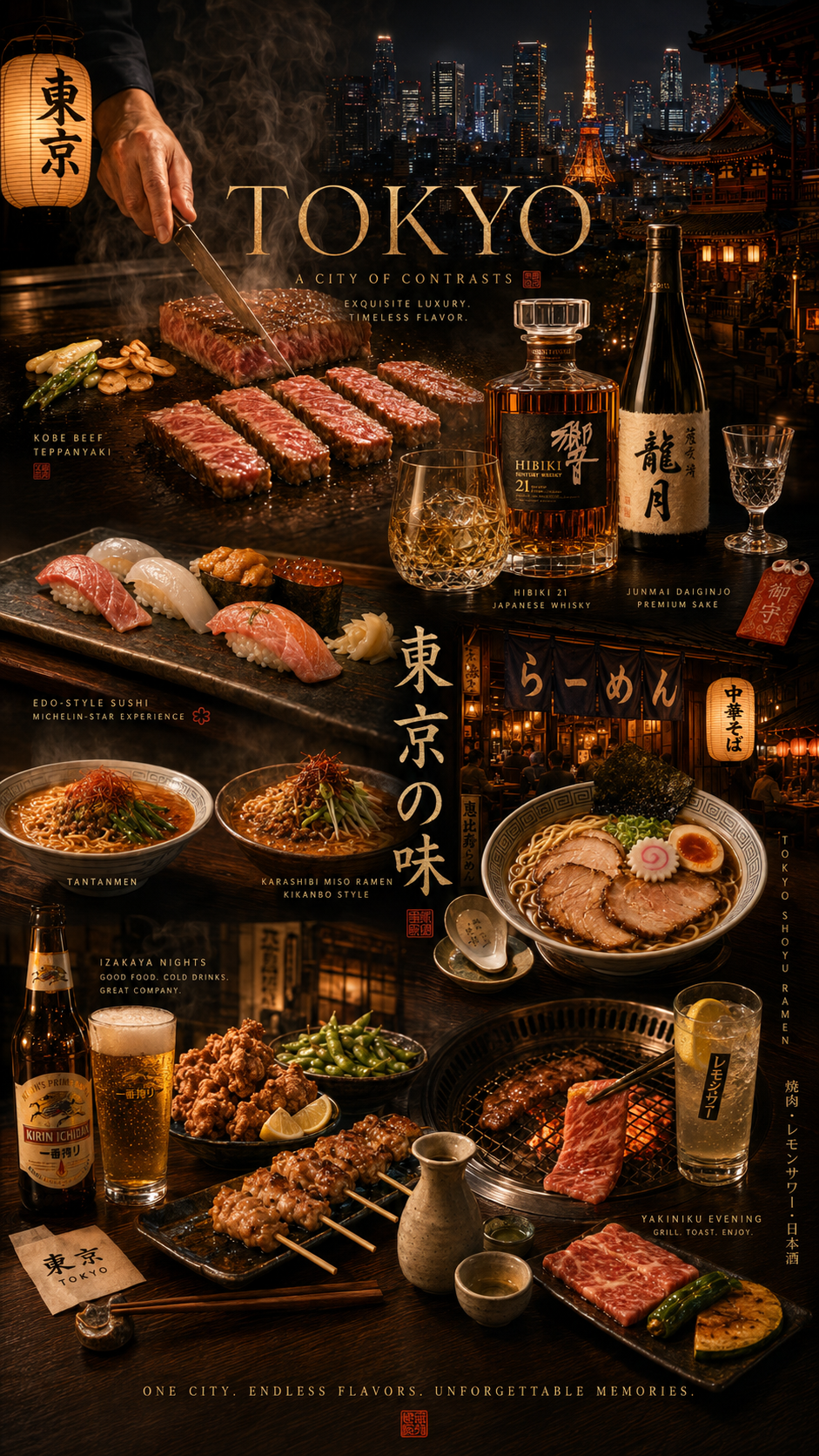
Tags: Tokyo food, Japanese cuisine, yakiniku, sushi, ramen, sake, whiskey, izakaya, food photography, Tokyo nightlife, grilled beef, ramen bowls, lanterns, city skyline, gourmet dining
AI Model: GPT-Image-2
Prompt: Create an ultra-premium 9:16 vertical culinary tourism poster of Tokyo, designed like a world-class luxury travel and food campaign by an elite graphic designer. The poster should feel warm, inviting, elegant, and deeply appetizing, celebrating Tokyo through a refined contrast of luxury and homey comfort, high-rise sophistication and old temple atmosphere, fine dining and casual food culture. The overall mood should be rich, emotional, polished, atmospheric, and unforgettable, with the food and drink as the clear priority. The image must be a tall vertical poster composition, not square, not horizontal, and not wide-format. Design the poster from bottom to top, with the most important food and drink elements in the lower foreground, secondary culinary scenes rising through the middle, and subtle Tokyo city atmosphere and landmarks in the upper background. The composition should be carefully curated and less busy, with strong visual hierarchy and breathing room so that each featured item feels premium and beautifully rendered. Focus on quality over quantity. Do not overcrowd the poster. Every dish, drink, and background element should feel intentional, luxurious, and visually important. The core idea is to present Tokyo as a city of culinary contrasts. Blend the feeling of glowing urban refinement with intimate neighborhood warmth. Show subtle hints of Tokyo high-rises, elegant evening city lights, and a few recognizable urban silhouettes, balanced with touches of traditional temple architecture, calm old-street charm, noren curtains, lantern glow, and refined Japanese cultural atmosphere. The city should feel unmistakably Tokyo, but the food and drink must remain the main focus. Feature several carefully chosen Tokyo food and drink scenes, arranged in a layered, elegant vertical composition. Luxury Tokyo food and drink Include a premium teppanyaki scene featuring A5 Kobe beef, beautifully marbled, sizzling on an expansive teppan grill with glossy highlights, rising heat, and luxurious presentation. Make it feel rich, indulgent, and high-end. Include a refined Michelin-star sushi moment, with elegant Edo-style sushi presented on polished wood or ceramic, beautifully plated with restraint and precision. The sushi should look jewel-like, premium, and masterfully crafted. Show high-end drinks such as expensive Hibiki whisky and high-class Junmai Daiginjo sake, presented with elegance and sophistication. The Hibiki should feel polished, amber, prestigious, and luxurious. The Junmai Daiginjo sake should feel refined and graceful, perhaps in fine glassware or premium sake vessels. Homey and casual Tokyo food culture Balance the luxury with a quaint ramen shop scene full of warmth and authenticity. Show a cozy Tokyo ramen shop with noren curtains, counter seating, steam, warm lighting, and a neighborhood feel. Feature a signature Tokyo shoyu ramen bowl prominently, rich and inviting. Also include visual references to the variety of ramen found in Tokyo, especially tantanmen and karashibi miso ramen inspired by Kikanbo, each looking distinct, flavorful, and deeply satisfying. The ramen scene should feel intimate, steamy, and full of life. Include a lively izakaya food-and-drink scene with karaage, yakitori, and edamame, presented in a warm, social, delicious way. Pair this with Kirin beer and a classic Japanese highball, making the scene feel energetic, welcoming, and atmospheric, as if the viewer has stepped into a beloved Tokyo nightlife spot. Also include a yakiniku moment, with beautifully grilled meat, glowing grill warmth, and a delicious, sociable atmosphere. Pair this with lemon sour and warm sake, giving it a relaxed but distinctly Tokyo evening feel. Tokyo atmosphere and symbolism Add just a few tasteful Japanese details to enrich the composition without distracting from the food. Include subtle omamori charms, perhaps a few elegant table details, chopsticks, ceramic dishes, soft paper textures, small lantern accents, and restrained cultural knick-knacks. Use these only as supporting details. They should enhance the atmosphere, not crowd the poster. Include a few subtle Tokyo cues such as a soft city skyline, upscale dining glow, a temple silhouette, or old-meets-new street atmosphere, but keep them secondary. In the upper background, allow the Tokyo atmosphere to rise vertically with soft high-rises, warm restaurant lights, faint temple shapes, and evening glow. The poster should feel like Tokyo through food rather than a general city landmark collage. Composition and visual balance The layout should feel refined, curated, and easy to read. Give each major food scene enough space to shine. Avoid clutter, overcrowding, or too many competing mini-elements. Let the luxury scenes and homey scenes complement each other naturally. The contrast between high-end and everyday should be clear, but the whole poster should still feel cohesive, warm, and premium. For the 9:16 vertical format, place the richest food and drink details in the lower foreground, let steam, lantern glow, restaurant warmth, and subtle reflections rise through the middle, and let the Tokyo skyline and temple atmosphere fade softly into the upper background. Preserve breathing room between major food scenes so each item looks high-quality and intentional. Color palette and lighting Use a luxurious and appetizing color palette of warm amber, deep crimson, lacquer red, charcoal black, golden brown, soft cream, soy-rich browns, whiskey amber, sake ivory, and gentle warm city-light tones. Lighting should be cinematic and mouthwatering: soft restaurant glows, warm lantern light, polished reflections, subtle evening atmosphere, rich shadows, steam diffusion, and glossy highlights on the food and drinks. The food should look exceptionally delicious and premium, with realistic textures and strong surface detail: marbled beef, glossy broth, crisp karaage, glistening yakitori glaze, delicate sushi rice, shimmering whisky, and soft rising steam. The overall poster should feel like a museum-quality culinary travel artwork and a luxury Tokyo food tourism campaign — elegant, emotional, inviting, and visually irresistible. Aspect ratio requirement: strict 9:16 vertical poster format, tall luxury travel-poster layout, full-height composition, no square crop, no horizontal crop, no wide banner crop. Style references: cinematic culinary travel poster, luxury Tokyo tourism branding, warm Japanese food editorial design, premium mixed-media poster art, refined restaurant photography atmosphere, upscale travel campaign aesthetics, high-end food styling, emotional storytelling composition, ultra-detailed masterpiece. Create the image like a professional graphic designer with the best lighting, best color harmony, elegant composition, strong visual hierarchy, highly appetizing food rendering, and a distinctive, unforgettable Tokyo culinary identity.
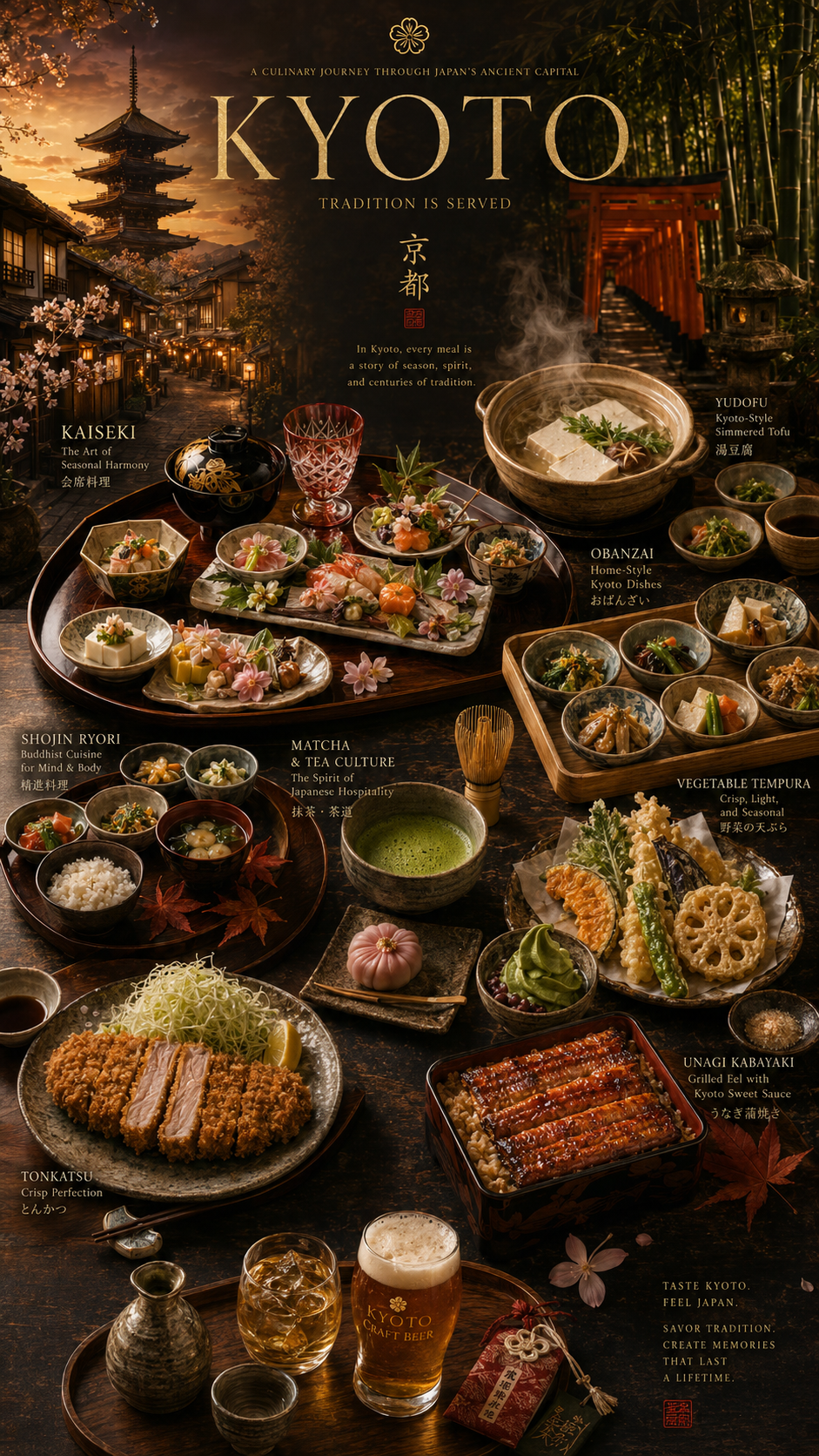
Tags: Kyoto, Kyoto cuisine, Japanese dining, Kaiseki, tofu, udon, tempura, matcha, tea culture, traditional meals, autumn decor, traditional Japanese food, travel Japan, food photography, Japanese cuisine showcase
AI Model: GPT-Image-2
Prompt: Create an ultra-premium 9:16 vertical culinary tourism poster of Kyoto, designed like a world-class luxury travel and food campaign by an elite graphic designer. The poster should feel warm, inviting, elegant, peaceful, traditional, and deeply appetizing, celebrating Kyoto as a city of heritage, refinement, seasonal beauty, temple atmosphere, tea culture, and graceful culinary craft. The overall mood should be calm, luxurious, intimate, artistic, and unforgettable, with the food and drink as the clear priority. The image must be a tall vertical poster composition, not square, not horizontal, and not wide-format. Design the poster from bottom to top, with the most important Kyoto dishes and drinks in the lower foreground, refined culinary scenes rising through the middle, and subtle Kyoto landmarks, temples, bamboo, and traditional atmosphere in the upper background. The composition should be carefully curated and less busy, with strong visual hierarchy and breathing room so that each featured item feels premium and beautifully rendered. Focus on quality over quantity. Do not overcrowd the poster. Every dish, drink, and background element should feel intentional, refined, and visually important. The core idea is to present Kyoto as a city of tradition through food. Blend the feeling of quiet temple streets, wooden machiya townhouses, stone paths, bamboo shadows, lantern glow, and old teahouse elegance with beautifully presented Kyoto cuisine. The city should feel unmistakably Kyoto, but the food and drink must remain the main focus. Feature several carefully chosen Kyoto food and drink scenes, arranged in a layered, elegant vertical composition. Traditional Kyoto cuisine Include a refined kaiseki dining scene, beautifully arranged with seasonal vegetables, delicate small dishes, lacquerware, ceramic plates, tiny bowls, edible flowers, and graceful presentation. The kaiseki should feel luxurious, poetic, seasonal, and deeply Kyoto. Include yudofu, Kyoto-style simmered tofu, presented in a warm ceramic pot or traditional wooden setting, with soft steam, delicate broth, small dipping sauces, scallions, and a peaceful temple-dining atmosphere. It should feel gentle, nourishing, and elegant. Include obanzai, Kyoto’s home-style vegetable dishes, arranged in small bowls with seasonal greens, simmered vegetables, pickles, tofu, mushrooms, and rustic but beautiful presentation. This should bring a warm, homey, local feeling to balance the refined luxury. Include shojin ryori, Buddhist temple cuisine, with carefully arranged plant-based dishes, tofu, vegetables, rice, soup, pickles, and subtle seasonal colors. Make it feel serene, spiritual, and beautifully restrained. Matcha and Kyoto tea culture Make matcha one of the visual stars of the poster. Include a graceful tea setting with a chawan bowl, bamboo whisk, deep green matcha foam, wagashi sweets, and soft tatami or teahouse textures. Add matcha ice cream or a refined matcha dessert as a small but visually appealing detail, rich green against warm ivory and wood tones. The matcha section should feel quiet, ceremonial, and luxurious, with soft light, delicate steam, and a sense of timeless Kyoto hospitality. Rich Kyoto food moments Include elegant vegetable tempura, crisp and golden, featuring seasonal vegetables such as shishito, pumpkin, lotus root, eggplant, mushroom, and leafy greens. The tempura should look light, delicate, and freshly fried, with subtle oil sheen and refined plating. Include tonkatsu, presented beautifully with crisp golden breading, sliced pork, shredded cabbage, sauce, rice, and a small bowl of miso soup. Keep it premium and appetizing, but not overly heavy. Include unagi kabayaki, glossy and lacquered with rich tare sauce, served over rice or on refined ceramic, with warm steam, charred edges, and a deep savory shine. It should feel indulgent, traditional, and luxurious. Kyoto drinks Feature drinks that match Kyoto’s refined atmosphere: sake, umeshu, and craft beer. Present the sake in elegant glassware or ceramic cups, the umeshu with warm amber plum tones, and the craft beer with soft golden foam. These should feel celebratory and tasteful, enhancing the culinary travel mood without overwhelming the food. Kyoto atmosphere and symbolism Add just a few tasteful Kyoto landmarks and cultural symbols in the background, but keep them secondary. Include subtle hints of torii gates, traditional temple rooftops, stone lanterns, bamboo groves, old wooden streets, paper lanterns, noren curtains, and a soft suggestion of Kyoto’s historic districts. Landmarks should create atmosphere, not dominate the poster. You may include restrained references to Kyoto icons such as Kiyomizu-dera, Fushimi Inari torii gates, Gion streets, or Arashiyama bamboo, but only as soft background silhouettes or atmospheric details. The upper background should feel like Kyoto rising gently behind the food: temple roofs, bamboo shadows, lantern haze, and quiet historic streets fading into warm light. The poster should feel like Kyoto through food, not a general landmark collage. Add a few tasteful Japanese details such as omamori charms, ceramic chopstick rests, washi paper textures, small calligraphy notes, folded cloth, lacquer trays, maple leaves, sakura petals, and tea utensils. Use these only as supporting accents. They should enrich the atmosphere without crowding the composition. Composition and visual balance The layout should feel refined, curated, peaceful, and easy to read. Give each major food scene enough space to shine. Avoid clutter, overcrowding, or too many competing mini-elements. Let the cuisine feel carefully arranged like a seasonal Kyoto tasting journey. The contrast should be between temple elegance, teahouse calm, home-style Kyoto cooking, and refined dining luxury. The whole poster should feel cohesive, warm, premium, and deeply inviting. For the 9:16 vertical format, place the richest food and drink details in the lower foreground, let steam, lantern glow, tea warmth, and soft temple atmosphere rise through the middle, and let Kyoto’s rooftops, bamboo, torii gates, and historic silhouettes fade gently into the upper background. Preserve breathing room between major food scenes so each item feels carefully presented and high-quality. Color palette and lighting Use a luxurious and appetizing Kyoto color palette of matcha green, warm amber, deep lacquer red, antique ivory, soft cream, muted gold, cedar brown, charcoal black, plum wine amber, fresh vegetable green, pale tofu white, and gentle lantern orange. Lighting should be cinematic and mouthwatering: soft teahouse glow, warm lantern light, delicate steam diffusion, polished ceramic reflections, gentle shadows, temple-atmosphere haze, glossy highlights on unagi, crisp golden tempura texture, and rich matcha depth. The food should look exceptionally delicious and premium, with realistic textures and strong surface detail: silky tofu, glossy unagi glaze, crisp tempura batter, delicate kaiseki vegetables, creamy matcha foam, lacquered bowls, steamed rice, and warm sake reflections. The overall poster should feel like a museum-quality culinary travel artwork and a luxury Kyoto food tourism campaign — serene, emotional, traditional, elegant, appetizing, and visually irresistible. Aspect ratio requirement: strict 9:16 vertical poster format, tall luxury travel-poster layout, full-height composition, no square crop, no horizontal crop, no wide banner crop. Style references: cinematic culinary travel poster, luxury Kyoto tourism branding, traditional Japanese food editorial design, premium mixed-media poster art, refined teahouse atmosphere, temple-district elegance, high-end food styling, warm Japanese hospitality, emotional storytelling composition, ultra-detailed masterpiece. Create the image like a professional graphic designer with the best lighting, best color harmony, elegant composition, strong visual hierarchy, highly appetizing food rendering, and a distinctive unforgettable Kyoto culinary identity.
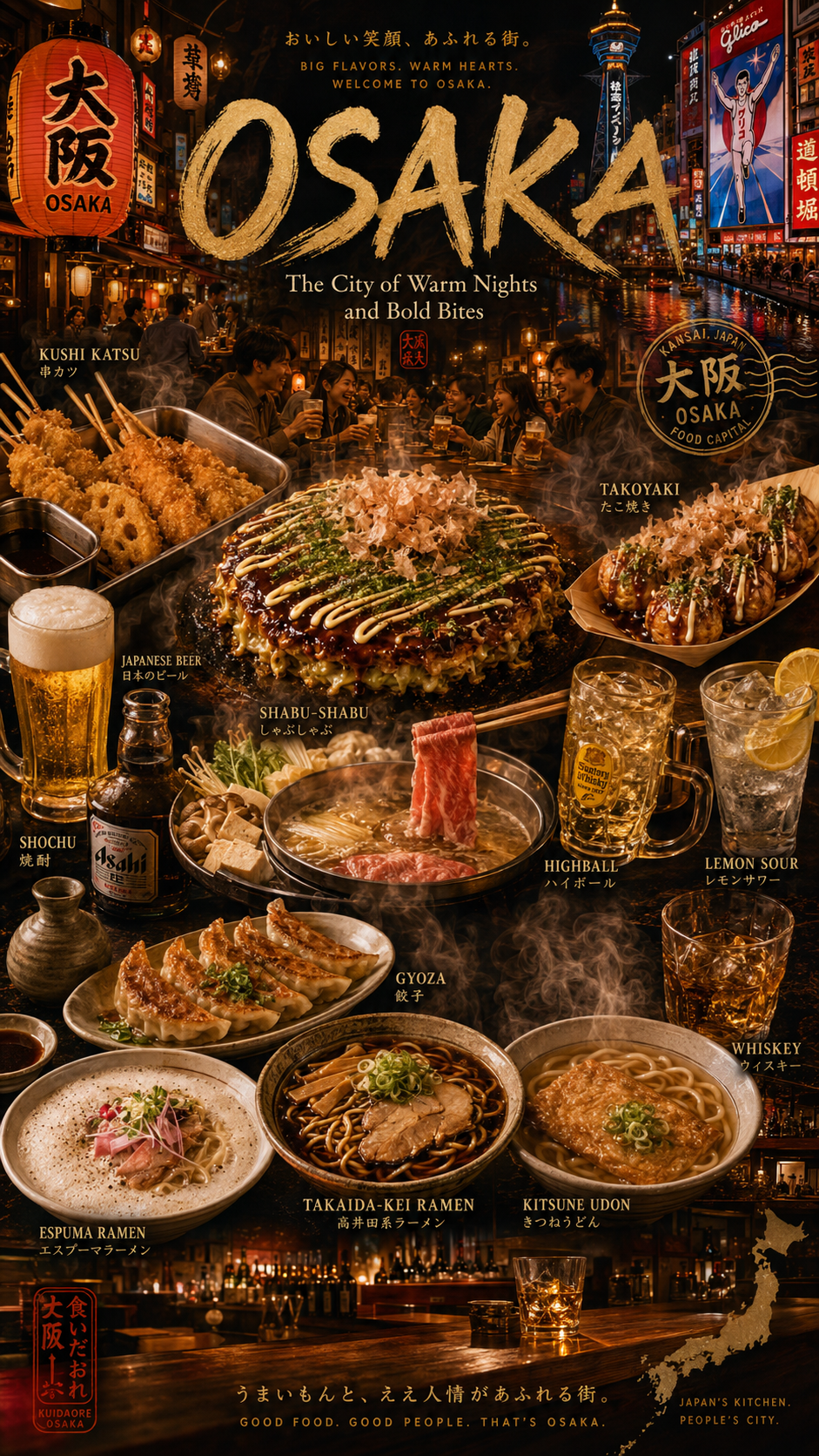
Tags: Osaka, Osaka nightlife, street food Osaka, okonomiyaki, takoyaki, ramen, gyoza, Japanese beer, highball, lemon sour, izakaya, food photography, night market, Japanese cuisine, Osaka food scene
AI Model: GPT-Image-2
Prompt: Create an ultra-premium 9:16 vertical culinary tourism poster of Osaka, designed like a world-class luxury travel and food campaign by an elite graphic designer. The poster should feel warm, welcoming, lively, generous, flavorful, and deeply appetizing, celebrating Osaka as a city of Kansai hospitality, friendliness, street-food energy, drinking culture, izakaya warmth, late-night comfort food, and bold local flavor. The overall mood should be rich, social, glowing, atmospheric, joyful, premium, and unforgettable, with the food and drink as the clear priority. The image must be a tall vertical poster composition, not square, not horizontal, and not wide-format. Design the poster as a fully integrated culinary travel artwork, not as a top-half city scene and bottom-half food display. Food, drinks, neon streets, izakaya warmth, bar details, and Osaka landmarks should blend naturally from top to bottom, with the most important dishes distributed through the composition instead of being placed only along the bottom. The composition should be carefully curated and less busy, with strong visual hierarchy and breathing room so that each featured item feels premium and beautifully rendered. Focus on quality over quantity, but include enough variety to match the richness of the Tokyo and Kyoto posters. Do not overcrowd the poster. Every dish, drink, bar detail, and city element should feel intentional, appetizing, and visually important. The core idea is to present Osaka as Japan’s warm, friendly, food-loving city, a place of glowing nightlife, generous plates, shared drinks, and casual joy. Blend the feeling of lively backstreets, friendly izakaya counters, Dotonbori neon, warm lanterns, shared tables, street-food stalls, smoky grills, and Kansai-style hospitality. The city should feel unmistakably Osaka, but the food, drinks, and social warmth must remain the main focus. Feature several carefully chosen Osaka food and drink scenes, arranged in a layered, elegant vertical composition. Osaka street food and local soul Include KUSHI KATSU as one of the visual stars of the poster. Show golden fried skewers arranged beautifully with crisp textured coating, served with the classic dark dipping sauce in a metal or ceramic container. The sauce should look rich, glossy, and deeply savory. The kushi katsu should feel casual, local, generous, and delicious, but still rendered with premium food-poster quality. Include OKONOMIYAKI, thick and savory, sizzling on a hot plate with glossy sauce, mayonnaise lines, bonito flakes dancing in the heat, aonori, cabbage texture, steam, and rich griddle warmth. It should feel hearty, iconic, and deeply Osaka. Include TAKOYAKI, golden and round, served in a small tray or elegant street-food dish, with sauce, mayonnaise, bonito flakes, aonori, and steam rising from the soft centers. The takoyaki should feel playful, hot, comforting, and irresistible. Add GYOZA, pan-fried and golden with crisp bottoms, arranged beside a small dipping sauce dish, steam, scallions, and warm izakaya lighting. The gyoza should feel like a perfect drinking-food companion. Osaka noodles and comfort food Include ESPUMA RAMEN / AWASE-STYLE CREAMY RAMEN, representing Osaka’s modern bubble-style ramen trend. Show a refined bowl with a creamy, foamy, luxurious broth surface, delicate toppings, noodles partially visible beneath the foam, soft steam, and modern restaurant lighting. It should feel contemporary, elegant, and uniquely Osaka. Include TAKAIDA-KEI RAMEN, Osaka’s local classic from the eastern Takaida district. Show a darker, gritty, soul-warming ramen bowl with a deep soy sauce-heavy broth, almost black in tone, thick noodles, sliced pork, green onions, and a powerful savory presence. It should feel local, bold, nostalgic, and comforting, contrasting beautifully with the modern creamy ramen. Include KITSUNE UDON, warm and comforting, with thick udon noodles in a clear golden broth, topped with sweet simmered aburaage tofu, scallions, steam, and a simple elegant bowl. It should bring a softer, homey Kansai comfort-food note to the poster. Shared-table dining and drinking culture Include SHABU-SHABU as a warm social dining moment. Show thinly sliced marbled beef, vegetables, tofu, mushrooms, dipping sauces, and a steaming hot pot at the center of a friendly table. The shabu-shabu should feel inviting, communal, and perfect for a warm Osaka night. Make Osaka feel like a true drinking city. Include a lively IZAKAYA scene integrated into the middle of the poster, with shared plates, glowing lanterns, wooden counters, handwritten menus, laughter, steam, and a welcoming social atmosphere. The izakaya should feel friendly and energetic, like a place where strangers become friends over food and drinks. Feature drinks throughout the composition rather than grouped in one place. Sprinkle them naturally beside the matching foods: Japanese shochu near izakaya plates or kushi katsu Highball beside takoyaki, okonomiyaki, or bar snacks Whiskey in a glowing tumbler near the bar scene Japanese beer beside gyoza, karaage-style izakaya snacks, or kushi katsu Lemon sour beside yakiniku-style grilled food, takoyaki, or late-night street food The drinks should appear in chilled glasses, beer mugs, elegant tumblers, small bottles, or izakaya-style cups, with condensation, golden foam, amber reflections, citrus slices, ice, and warm bar lighting. They should feel integrated with the food scenes, not lined up like a separate drink display. Add a refined BAR SCENE woven into the middle or lower-middle section: polished counter, amber whiskey glow, soft bottles in the background, subtle reflections, warm wood, friendly conversation, and Kansai nightlife warmth. This should complement the izakaya mood rather than feel like a separate top-half landmark scene. Osaka atmosphere and symbolism Add tasteful Osaka landmarks and city cues in the background, but keep them secondary and integrated with the food. Include subtle hints of Dotonbori neon, canal reflections, warm signboards, narrow nightlife alleys, glowing food stalls, and soft Osaka city lights. Landmarks and signage should create atmosphere, not dominate the poster. You may include restrained references to Tsutenkaku Tower, Dotonbori, or Osaka castle-like silhouettes, but only as atmospheric background shapes. Avoid making the upper half mostly landmarks or bar scenery. The upper background should still contain food atmosphere, steam, izakaya glow, signage, and Osaka warmth. The poster should feel like Osaka through food and drink, not a general landmark collage. Add a few tasteful Japanese details such as noren curtains, paper lanterns, small ceramic plates, chopsticks, sauce dishes, izakaya menu slips, subtle Osaka travel stamps, warm wood textures, restaurant signs, and small cultural knick-knacks. Use these only as supporting accents. They should enrich the atmosphere without crowding the composition. Text and labeling style Use a large elegant city title: OSAKA. Include a short English city tagline, such as: The City of Warm Nights and Bold Bites or Big Flavors. Warm Hearts. Welcome to Osaka. Dish names should appear in clear English labels, with optional smaller Japanese text nearby. Make sure key dish names are readable in English: KUSHI KATSU OKONOMIYAKI TAKOYAKI GYOZA ESPUMA RAMEN TAKAIDA-KEI RAMEN KITSUNE UDON SHABU-SHABU JAPANESE BEER HIGHBALL LEMON SOUR SHOCHU WHISKEY The rest of the poster may include a tasteful mix of Japanese calligraphy, small menu notes, izakaya signs, and Osaka-style decorative text, but the major dish names should be in English. Composition and visual balance The layout should feel refined, curated, lively, and easy to read. Avoid splitting the poster into a separate city top and food bottom. Instead, create a cohesive vertical flow where steam, lantern glow, bar reflections, sauce shine, and neon light connect every section. Give each major dish and drink enough space to shine. Let Osaka feel abundant without becoming cluttered. Use overlapping warmth, steam, and reflections to blend the scenes naturally. The contrast should be between street-food comfort, modern ramen creativity, old local ramen soul, izakaya friendliness, communal hot pot warmth, noodle comfort, and glowing bar-night atmosphere. The whole poster should feel cohesive, warm, premium, energetic, and deeply inviting. For the 9:16 vertical format, place several major food scenes throughout the lower and middle sections, not only at the bottom. Let steam, grill heat, lantern glow, beer foam, and bar reflections rise through the whole poster, while Osaka’s neon streets, canal lights, and city silhouettes fade gently into the background. Preserve breathing room between major food scenes so each item feels carefully presented and high-quality. Color palette and lighting Use a luxurious and appetizing Osaka color palette of warm amber, deep sauce brown, golden fried tones, lacquer red, charcoal black, neon crimson, beer gold, lemon yellow, creamy ramen ivory, dark soy black, soft steam white, udon broth gold, and glowing izakaya orange. Lighting should be cinematic and mouthwatering: warm lantern light, glowing izakaya signs, wet neon reflections, polished bar highlights, rich griddle heat, soft steam diffusion, glossy sauce reflections, beer condensation, amber whiskey shine, hot pot steam, ramen haze, and deep cozy shadows. The food should look exceptionally delicious and premium, with realistic textures and strong surface detail: crisp kushi katsu coating, glossy dipping sauce, sizzling okonomiyaki sauce, steaming takoyaki, golden gyoza bottoms, creamy espuma ramen foam, dark Takaida-kei broth, soft kitsune udon noodles, delicate shabu-shabu beef, chilled beer foam, sparkling lemon sour, and warm whiskey glow. The overall poster should feel like a museum-quality culinary travel artwork and a luxury Osaka food tourism campaign — lively, friendly, emotional, appetizing, social, premium, and visually irresistible. Aspect ratio requirement: strict 9:16 vertical poster format, tall luxury travel-poster layout, full-height composition, no square crop, no horizontal crop, no wide banner crop. Style references: cinematic culinary travel poster, luxury Osaka tourism branding, warm Kansai food editorial design, premium mixed-media poster art, izakaya nightlife atmosphere, street-food luxury, high-end food styling, glowing bar-scene composition, Japanese drinking culture, emotional storytelling composition, ultra-detailed masterpiece. Create the image like a professional graphic designer with the best lighting, best color harmony, elegant composition, strong visual hierarchy, highly appetizing food rendering, readable English dish labels, and a distinctive unforgettable Osaka culinary identity.
Comments
CaylaCatz
Yum! I miss street food, izakayas and ramen shops. Oh and lunchtime bento specials in restaurants!
thewhiskeyjack
Oh! thank you so much for the tip and the nice words.
archangeltara
Fabulous fantastic work LOVE all of these
thewhiskeyjack
Yes! So much good food.
thewhiskeyjack
@EternaSky @antares @aqualemonade @archangeltara @base451121 @beastsg @Belinda @bic_revelation @Biscuit @bleepunc @CaylaCatz @charlypalermo @Cheinia @ChildNerd @chris70 @cocoayoc @Colossus @DavidP @dirty_biker @dovonko @elkanthe @elysian @EternaSky @fantasydesignink @germancowboy @gman @gummiefish @humtum8182 @IndoAIArtist @justrob @King @kirito @mim86 @nametaker @NickWolf @NielsCarlsen @panos @PabloArtStation @paulie @pocahontas @Sealine @sonny001 @southamericanmyth @standartis @sr92 @strixowl-47 @suga2309 @TheBard @thedreamcatcher @thewhiskeyjack @To4kawa @Troxley @TTRPG_Player @TesaranJ @underman @Unleashed @vrieming @winter_witch @archangeltara Interested to join or wish to be removed from this list? Leave a comment in for inclusion or exclusion https://budgetpixel.com/blog/enjoy-creating-and-join-the-qt-masterlist