
Part 1 of Women Who Defied Their Times
THE TWENTY WOMEN OF PORT ROYAL
 @germancowboy
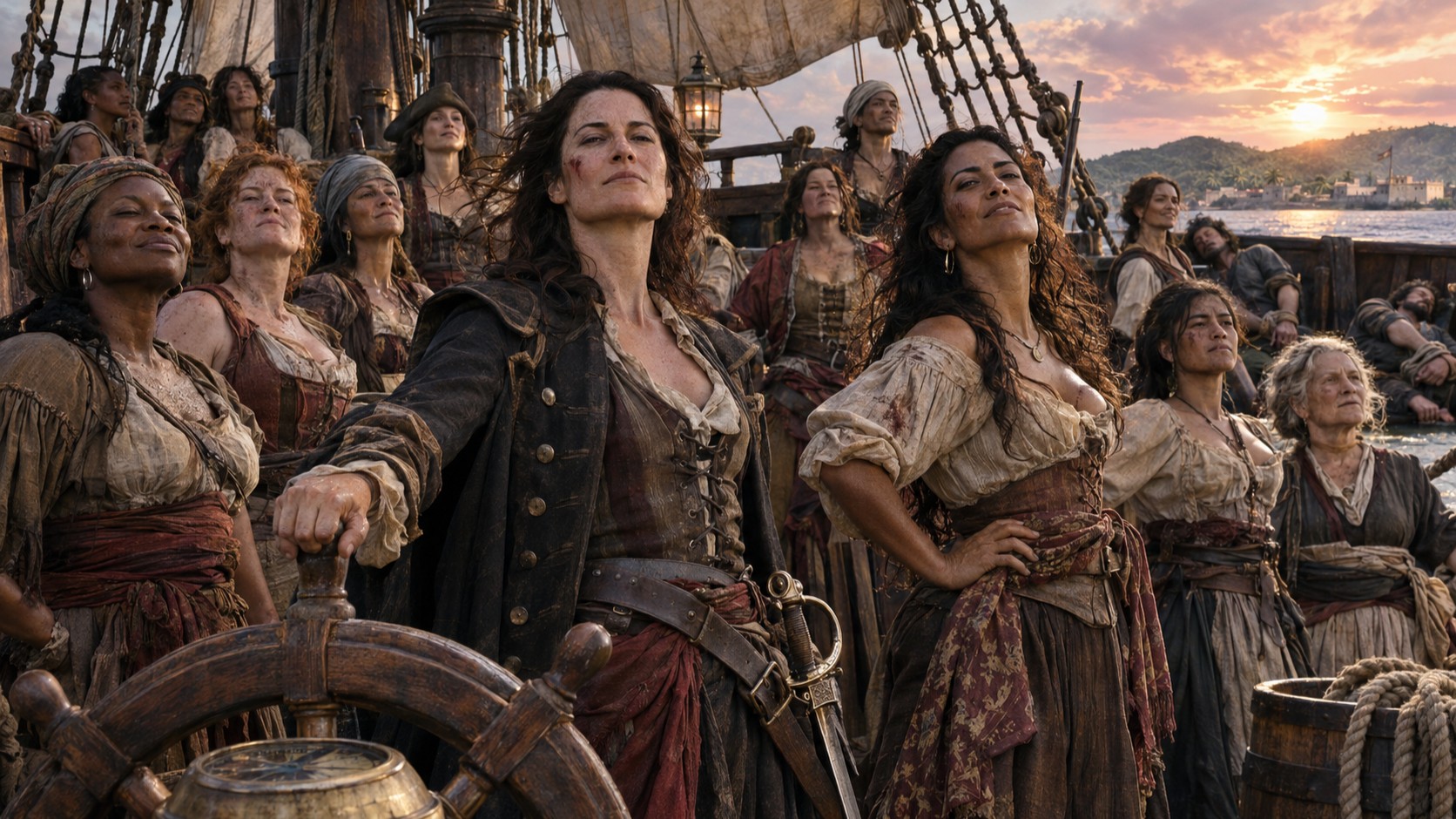
Port Royal, Jamaica — May 1692
An account from the final weeks before the great earthquake.
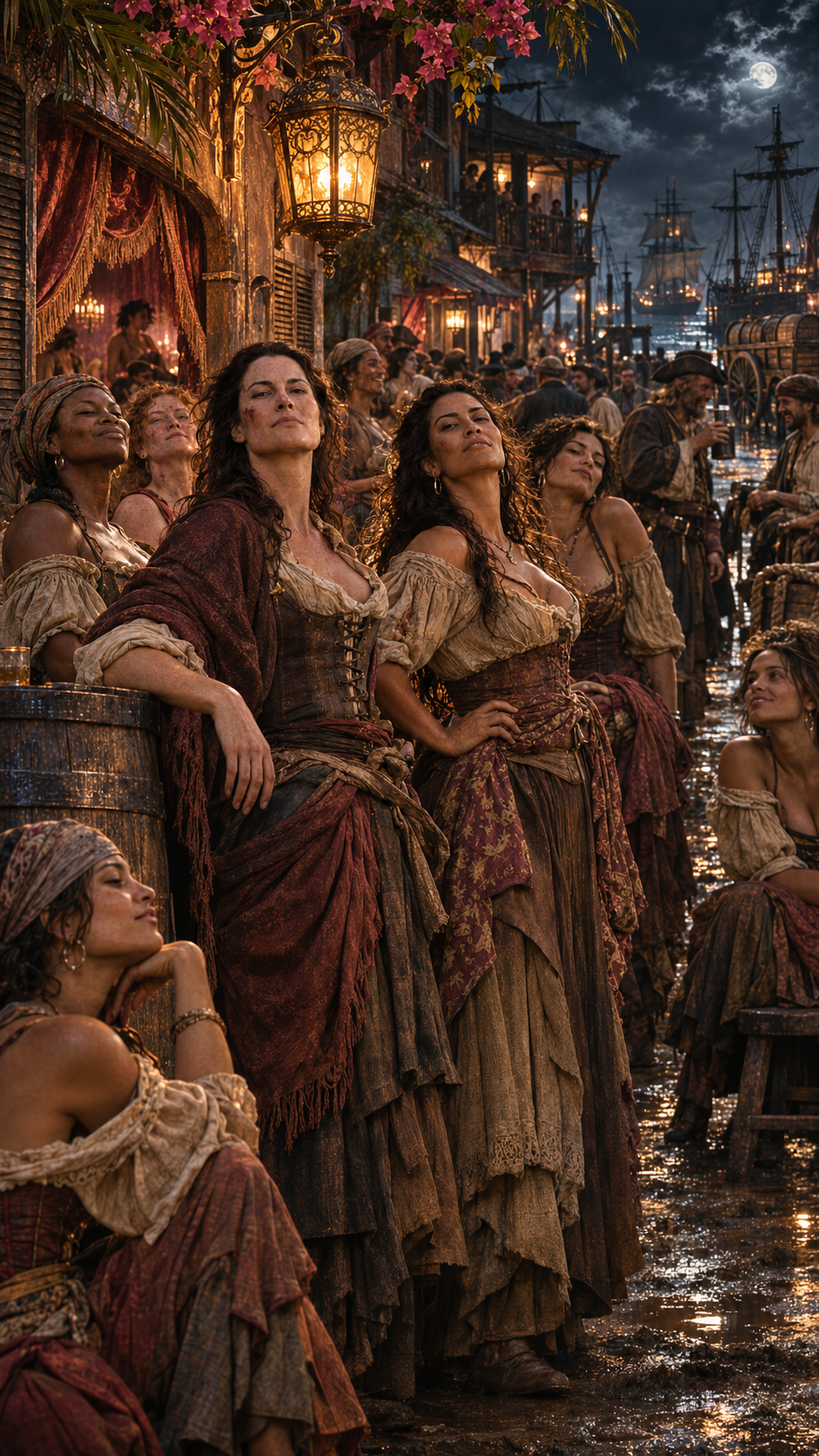
The Cargo Nobody Declared
Captain Nathaniel Graves had been at sea for four days when he noticed something peculiar about his crew.
They were happy.
Not merely content, but extraordinarily cheerful.
Men who ordinarily cursed the heat, the food, and the captain himself were laughing, singing, and exchanging knowing glances.
Worse, they were disappearing below deck at every opportunity.
On the fifth morning, Graves decided to investigate.
He had barely descended the companionway when a cabin door opened.
A sailor emerged, adjusting his trousers.
"She's all yours, Tom!" he called cheerfully to another man waiting outside. "Who's next after him?"
The two men laughed.
Graves stopped.
"WHAT THE DEVIL IS GOING ON HERE?"
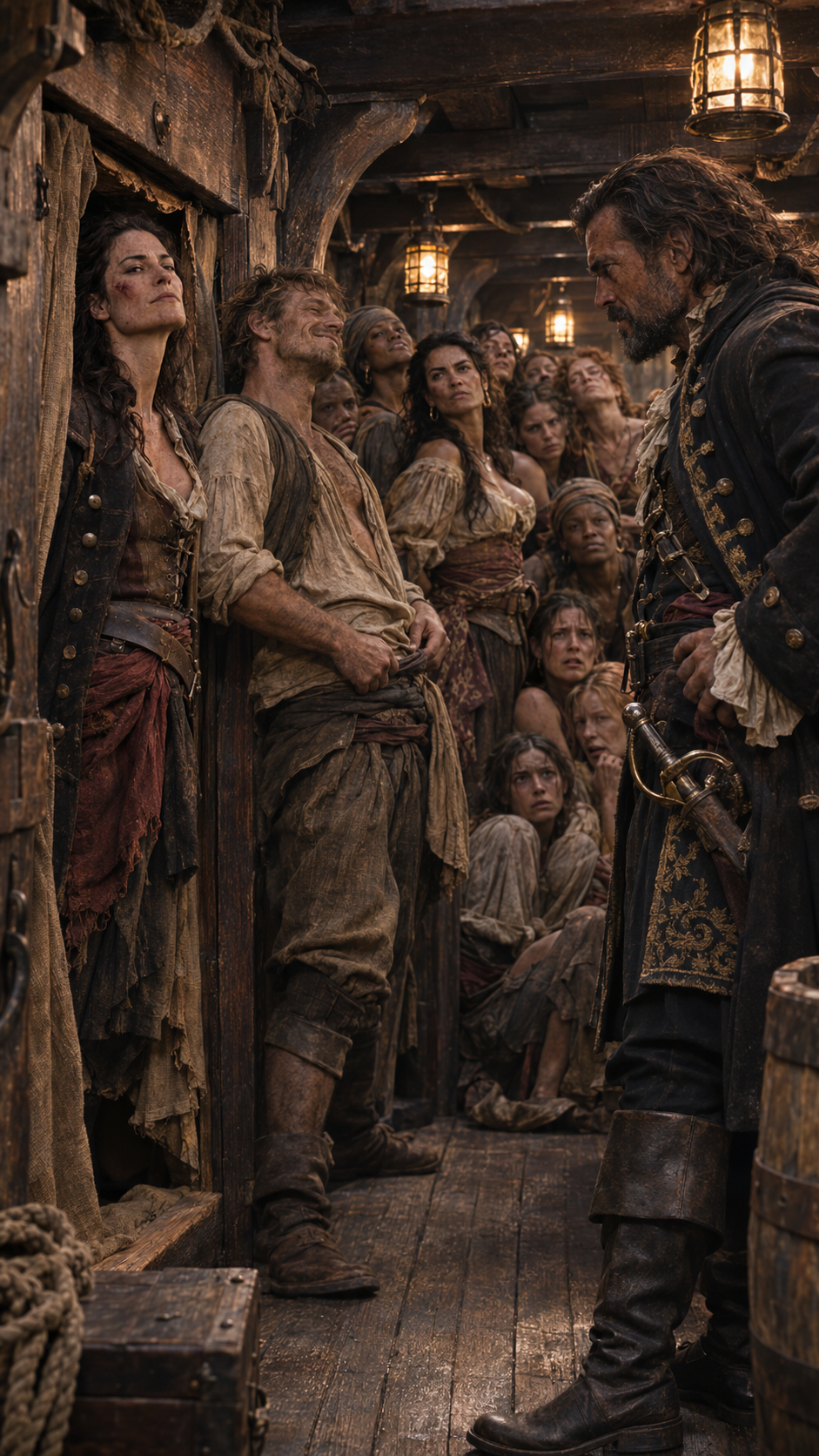
The sailor froze.
Behind him, a woman appeared in the doorway.
She was perhaps thirty-eight, with dark hair hanging loosely around her shoulders. Her blouse was torn at the collar, and there was a fading bruise along her cheek.
She looked at the captain.
Then at the sailor.
Then back at the captain.
"Well," she said quietly. "Perhaps now someone will explain why we're here."
Her name was Eleanor Vane.
And she was one of twenty women his crew had abducted from the Golden Lantern, a notorious brothel near the Port Royal waterfront.
They had been dragged from their rooms, threatened with knives, and brought aboard under cover of darkness.
Some had fought.
All had resisted.
But twenty unarmed women against a gang of drunken, heavily armed pirates had stood little chance.
Now, four days out of Jamaica, they were locked below deck whenever the sailors had no immediate use for them.
Graves listened to the explanation with growing fury.
Not because of what had happened to the women.
Because his crew had acted without permission.
The Captain Takes His Share
The first mate expected punishment.
Instead, Graves looked thoughtfully at Eleanor.
"Twenty, you say?"
"Twenty, Captain."
"And you've been keeping them down here?"
"Aye, sir."
Graves considered the matter.
The ship was already at sea. Returning to Jamaica would waste valuable time, and the women might fetch a handsome price at another port.
He turned to Eleanor.
"Come with me."
She did not move.
A sailor shoved her forward.
Graves led her to his cabin.
An hour later, Eleanor emerged with a fresh bruise on her wrist and an expression that made even the first mate uncomfortable.
Graves appeared in the doorway behind her, tightening his belt.
"See that they're fed," he ordered. "And keep them quiet. I won't have them interfering with the ship."
The first mate grinned.
"Aye, Captain."
Eleanor walked silently back below deck.
There, Isabella de la Cruz, a thirty-one-year-old Spanish-Jamaican woman who had worked beside her at the Golden Lantern for six years, was waiting.
"Well?" Isabella asked.
Eleanor sat down.
"He knows."
"And?"
"He doesn't care."
Isabella closed her eyes.
For a moment, neither spoke.
Then Eleanor leaned closer.
"We're going to kill them."
Isabella looked at her.
"All of them?"
Eleanor's expression didn't change.
"Every man who put his hands on us."
Twenty Women Who Knew How to Survive
The pirates had made one terrible mistake.
They believed the women were helpless because they had been prostitutes.
They knew nothing of the lives those women had survived.
Eleanor had endured twelve years at the Golden Lantern. She had learned to recognize danger by the sound of footsteps outside a door. She knew how to remain calm while frightened, how to conceal anger, and how to persuade a violent man that he was entirely in control.
Isabella had once broken a sailor's nose with a chamber pot.
Margaret Finch, forty-three, had worked in Port Royal longer than any of them. She knew which medicines made men sleep and which could make them dangerously ill.
Young Catherine Bell, twenty-four, could read, write, and keep accounts better than the ship's quartermaster.
And Ruth Morgan, a broad-shouldered Welshwoman of thirty-five, had grown up aboard her father's coastal trading vessel.
She knew how to handle a ship.
Not a single pirate had bothered to ask.
For the next three days, the women endured what they could not yet prevent.
They stopped openly resisting.
They listened.
They watched.
And when the sailors mistook exhausted obedience for acceptance, they learned everything they needed to know.
Where the weapons were kept.
When the watches changed.
Which men slept deeply.
Which men were cruelest.
Which men had stood aside when the women had been dragged aboard.
Eleanor kept a list in her head.
Twenty women.
Thirty-four pirates.
The odds were not favorable.
But they were improving.
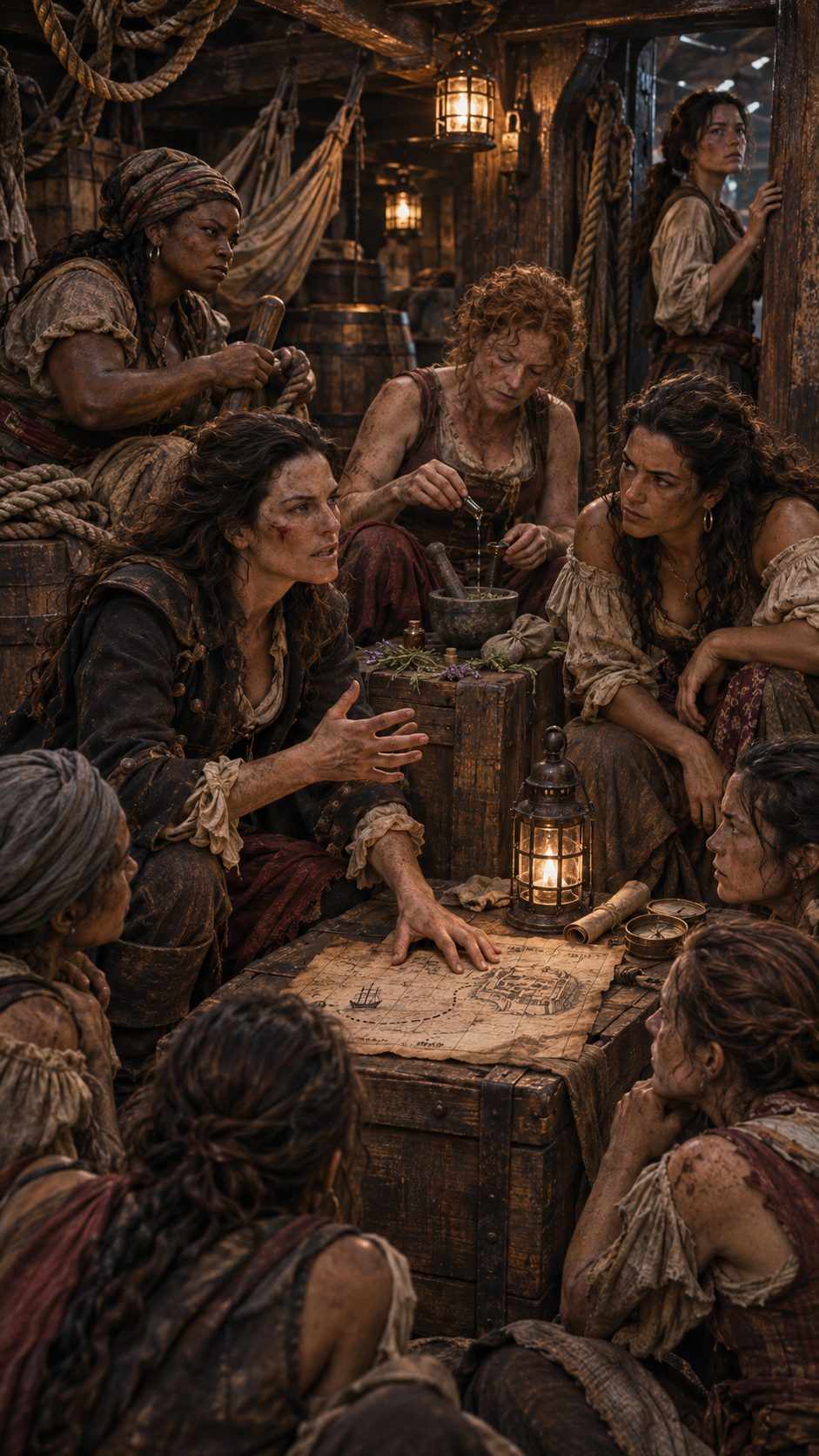
The Last Night of Captain Graves
On the eighth evening, the captain ordered a celebration.
They had sighted no naval patrols, the weather remained favorable, and the crew had begun opening the better barrels of rum.
The women were instructed to serve.
They obeyed.
Margaret had already prepared the sleeping draught from supplies she had quietly gathered. She mixed it into several pitchers while the women moved between the sailors, filling cups and offering smiles that never reached their eyes.
It was the first time in eight days the pirates had seen so many of them smiling.
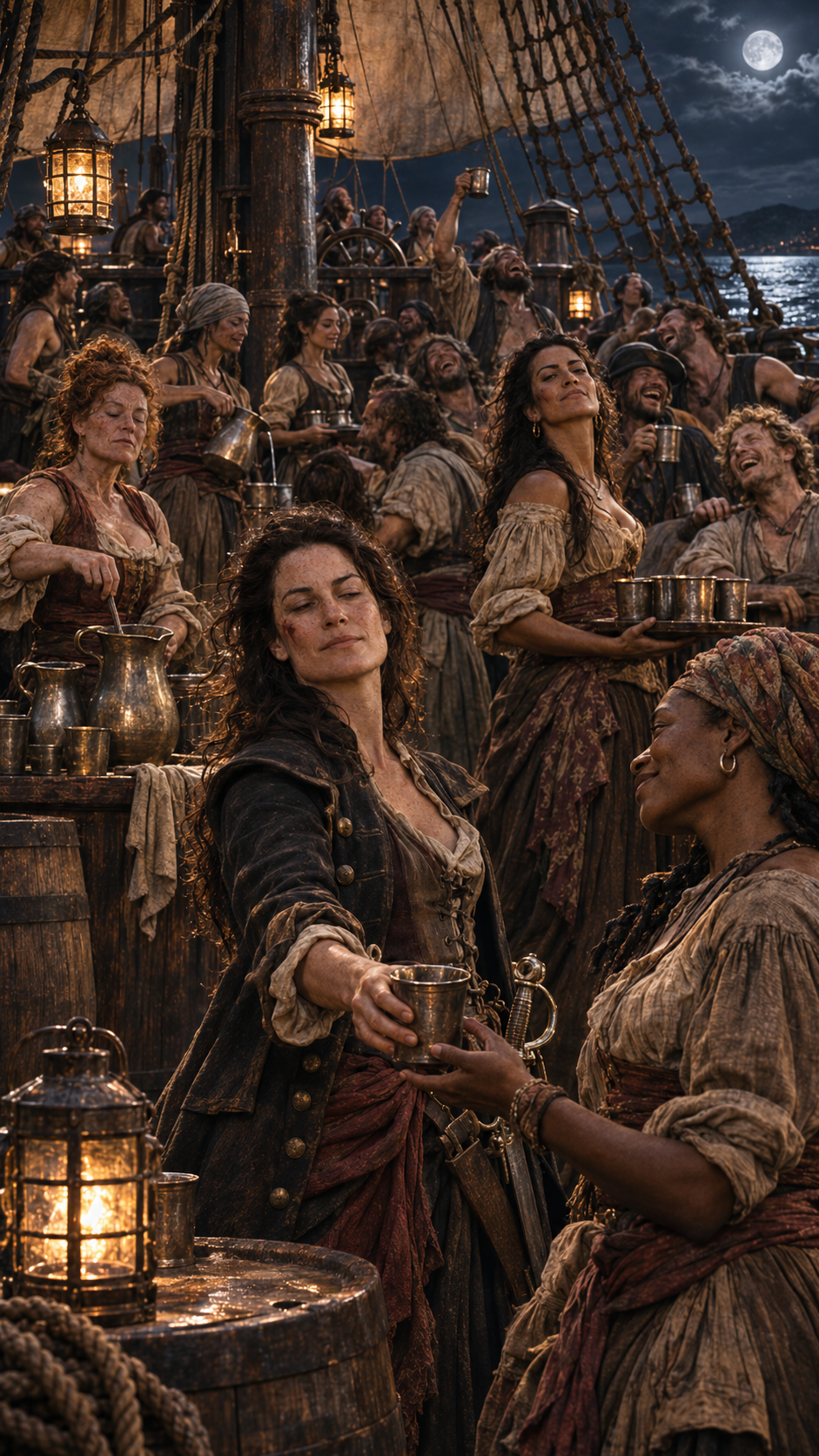
They mistook it for gratitude.
By midnight, men were falling asleep at their tables.
A few were already unconscious in their hammocks.
The first mate collapsed beside the galley.
Two sailors who had been particularly brutal were found in a passageway, sprawled across each other.
Eleanor stood over them.
"These two," she said.
Isabella understood.
The women dragged them onto the deck.
The sea was black beneath the moonlight.
One of the men briefly opened his eyes before disappearing over the rail.
There was a splash.
Then another.
By the time Eleanor reached the captain's cabin, the women had already taken control of the lower deck.
She entered carrying a pistol.
Graves was half asleep.
"What is it?"
"Get up."
He blinked at the weapon.
Then he laughed.
"You?"
"Yes. Me."
"You stupid woman. Do you think you can—"
Eleanor struck him across the face with the pistol.
He fell back against the bed.
"You remember me now, Captain?"
Graves stared at her.
She stepped closer.
"You knew what your men were doing. You could have stopped them."
He tried to sit up.
"You don't understand how things work aboard a ship."
"I understand perfectly."
She pulled his own sword from its scabbard.
"That's why you're no longer in command."
No Mercy for the Wolves
By dawn, The Black Providence belonged to the women.
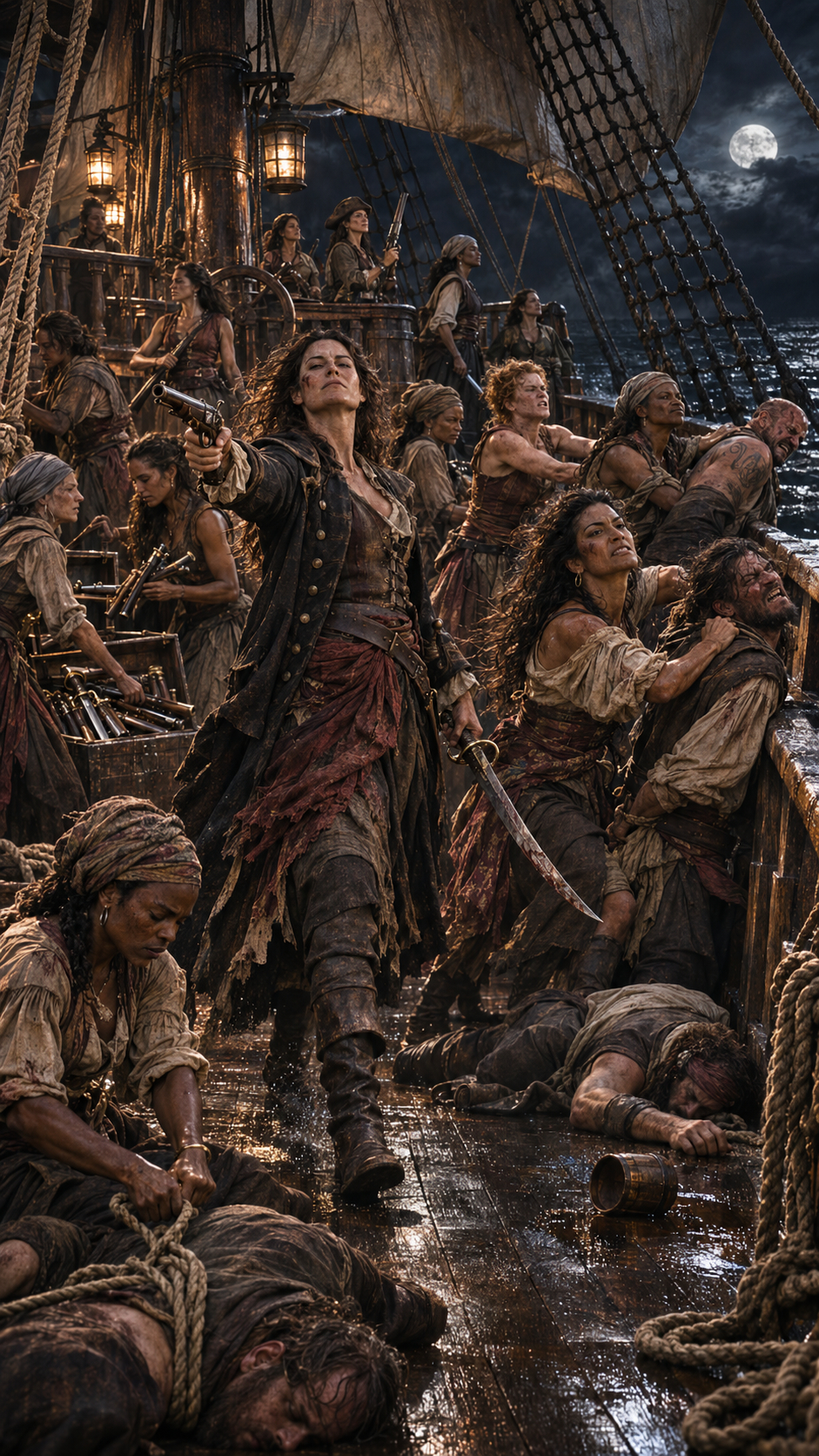
Seventeen pirates were already dead or gone overboard.
The others were bound and brought onto the main deck.
Some begged.
Some cursed.
One offered Eleanor half the treasure aboard.
Another swore he had never harmed a woman in his life.
Isabella laughed bitterly.
"We remember you."
Eleanor walked along the line of prisoners.
Every woman aboard had been given a voice in deciding their fate.
Some prisoners had taken part in the abduction. Others had stood guard. Several had committed acts the women would remember for the rest of their lives.
The women showed no mercy to those responsible.
But there were three men among the prisoners whom none of the women accused of violence.
One was a young cabin boy who had repeatedly brought them extra water when the others weren't looking.
Another was the carpenter.
The third was an elderly navigator who had protested their treatment and been beaten for it.
Those three were spared.
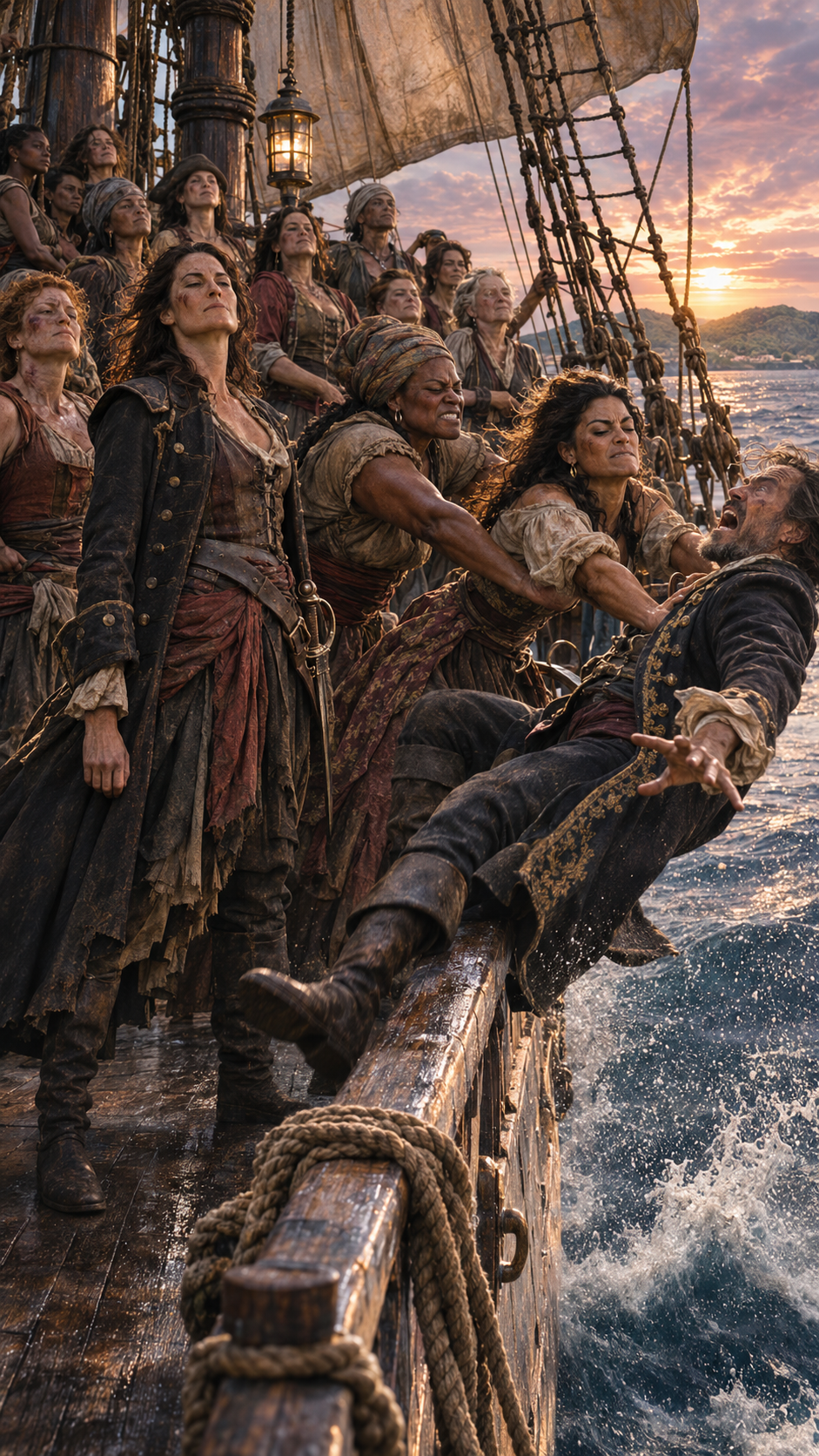
The rest were taken to the rail.
Some fought.
Some screamed.
The women pushed them into the sea, one after another.
Captain Graves was last.
His face was pale.
"You're murderers," he whispered.
Eleanor looked at him for a long moment.
"No, Nathaniel. We were women you thought nobody would miss."
She stepped aside.
Isabella and Ruth took him by the arms.
He struggled.
"YOU CAN'T DO THIS! I'M THE CAPTAIN!"
Eleanor looked toward the rising sun.
"Not anymore."
And Captain Nathaniel Graves went over the side of his own ship.
A Ship Without Masters
The women stood in silence after the final splash.
Some were trembling.
One began to cry.
Another laughed and then broke into tears.
Nobody cheered.
There was nothing simple about what they had done.
But for the first time since leaving Port Royal, no man aboard could order them into a cabin.
Nobody could lock their doors.
Nobody could sell them.
Eleanor took off Graves's coat.
She had worn it during the takeover, but now she folded it carefully and placed it on the deck.
"We need a captain," Ruth said.
"We need a navigator," Catherine added.
"We need food, water, and somewhere to go," Margaret observed.
Isabella looked at Eleanor.
"And we need to decide what we are."
Eleanor considered the women around her.
They were bruised, exhausted, frightened, and angry.
They were also alive.
"We're free," she said.
Ruth shook her head.
"Freedom won't keep this ship afloat."
"Then you'd better teach us to sail her."
It was the first genuine laugh Eleanor had heard from any of them in eight days.
The three spared sailors were brought on deck.
They would help teach the women the work of running the vessel. For the time being, they remained under guard.
No one aboard was entirely trusting.
Not yet.
The Twenty
The women renamed the vessel The Twenty.
They elected Eleanor captain and Isabella her second.
Ruth took charge of the sailing crew. Catherine assumed responsibility for the ship's stores and treasure. Margaret became their surgeon, despite insisting she knew considerably more about keeping drunkards alive than treating cannon wounds.
The first weeks were difficult.
Sails tore.
A storm nearly destroyed the foremast.
They exhausted half their drinking water before understanding how carefully it needed to be rationed.
More than once, they argued bitterly about where they should go.
But they learned.
And when they encountered a small merchant vessel, the sight of twenty armed women on deck was enough to persuade its captain that surrendering supplies was preferable to testing their abilities.
They paid him in silver taken from Graves's chest.
Eleanor would later remark that it was the first honest transaction conducted aboard the ship.
The Day the Earth Swallowed Port Royal
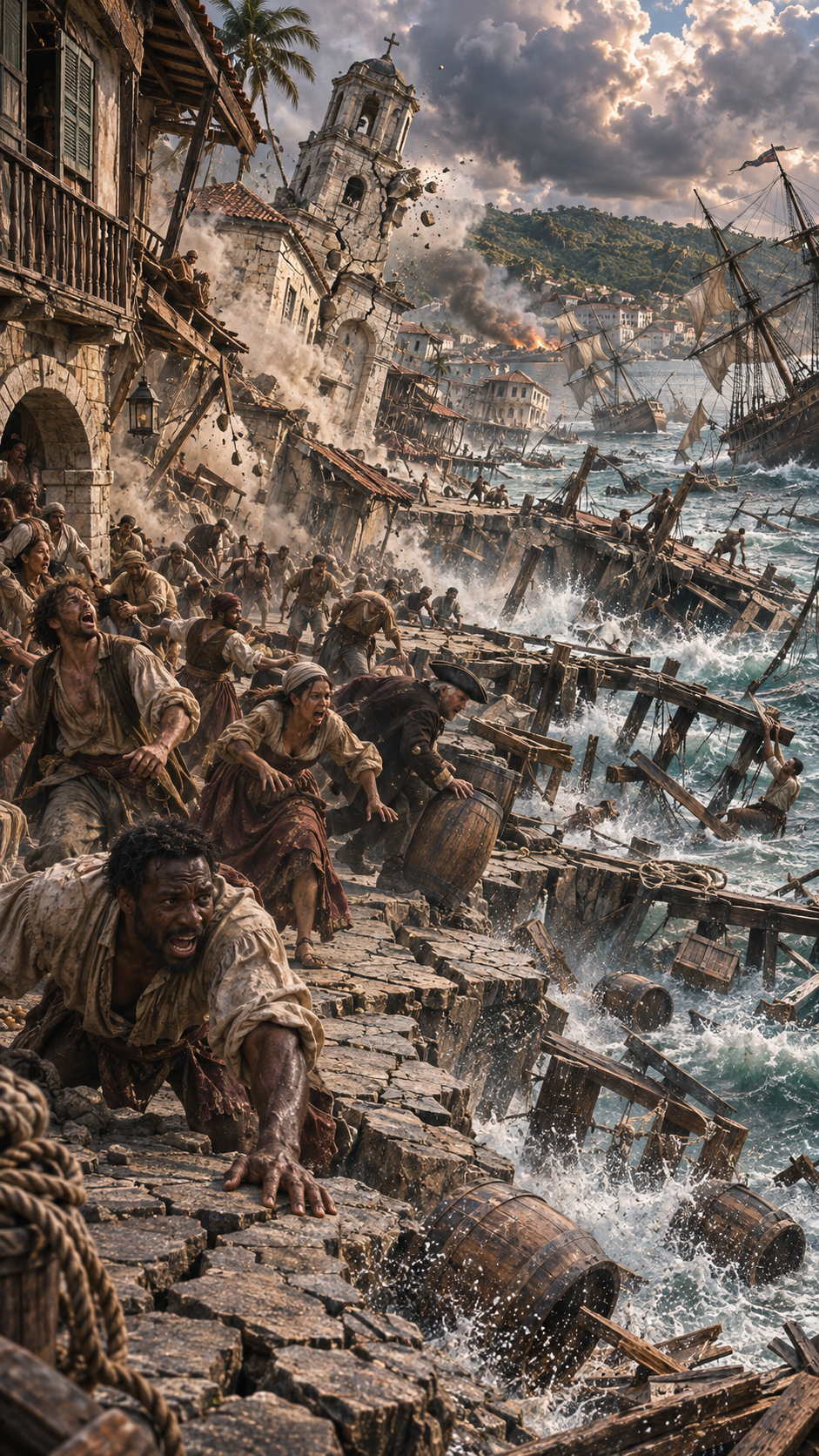
On June 7, 1692, the earth shook beneath Port Royal.
Buildings collapsed.
Streets broke apart.
A great portion of the harbor district disappeared beneath the sea.
The Golden Lantern, where the women had spent years enduring the appetites and violence of men, was destroyed.
So were countless homes, shops, warehouses, and churches.
The women did not learn of the disaster until weeks later, when they encountered a ship carrying survivors from Jamaica.
Eleanor read the account twice.
Then she handed it to Isabella.
"Port Royal is gone."
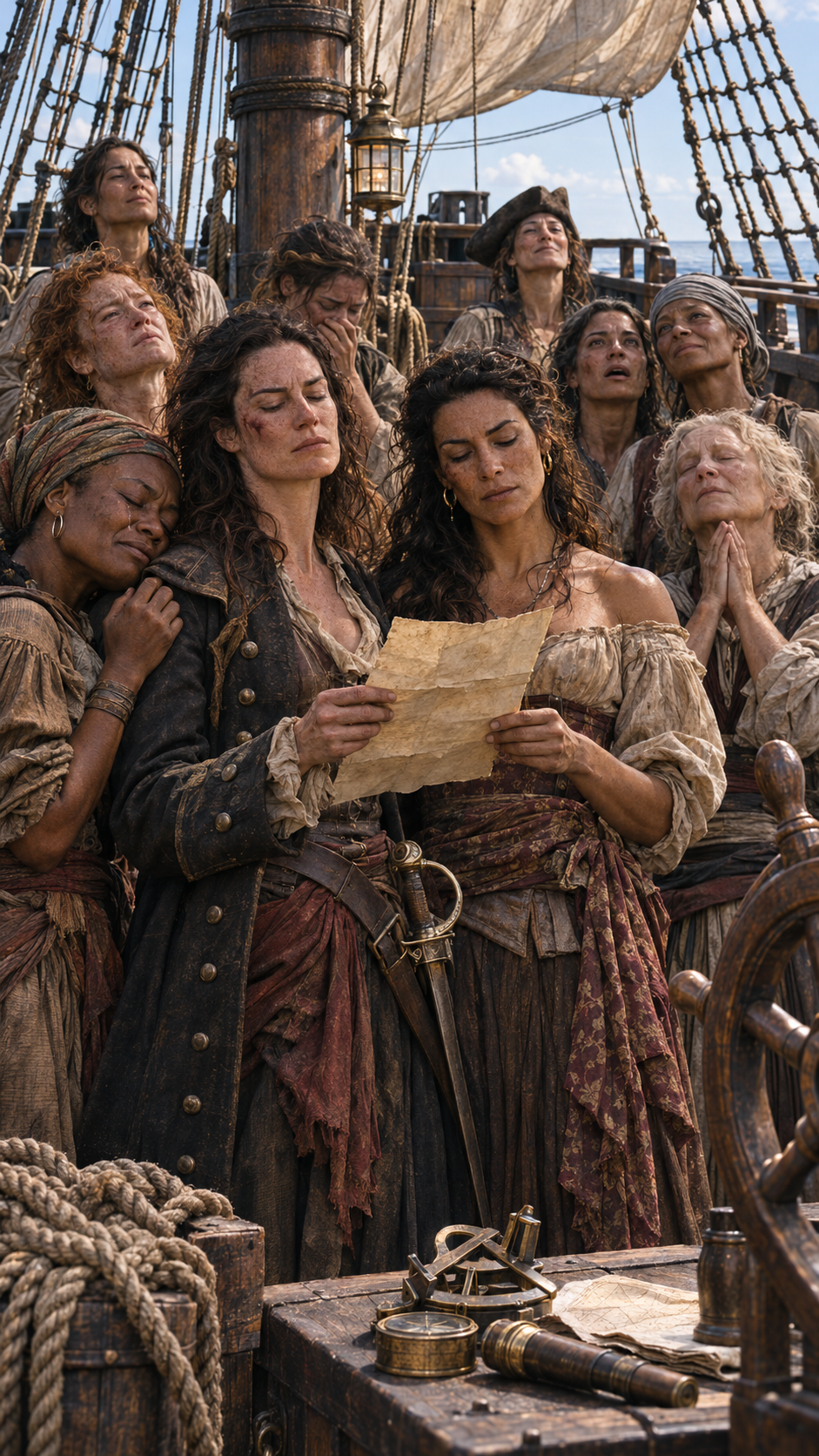
Isabella stared at the paper.
"The Lantern?"
"Gone."
"The waterfront?"
"Gone."
For a long time, the women sat without speaking.
They thought of the other women who had remained behind. Friends, rivals, girls they had tried to protect. Women who might have survived, and women they would never see again.
Finally Margaret spoke.
"Those bastards dragged us away from there."
"Yes," Eleanor said.
"They meant to ruin our lives."
"Yes."
"And instead..."
Eleanor looked across the deck.
Twenty women.
A ship.
A horizon without walls.
"Instead," she said, "we're still here."
The Women Who Came Back
The story might have ended there.
But according to a tale that later circulated through Caribbean taverns, The Twenty eventually found a secluded anchorage among the islands.
The women made it their base.
They traded when they could.
They raided when they must.
And they developed one particular habit that gave them a reputation unlike any other pirate crew.
Whenever they encountered a vessel carrying women against their will, they intervened.
Sometimes they negotiated.
Sometimes they paid.
Sometimes they simply boarded with pistols drawn and invited the women to leave.
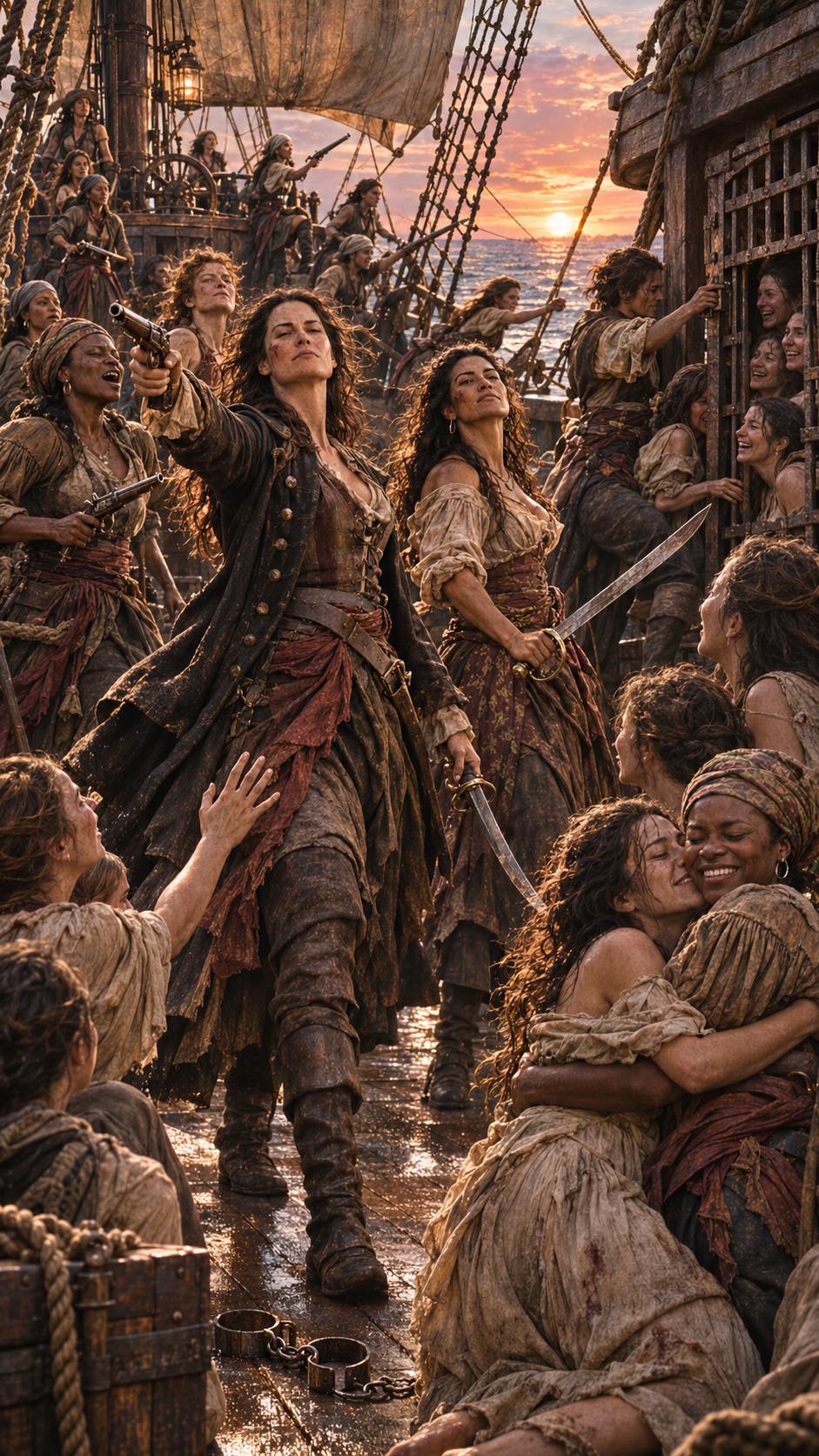
The men aboard those ships learned very quickly that Captain Eleanor Vane did not negotiate twice.
Over time, their refuge became home to more than twenty women.
There were former servants, escaped captives, widows, and women who had simply decided they had endured enough.
Some stayed.
Others were given passage elsewhere.
No woman was compelled to remain.
And although Eleanor and Isabella never claimed to be saints, there was one rule aboard The Twenty that neither would compromise:
No woman would ever again be treated as cargo.
Years later, the legend claimed, a young sailor asked an old Caribbean merchant whether the stories about the women pirates were true.
"Did they really throw an entire crew into the sea?"
The merchant took a long drink.
"Most of them."
"And the captain?"
"Him too."
The young sailor looked astonished.
"But why would twenty women do such a thing?"
The merchant regarded him thoughtfully.
"Son, if you have to ask that question, you'd best never meet them."
Historical Note
Port Royal, Jamaica, was one of the Caribbean's most infamous ports during the seventeenth century, known for its wealth, privateers, drinking establishments, and prostitution. On June 7, 1692, a devastating earthquake and associated destruction caused much of the town to collapse, including portions that sank beneath the harbor.
The story of The Twenty, Captain Eleanor Vane, and Isabella de la Cruz is fictional. The characters and their rebellion are imagined against the real historical backdrop of Port Royal shortly before its destruction.
Writing one? Publish your story on the BudgetPixel blog.





 @crabmouse

 @CaylaCatz

 @EternaSky


 @Sealine

 @DavidP
Comments (1)
Sehr gut mit den Bildermein Freund, ich werde es in aller Ruhe lesen!!!
Sign in to join the conversation.