
The Andean Incident of 1911
 @germancowboy
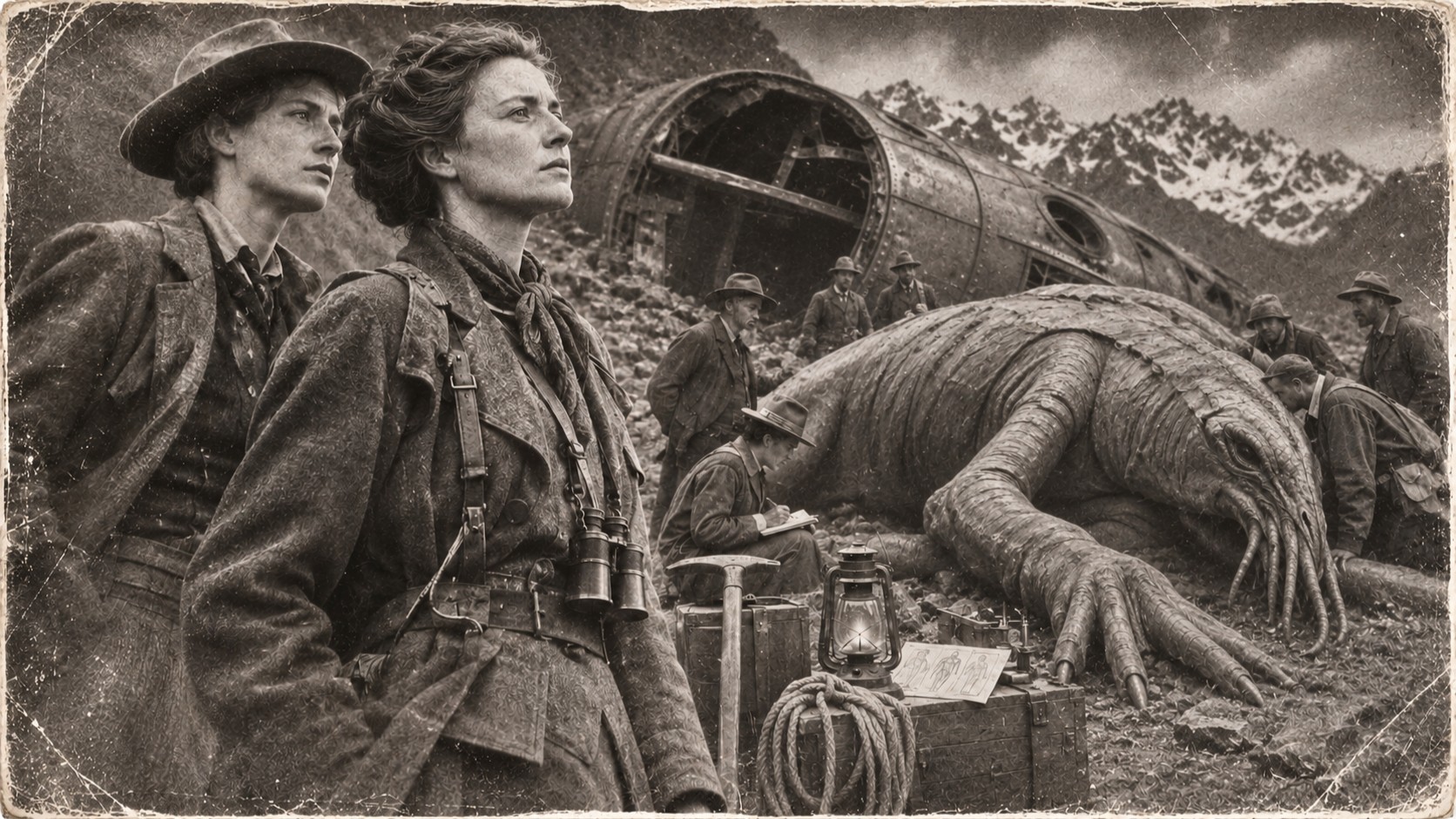
The Expedition That Never Returned
An extraordinary newspaper photograph, a secret mission to contact extraterrestrial intelligence, two women whose love remained hidden, and a disappearance that has never been explained.
On October 17, 1911, the Chilean newspaper El Mercurio de Santiago published a photograph that should have changed humanity's understanding of its place in the universe.
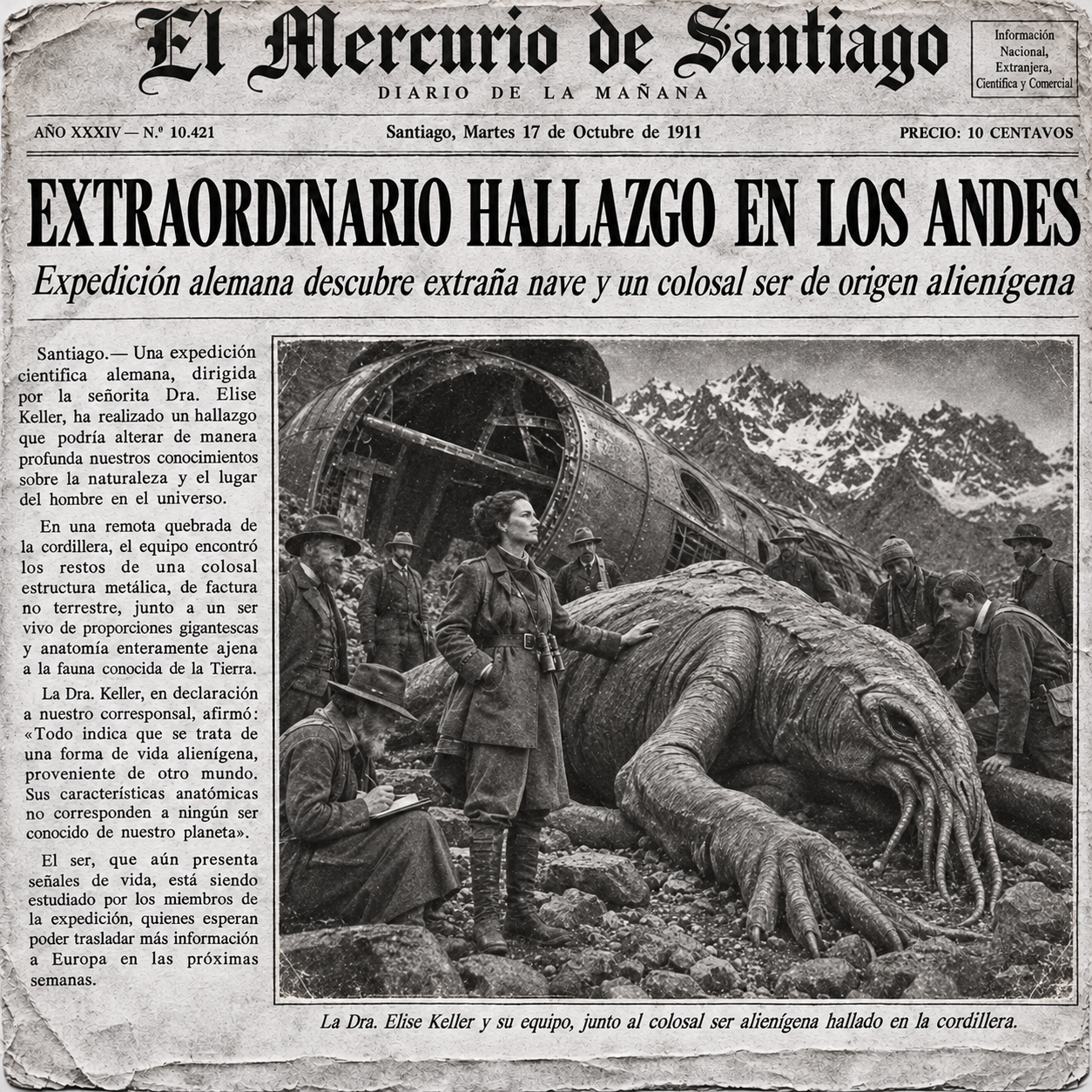
The photograph showed a German scientific expedition gathered around an enormous, apparently dying creature in a remote Andean valley. Behind them lay the wreckage of a gigantic metallic structure unlike any known aircraft. The accompanying article identified the expedition's leader as Dr. Elise Keller, a German scientist who believed the creature was extraterrestrial.
The newspaper reported that the animal was still showing signs of life when discovered. Its massive limbs, peculiar skeletal structure, and unfamiliar anatomy appeared to defy every known classification of terrestrial wildlife.
For several days, the discovery attracted considerable attention.
Then the story disappeared from the newspapers.
So, apparently, did the expedition.
The Woman Behind the Expedition
Dr. Elise Keller was born in Freiburg, Germany, in 1869. By the beginning of the twentieth century, she had established herself as an accomplished geologist, experienced mountaineer, and unconventional scientific investigator.
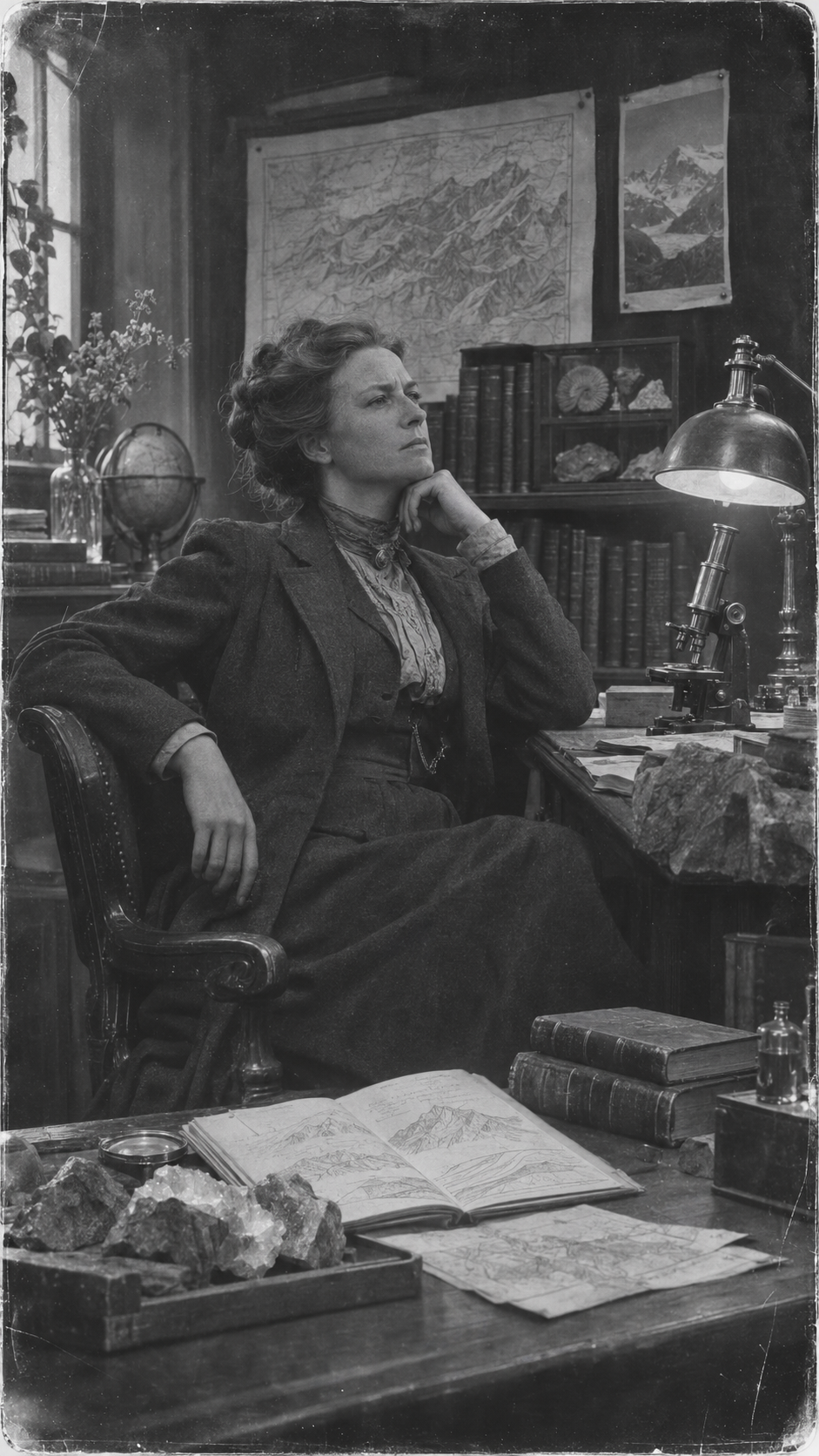
Her interests extended well beyond conventional geology. Keller had studied atmospheric electricity, unexplained luminous phenomena, unusual magnetic disturbances, and historical accounts of mysterious objects observed in the skies.
In 1908, she reportedly participated in a confidential investigation into unusual atmospheric observations in Central Europe. Although no official report has survived, correspondence discovered decades later suggests that Keller believed certain aerial phenomena might represent evidence of intelligent activity beyond Earth.
Such ideas were hardly fashionable in respectable scientific circles.
Nevertheless, they attracted the attention of an obscure group of European researchers and wealthy private sponsors who shared a remarkable conviction: extraterrestrial intelligence had already visited Earth, and contact might be established under the right circumstances.
In early 1911, Keller received an invitation to lead an expedition into the Chilean Andes.
Officially, the expedition would conduct geological and zoological research.
Unofficially, its objective may have been something considerably more extraordinary.
A Mission Nobody Was Supposed to Know About
According to documents attributed to the expedition's sponsors, a remote valley high in the Andes had been identified as a promising location for observing unusual aerial activity.
Reports collected from the region described mysterious lights, unexplained sounds, and occasional disturbances affecting compasses and other instruments.
The sponsors apparently believed these incidents were neither meteorological nor geological.
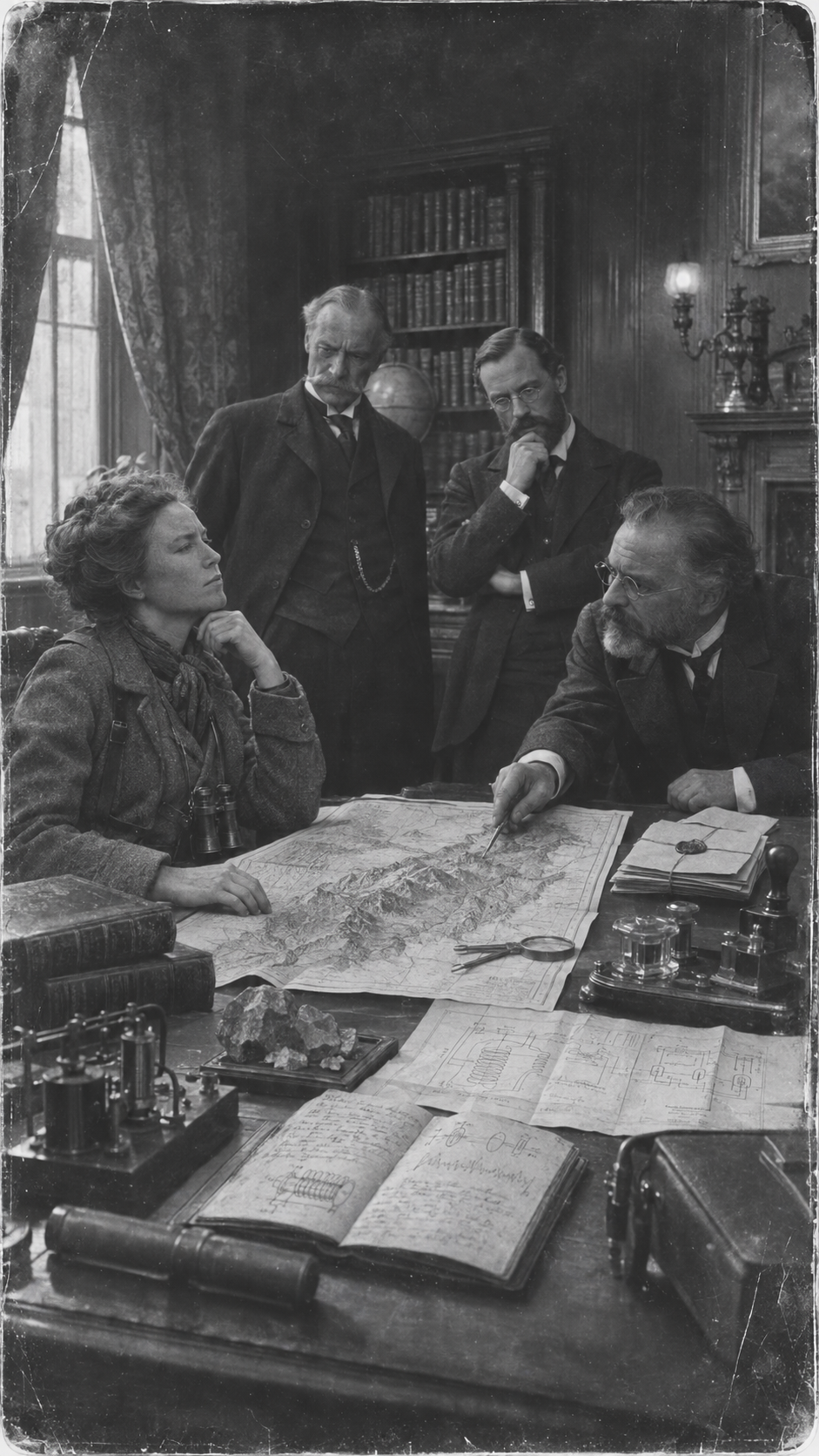
They suspected that the valley was being visited by beings from another world.
Keller's instructions allegedly included establishing a temporary observation station, conducting experiments with electrical signaling equipment, and attempting to attract the attention of whatever intelligence might be responsible.
Whether the expedition hoped to establish first contact or renew communication attempted by others remains uncertain.
What is remarkable is that the mission's true purpose appears to have been concealed from nearly everyone involved.
Including the woman closest to Keller.
Margarethe Vogel — The Explorer's Secret
Among the expedition members was a reserved young German man identified on the passenger records as Martin Vogel, aged thirty-four, employed as Keller's photographic assistant.
Martin was, in fact, Margarethe Vogel, Keller's longtime lover.
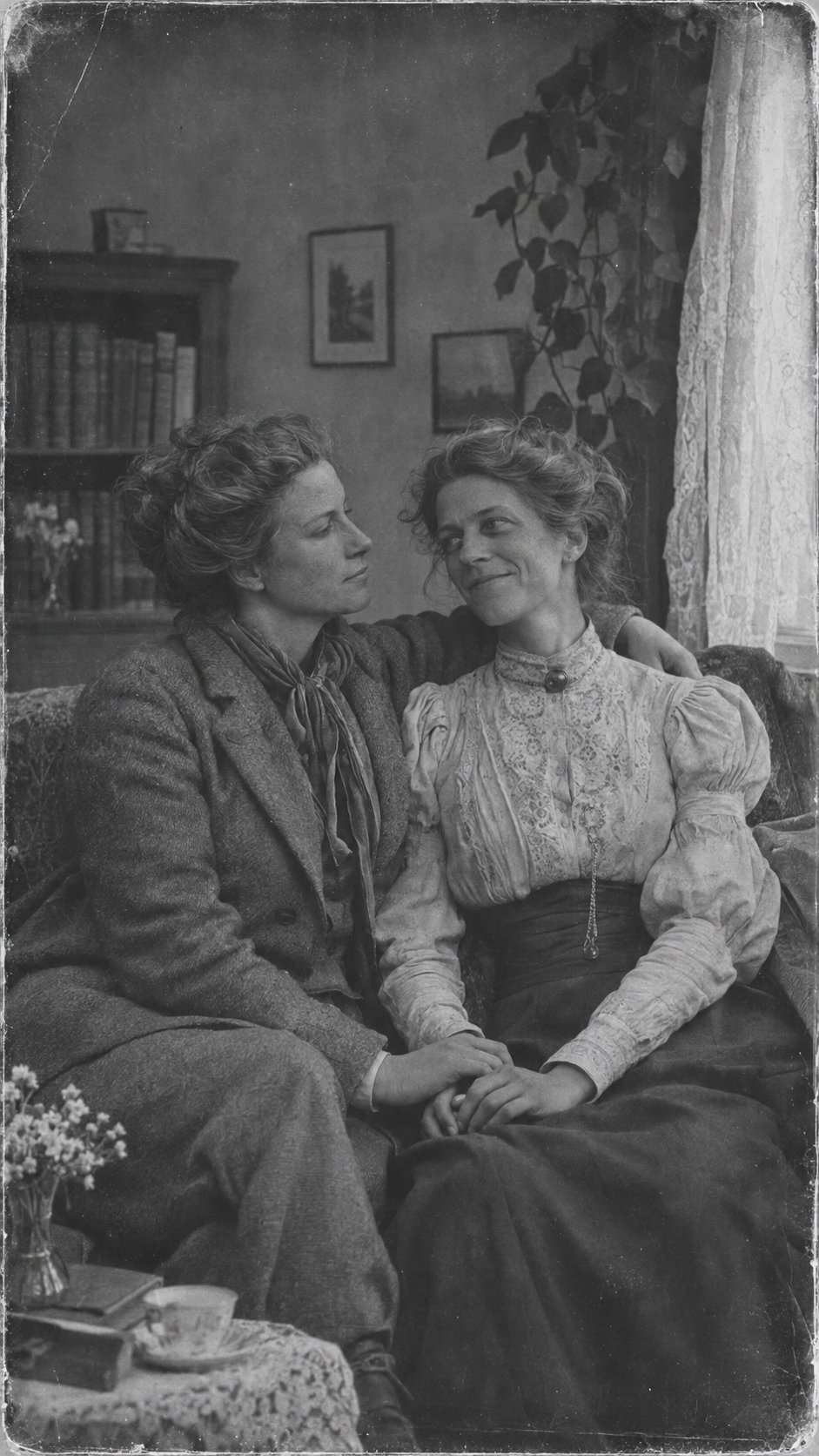
The women had reportedly met in Munich nearly a decade earlier. Margarethe, an enthusiastic amateur photographer with an interest in natural history, had become Keller's companion during several journeys across Europe.
Their friendship gradually developed into a romantic partnership, carefully concealed from a society that offered little tolerance for women openly loving other women.
Keller's professional reputation made discretion especially important.
When the Andean expedition was organized, Margarethe refused to remain behind. To avoid questions about two unmarried women traveling together and sharing accommodations, she cut her hair, adopted masculine clothing, and joined the expedition as Martin.
The disguise was sufficiently convincing that even the journalist accompanying the expedition apparently remained unaware of her identity.
For Margarethe, the journey offered another opportunity to share Elise's adventurous life.
She had no idea that her lover was leading a mission intended to establish contact with extraterrestrial beings.
Elise had apparently been sworn to secrecy.
That deception would later become one of the most troubling aspects of their story.
The Discovery in the Mountains
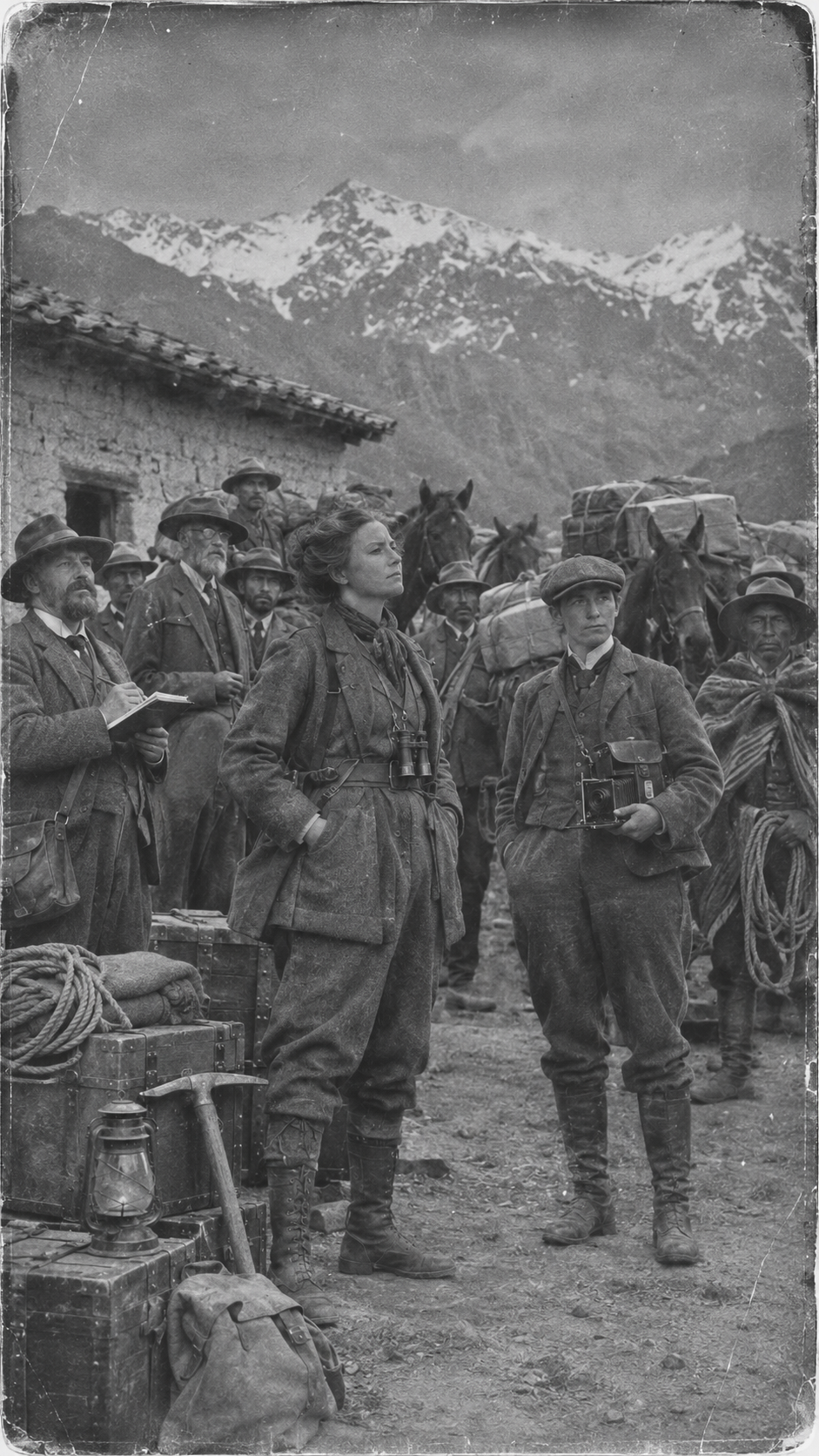
The expedition reached the remote valley in early October 1911.
What happened over the following days can only be reconstructed from photographs, newspaper accounts, and fragments of testimony attributed to surviving witnesses.
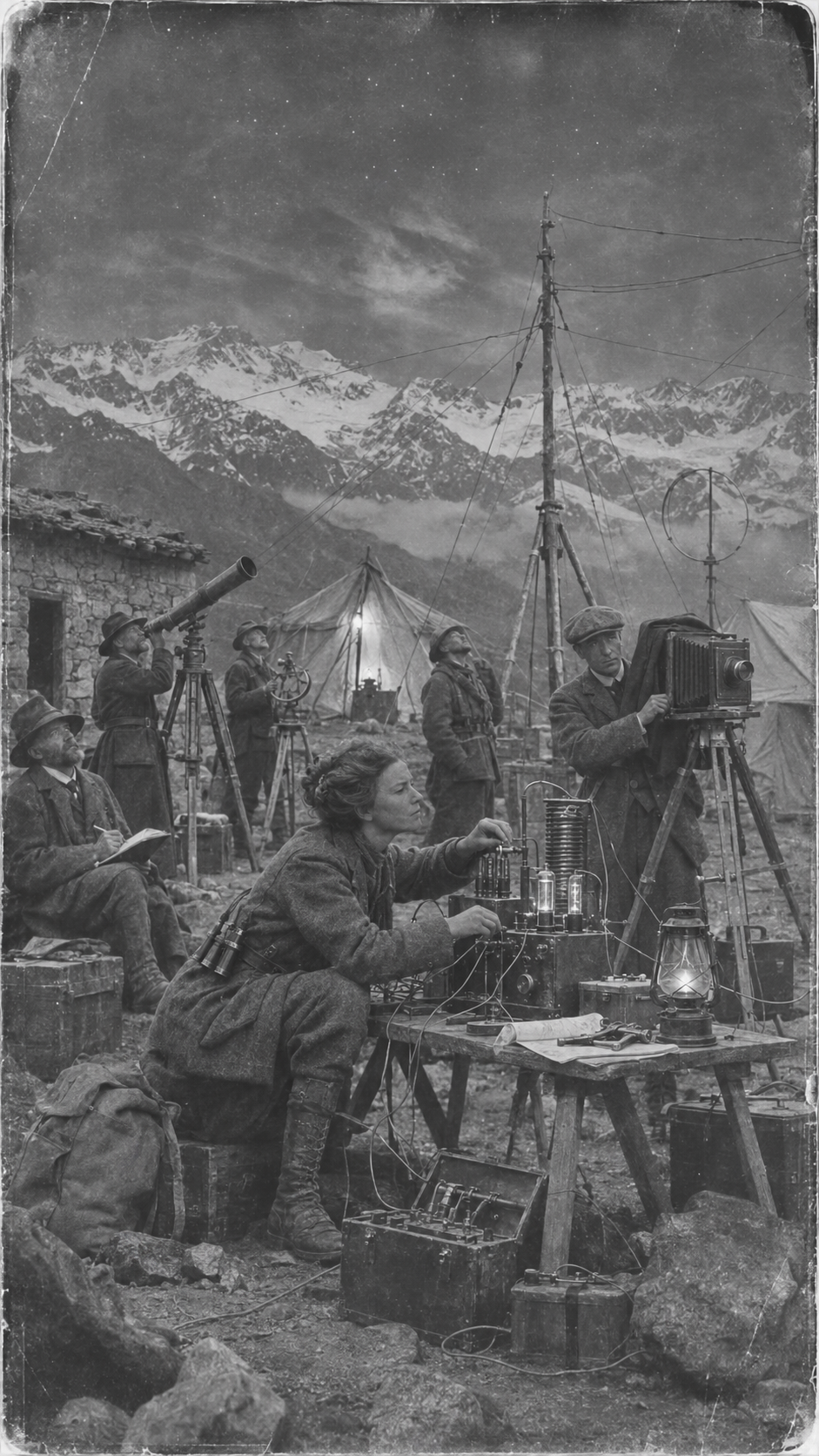
The team encountered the wreckage of an enormous metallic structure, partly embedded in a rocky mountainside.
Beside it lay a gigantic animal.
Its physical characteristics were unlike those of any known creature. Although some features resembled those of large terrestrial reptiles, its complex anatomy suggested something entirely different.
The animal was apparently gravely injured but still alive.
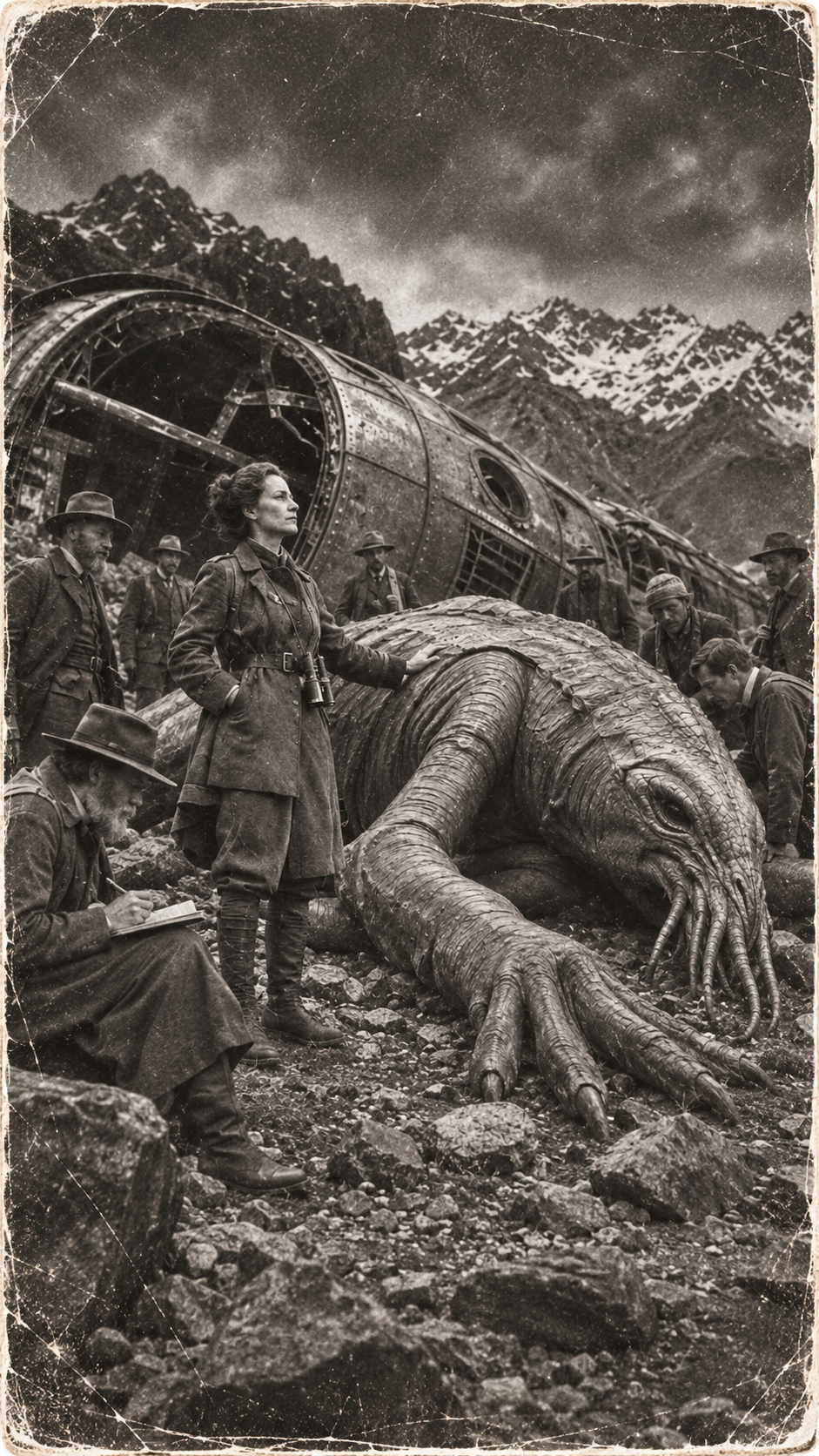
Keller reportedly believed that the structure was a crashed extraterrestrial vessel and that the animal had been transported aboard it.
This possibility introduced an unexpected complication.
The creature did not resemble the intelligent visitors Keller's sponsors had supposedly hoped to contact.
Had the expedition stumbled upon an accident involving an entirely different extraterrestrial species?
Or was the enormous animal itself the intended cargo of a vessel whose occupants had already departed?
Keller understood the significance of securing photographic evidence.
Several glass photographic plates were exposed, including the now-famous group photograph that would eventually appear in El Mercurio de Santiago.
But the expedition's situation was becoming increasingly uncertain.
The Last Farewell
On or about October 12, Keller ordered her photographic assistant, Martin Vogel, and the expedition's journalist to descend to the nearest settlement with the photographic plates, written observations, and several small samples collected near the wreckage.
The stated purpose was to secure the evidence and arrange additional supplies.
Martin reportedly protested.
What the journalist could not have known was that Martin was actually Margarethe Vogel, Keller's longtime lover. She had accompanied Elise to South America precisely because she wanted to remain at her side.
According to a later account attributed to the journalist, Keller and her young assistant exchanged several private words before Martin reluctantly prepared to depart.
Keller promised to follow within days.
There is no reliable record of what she said during their final conversation.
But the journalist later described Martin as unusually distressed throughout the descent. He apparently assumed that the young assistant was deeply concerned about the safety of his expedition leader.
He had no reason to suspect that he was witnessing the separation of two women who had secretly shared their lives for nearly a decade.
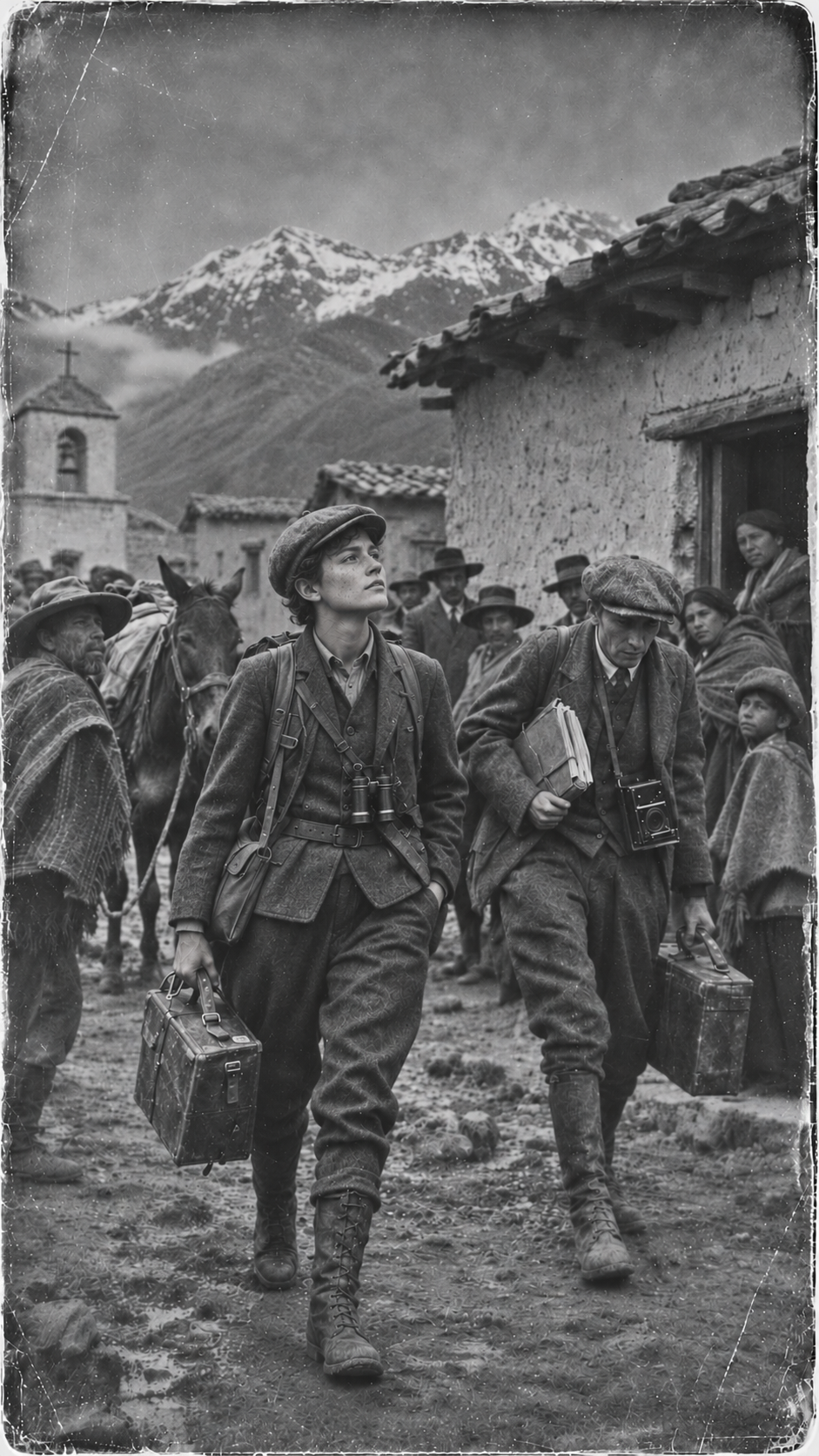
After reaching civilization, Martin and the journalist arranged for the photographs to be developed, and the story reached the Chilean press.
On October 17, the extraordinary discovery appeared in print.
Keller, however, had not returned.
The Empty Valley
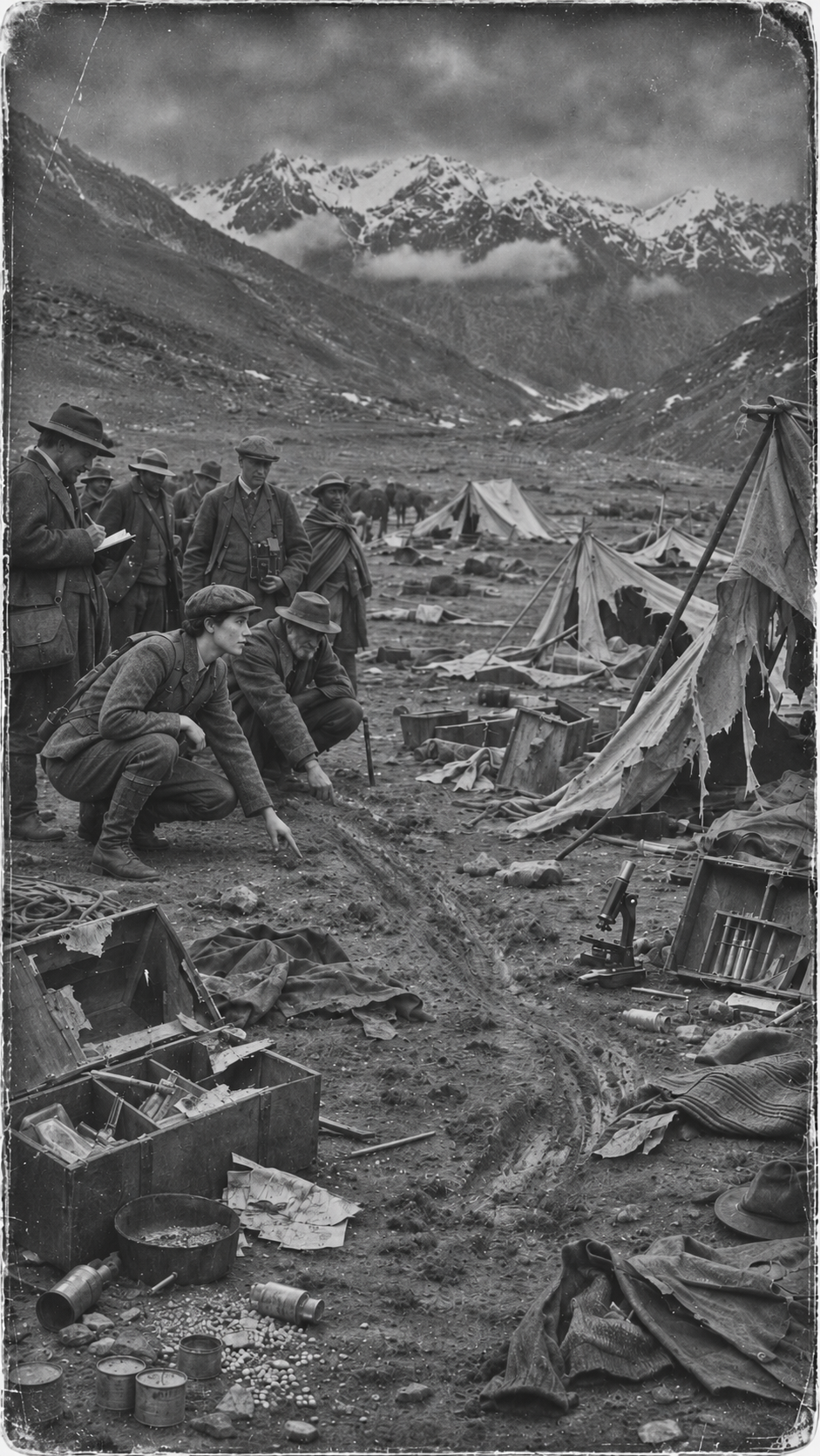
When Margarethe accompanied a small rescue party back into the mountains, they reportedly found a scene that none of them could explain.
The gigantic creature was gone.
The metallic wreckage had disappeared.
So had Dr. Elise Keller and the remaining expedition members.
Even the camp appeared to have been dismantled or removed.
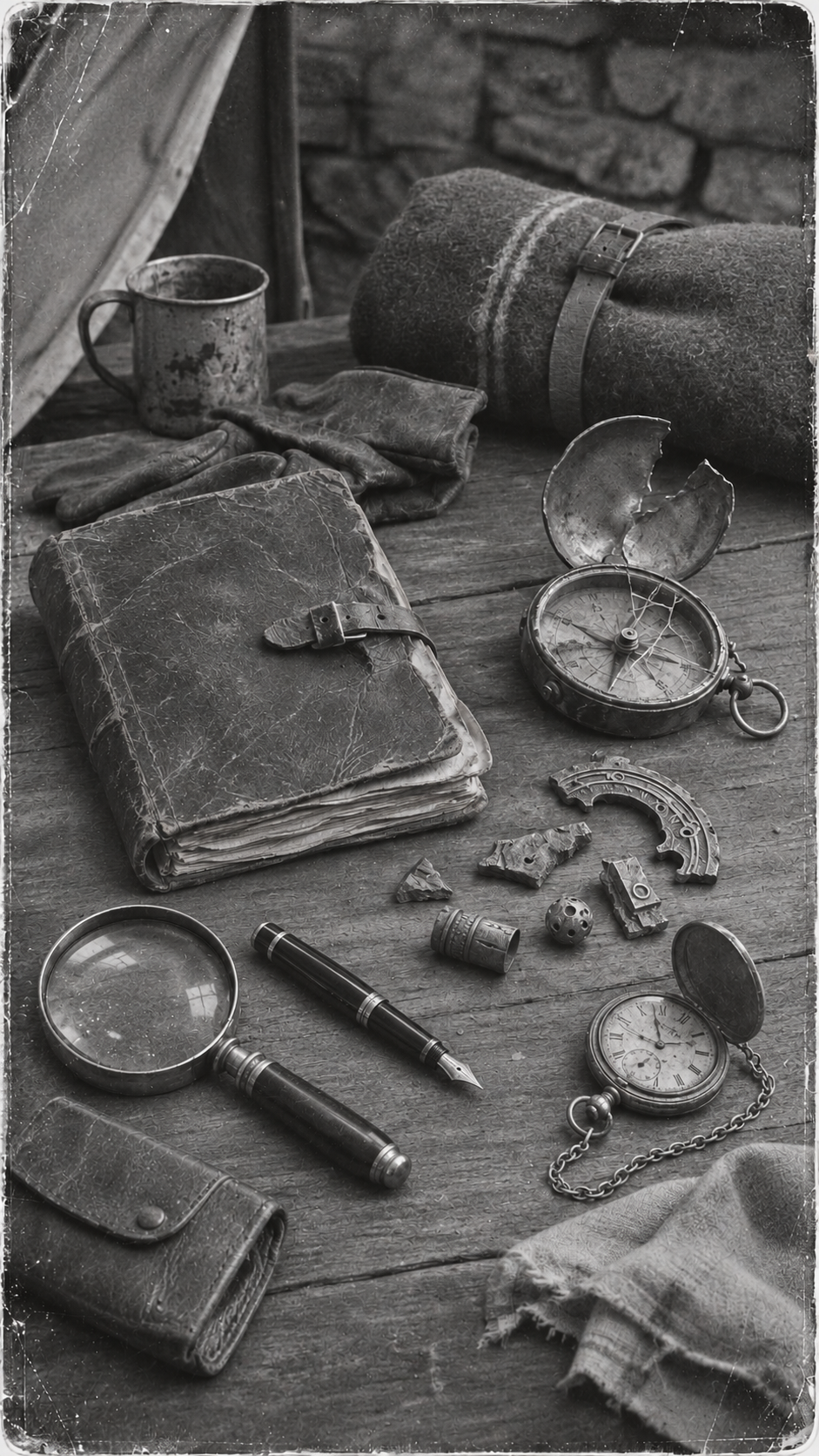
Only scattered objects reportedly remained: pieces of clothing, a damaged instrument case, several discarded provisions, and a small quantity of unfamiliar metallic material.
There were no bodies.
No evidence of a landslide sufficient to bury the wreckage.
No convincing indication that a party carrying heavy equipment had descended through the surrounding mountains.
Most disturbingly, the rescuers allegedly recovered part of Keller's field notebook.
The final surviving pages contained calculations related to atmospheric electricity and a series of observations concerning unusual lights above the valley.
One unfinished entry referred to an anticipated event during the night.
The rest of the notebook was missing.
Had the beings Keller sought finally arrived?
And if so, had they taken the expedition with them?
The Abduction Theory
For decades, the disappearance was attributed to a combination of severe mountain weather, dangerous terrain, and the possibility that the original newspaper report had been exaggerated.
Yet those explanations failed to account for the apparent removal of the enormous creature and the metallic wreckage.
A more disturbing possibility gradually emerged.
Perhaps Keller's experimental signals had succeeded.
Perhaps the crashed vessel had drawn the attention of its extraterrestrial owners.
And perhaps the returning visitors had removed not only the wreckage and the injured animal, but everyone who remained at the site.
One detail makes the theory particularly unsettling.
If Keller had been expecting contact, she may have understood the significance of certain observations in her final days.
Did she recognize signs that the visitors were approaching?
Was her decision to send Margarethe away an attempt to protect her?
Or had Keller been instructed to ensure that photographic evidence reached the outside world before an encounter that might leave no human witnesses?
No surviving document answers those questions.
What Happened to Margarethe Vogel?
For years, Margarethe reportedly attempted to discover what had happened to Elise.
She corresponded with scientific institutions, questioned former expedition sponsors, and sought access to documents concerning the mysterious organization that had financed the journey.
Her investigations were complicated by her assumed identity.
Official expedition records identified her as Martin Vogel, while her relationship with Keller remained an intensely guarded secret.
Nevertheless, fragments of correspondence suggest that she gradually uncovered evidence that the expedition had never been intended as an ordinary geological survey.
One letter, purportedly written by Margarethe in 1914, contains a particularly intriguing passage:
„Elise hat mir nicht alles erzählt. Ich verstehe heute, dass es Gründe für unsere Reise gab, über die sie nicht sprechen konnte. Aber inzwischen glaube ich, dass sie wusste, dass etwas geschehen würde. Und dass sie mich fortgeschickt hat, weil sie nicht wollte, dass ich dabei war, wenn es geschah.“
English translation:
"Elise did not tell me everything. I understand now that there were reasons for our journey which she could not explain. But I have begun to believe that she knew something would happen, and that she sent me away because she did not want me there when it did."
The authenticity of the letter has never been established.
Whether Margarethe's suspicions were justified, or whether Elise had simply been trying to protect the woman she loved, remains one of the unanswered questions surrounding the expedition.
Margarethe's subsequent fate is equally uncertain.
Some accounts place her in Switzerland during the First World War, continuing her efforts to locate Keller.
Others suggest that she returned to South America under another name.
A particularly strange account claims that, in 1923, a German-speaking woman matching her description visited a remote observatory in northern Chile, carrying a leather case containing photographic plates and several handwritten documents.
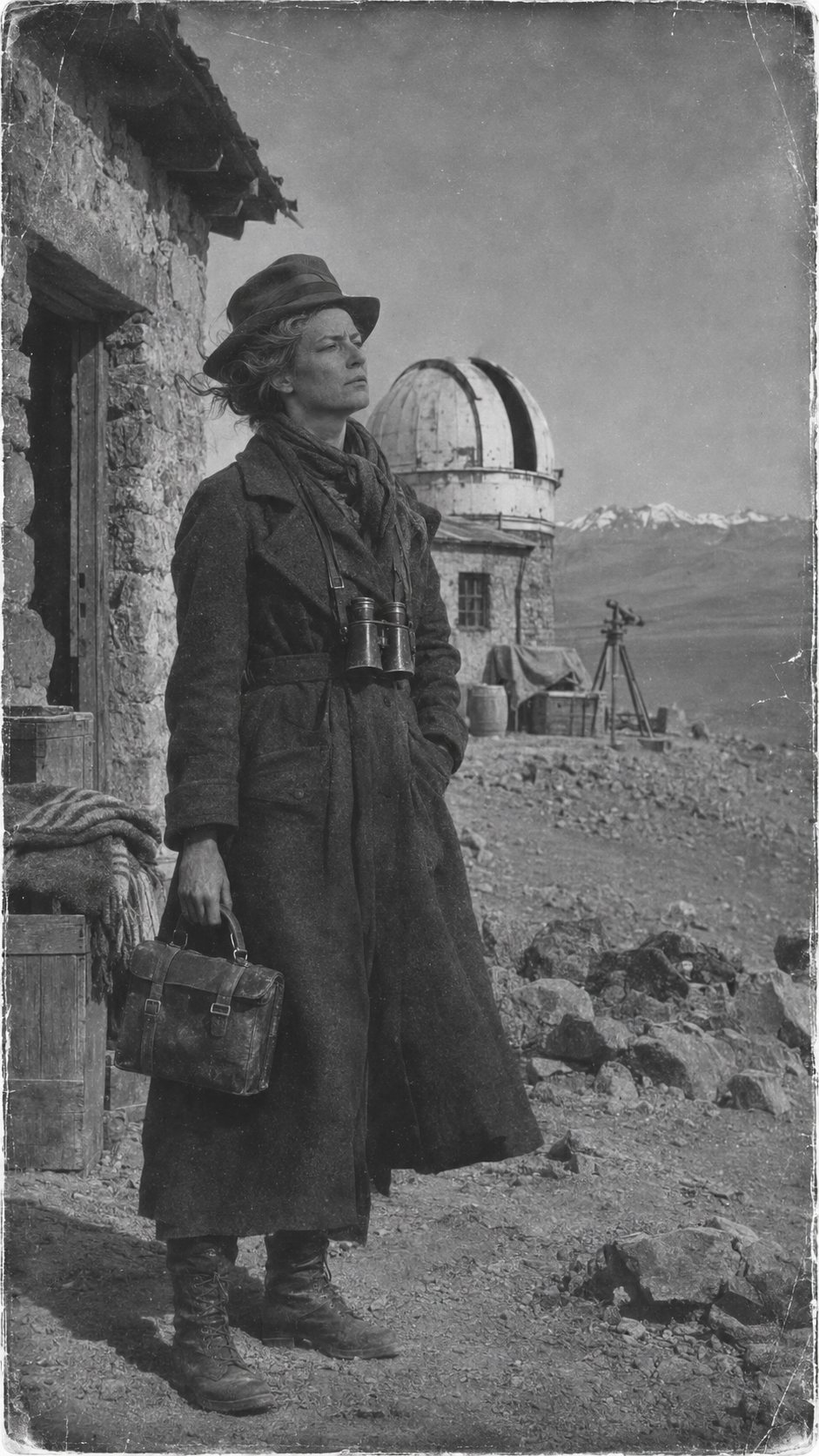
The woman reportedly asked detailed questions about unusual lights seen above the Andes.
She departed before dawn.
No reliable record of her subsequent movements has been found.
Even more curious, the original photographic plates associated with the 1911 discovery apparently vanished from the historical record.
Only newspaper reproductions and a handful of disputed copies are said to survive.
Whether Margarethe concealed the originals, surrendered them to an unknown organization, or took them with her remains unknown.
And there is one final possibility that cannot be dismissed within the legend: Margarethe may eventually have discovered how to contact the same visitors who had taken Elise.
If she did, perhaps her own disappearance was not accidental.
Perhaps she had finally found a way to follow the woman she loved.
The Mystery That Remains
More than a century later, the Andean Incident of 1911 remains an extraordinary tale of scientific ambition, hidden loyalties, unexplained disappearances, and the possibility of contact with another world.
Was the creature genuinely extraterrestrial?
Was the wreckage removed by a secret government operation, or by beings capable of crossing the distances between stars?
Did Keller and her companions perish in the mountains, or were they taken aboard a returning vessel?
And what happened to Margarethe Vogel, whose devotion to Keller may have drawn her into the mystery long after the expedition disappeared?
Perhaps the most revealing question concerns the expedition's original purpose.
If Keller had traveled to the Andes specifically to establish contact with extraterrestrial intelligence, then the discovery of the wreckage may not have been a coincidence at all.
Perhaps the mission had been arranged because someone already knew what was waiting in the mountains.
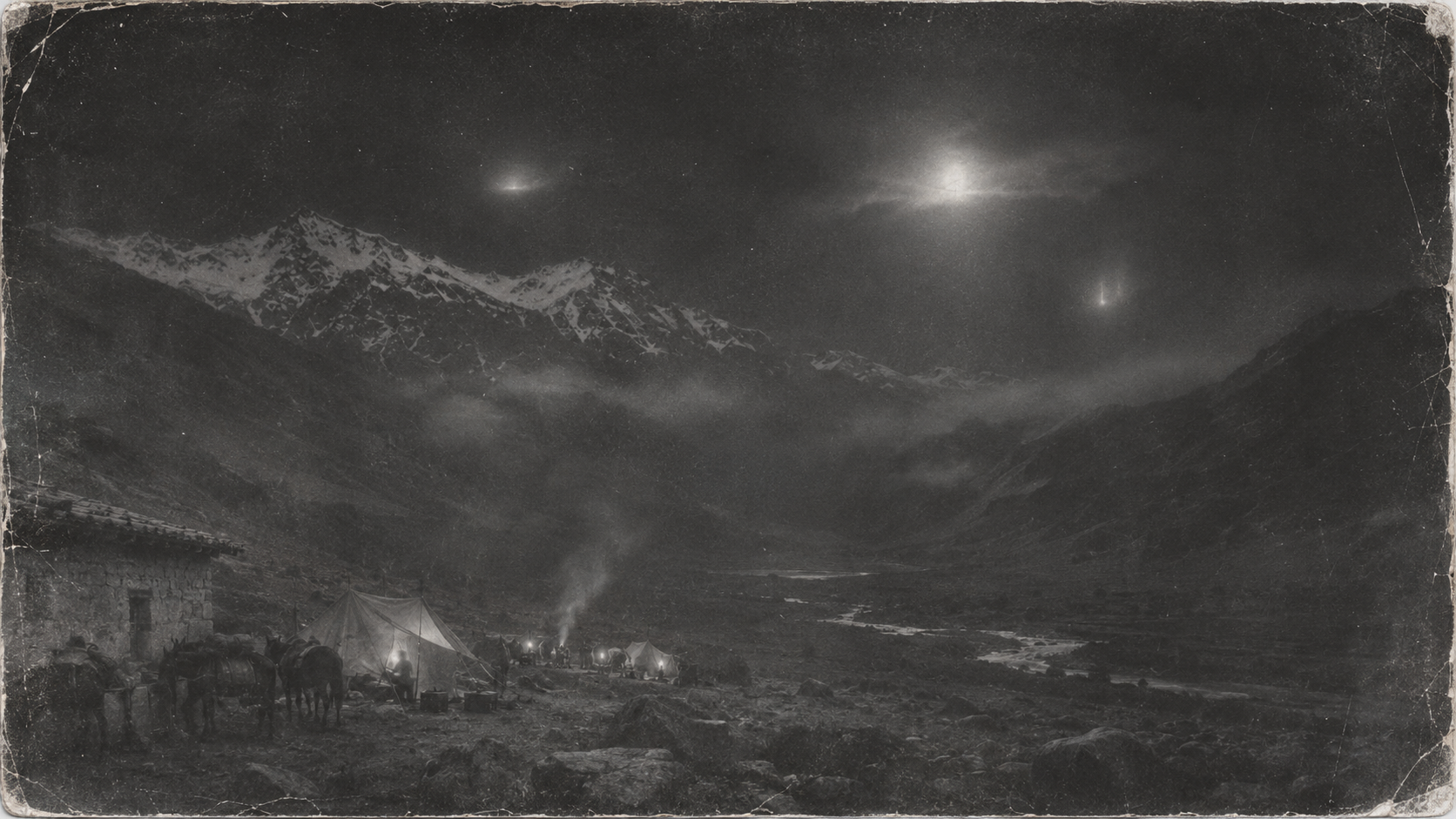
Or perhaps those who financed the expedition were not the only ones preparing for an encounter.
Perhaps the greatest mystery of the Andean Incident was never what Dr. Elise Keller discovered in those mountains, but whether the beings she had traveled so far to meet had been expecting her all along.
Editor's Note: This is a fictional historical mystery presented in the style of an investigative retrospective. The expedition, characters, correspondence, extraterrestrial discovery, and disappearance are imagined. The accompanying newspaper and photographs are AI-created period-style illustrations.
Writing one? Publish your story on the BudgetPixel blog.







 @crabmouse

 @southamericanmyth

 @EternaSky

 @CaylaCatz

 @Sealine

 @monkeydude69
Comments (1)
Sehr interessanter "Bericht" mein Freund, schön dargestellt. Fantastische S/W Fotos erzeugt. Großes Kompliment!!!
Sign in to join the conversation.