
Backward Footprints and River Songs: A 5-Minute Tour of Brazilian Mythology
 @yeah4
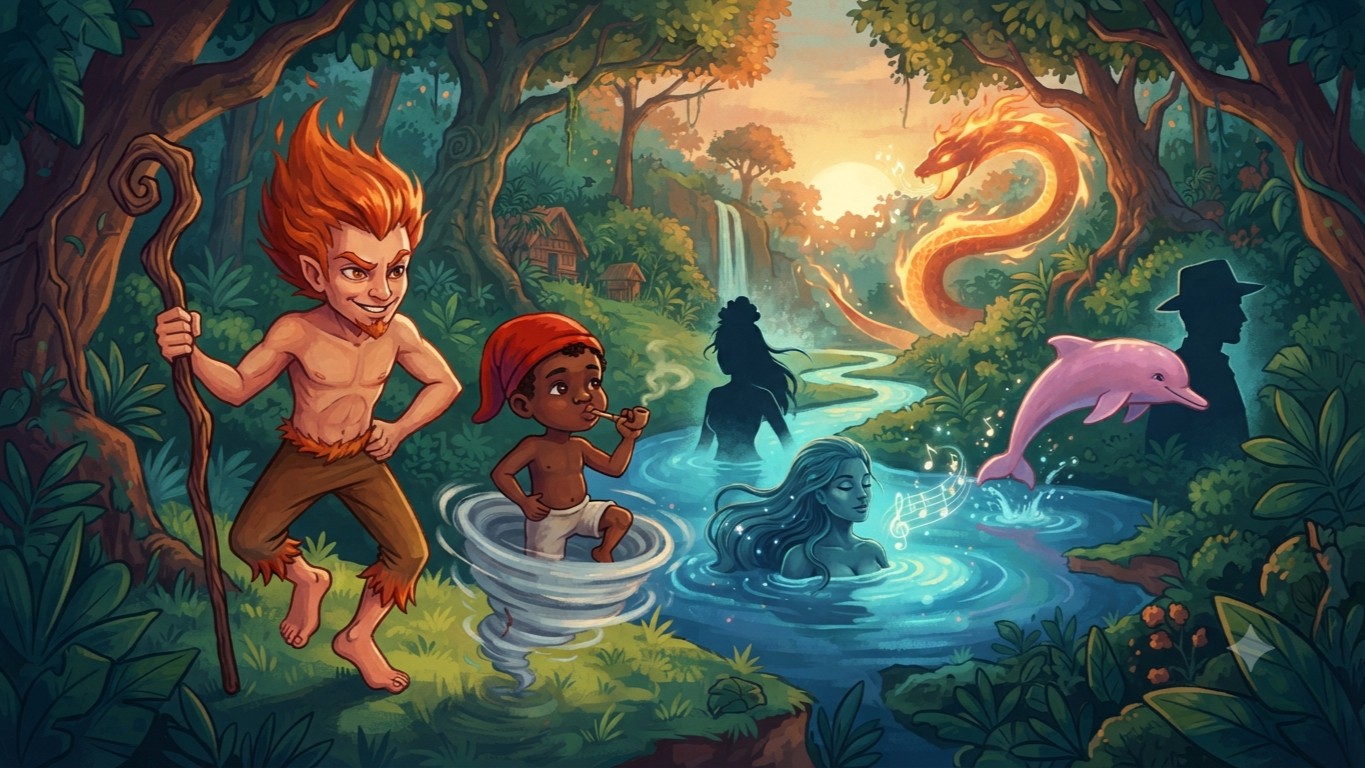
Step into the mist over the Amazon river basin or walk beneath dense coastal canopies, and you enter a living map of Brazilian stories. Unlike classic pantheons built around marble temples and rigid hierarchies, Brazilian mythology grew out of motion, contact, and survival. Indigenous Tupi-Guarani traditions, Portuguese colonial tales, and West African spiritual heritage blended over centuries into folklore where the forest has eyes, rivers sing, and tricksters test human greed.
Where Three Worlds Met
Brazilian folklore is not a single ancient text. It is a crossroads shaped by three major streams:
Indigenous roots: Deep ecological knowledge of animals, medicinal plants, rivers, and spirits that punish waste or disrespect toward nature.
Portuguese oral traditions: Enchanted princesses, nocturnal transformations, witches, and cautionary tales carried across the Atlantic.
Afro-Brazilian traditions: Spiritual lineages—including Candomblé and Umbanda—centered on Orixás (sacred forces of nature and human experience) that cross over into popular storytelling and festivals.
Because these traditions evolved side by side, a single legend can shift from region to region. A spirit feared by hunters in the North might appear as a mischievous prankster in the Southeast.
Iconic Figures You Should Know
1. Curupira: The Forest’s Decoy
Curupira is one of Brazil’s oldest forest guardians, often depicted with bright red hair and feet turned completely backward. When poachers or loggers track his footprints in the mud, the tracks lead deeper into danger while Curupira heads the other way. He mimics human voices to lure intruders off the trail and guards wildlife against greedy hunters.
2. Saci-Pererê: The One-Legged Trickster
Saci is a quick-witted trickster with a single leg, a red cap, and a clay pipe, often riding inside mini whirlwinds. He knots horses’ manes at night, sours milk, hides keys, and makes food burn in the pan. Yet he is not purely malicious—he rewards people who outsmart him or treat nature with respect. In folklore, capturing his red cap lets you make a wish, though holding onto it is easier said than done.
3. Iara: The Siren of the Waters
Known as Uiara or Mãe d’Água (Mother of Waters), Iara dwells in rivers and lakes. Drawing on Indigenous river spirits and European siren motifs, she enchants listeners with hypnotic songs and dazzling beauty, pulling unwary travelers beneath the surface. Her stories carry a practical lesson for river communities: respect strong currents, deep channels, and sudden weather shifts.
4. Boitatá: The Serpent of Fire
Boitatá is a giant serpent wreathed in fire that patrols fields and wetlands at night. Born from the spirits of serpents that survived devastating wildfires, it protects small animals and punishes anyone who sets reckless fires or harms the land.
5. Boto-Cor-de-Rosa: The Shape-Shifting River Dolphin
In the Amazon, pink river dolphins inspire tales of the boto, a shape-shifter that emerges at night dressed in white and wearing a hat to hide its blowhole. Charming and elusive, the boto courts dancers at village festivals before returning to the river before dawn—a mythic explanation for sudden pregnancies and vanished strangers along the water.
Why These Myths Still Matter Today
At their core, most Brazilian folk tales function as environmental and social guardrails. Curupira warns against overhunting; Boitatá warns against burning the brush; Iara reminds people that rivers are powerful and unforgiving.
You do not need a library to spot them in modern Brazil. They show up in children’s picture books, animated series, Carnival parades, regional slang, and ecological debates over the Amazon and Cerrado. For readers on BudgetPixel, these stories offer something rare: rich worldbuilding that costs nothing to explore, rooted in real landscapes and living memory.
Topics






 @southamericanmyth

 @EternaSky

 @germancowboy

 @CaylaCatz

 @suga2309