How to Make an AI Movie: From One Sentence to a Finished Short Film
BudgetPixel Director makes a short film with you one step at a time. You give it an idea in plain words; it writes the story and the script, casts the faces, builds the places, draws a storyboard, films the scenes as 480p drafts with voices, scores and cuts them, then finishes the film in 720p or 1080p. Below is a real film made in Director from one sentence, every step it took, and what each step costs.
 By BudgetPixel Team9 min readFacts verified
On this page
BudgetPixel Director is an AI film director. You tell it an idea in plain words, as rough as you like, and it makes the film with you one step at a time: the story, the script, the cast, the places, a storyboard, the scenes, the music and the cut. At every step you see the work and can ask for changes.
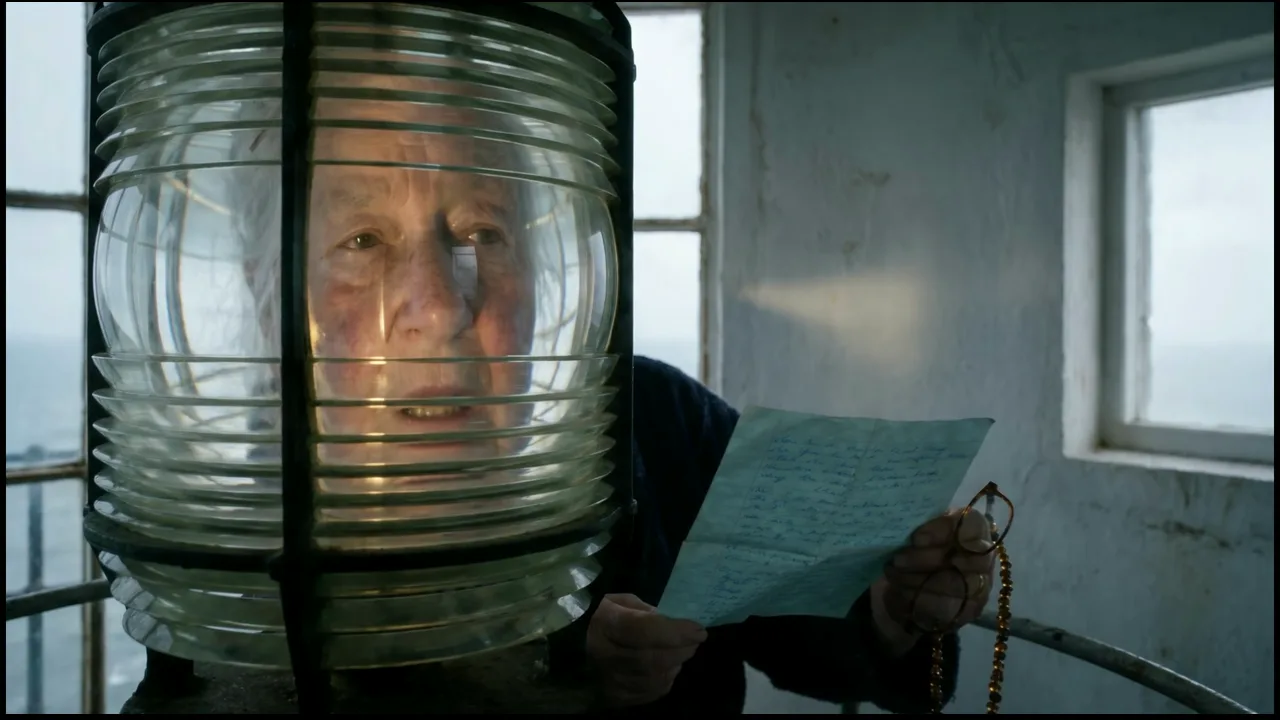
The film at the top of this page, Tomorrow's Post, was made in Director from one sentence: "A lighthouse keeper finds a letter dated tomorrow." Below is every step it went through, with the real pictures from each one.
An AI movie maker, not a clip generator
A video generator turns one prompt into a few seconds of video. A film needs more: a story that goes somewhere, the same faces and places from shot to shot, lines spoken by the right person, music, and a cut. Director handles all of that. You make the decisions.
Step 1: Start with one sentence
Open Director, press Start, and answer "What's your film about?". One line is enough. Ours was:
A lighthouse keeper finds a letter dated tomorrow.
Step 2: Pick a story
Director comes back with three different films you could make from the idea, says which one it would pick and why, and lets you choose or ask for others. For our sentence:
- Tomorrow's Post (heart): "Every morning a 78-year-old lighthouse keeper finds a letter dated tomorrow telling her exactly what to do, and she follows it like a prophecy, until we see who's writing them."
- The Sketch (thriller): "A keeper finds a pencil drawing in his own hand, dated tomorrow, showing a boat breaking up on the rocks below his tower, and the warning is the only reason he's awake to see it happen."
- Commendation (comedy): "A lighthouse keeper who is terrified of the sea gets a medal letter, dated tomorrow, for bravery in a rescue he hasn't done yet."
It picked the first: "The letter from tomorrow ends up meaning something human instead of a puzzle to solve... It's also the simplest to make well: one woman, one kitchen." We agreed.
Step 3: The script
Every line, every shot and every cut is timed out before anything is generated, and each role is written the way an actor gets it. The script for Tomorrow's Post has six scenes and sixteen shots, and one rule: "Bronagh obeys the letter like scripture, and nobody ever says Emrys is dead." The first scene opens like this:
1.1  Wide, locked off · 3.5 s
     Blue dawn kitchen. Bronagh shuffles in from frame left in dressing gown and socks.
     The cat sits on the chair frame right. Centre: the envelope propped against the
     brown teapot. She stops.
     Sound: the wall clock ticking, loud in the quiet.
     Join: hard cut on a clock tick, straight to the envelope.

1.3  Close-up · 4 s
     Bronagh, frame left, glasses on, the unfolded letter held up. She reads aloud
     to the cat, out of frame right, solemn as church.
     BRONAGH: "Thursday. Wind the clock. Polish the lens."
     Sound: her voice over the clock tick.
     Join: hard cut to the clock, she's already obeying.
This is also where you set the film's length and shape: from 10 seconds to 3 minutes (most films land at 40 to 60), in 16:9, 9:16, 1:1 or 21:9, live action or animated. Ask for changes in plain words and the script is rewritten.
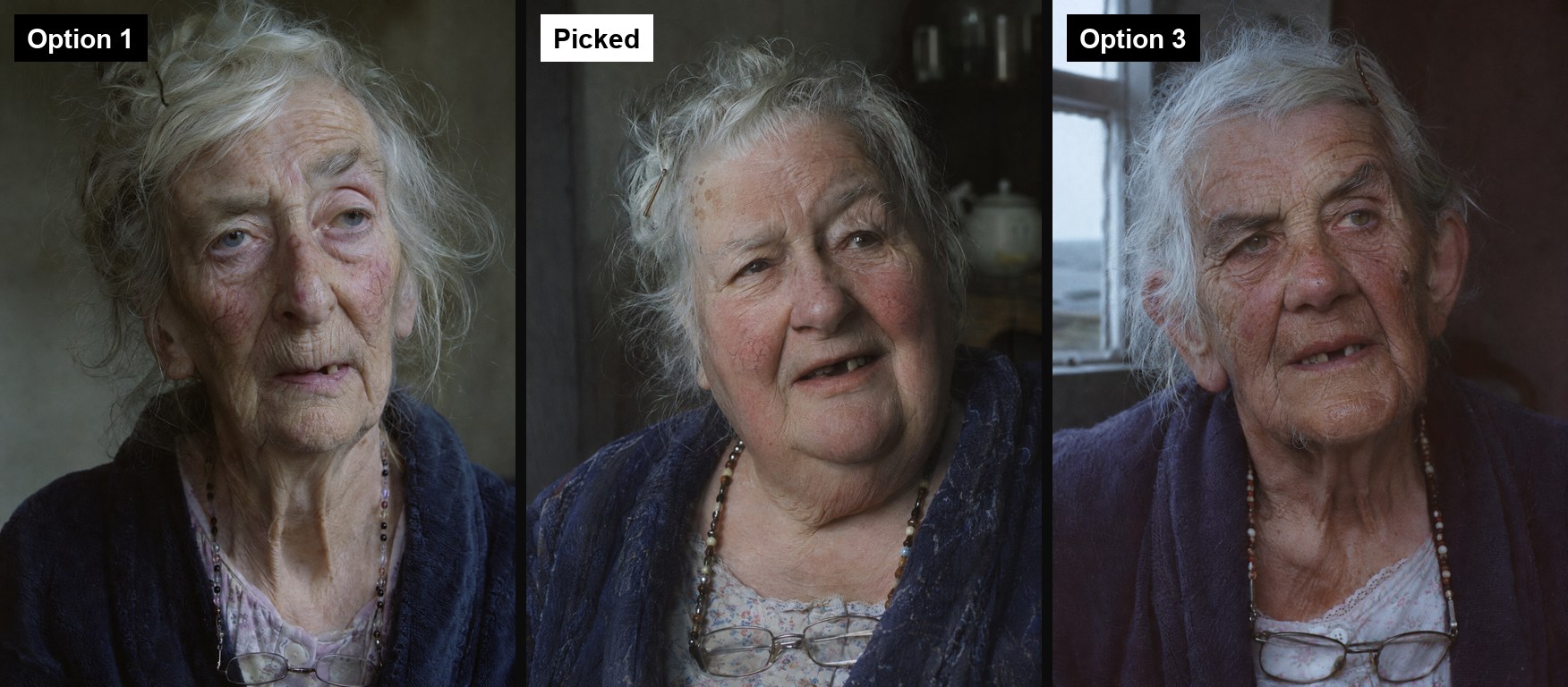
Step 4: Cast the faces
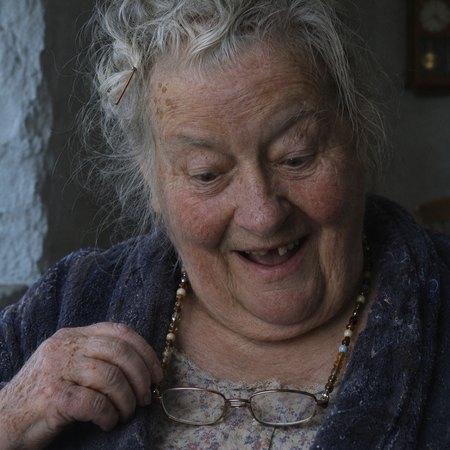
For every role on screen, Director makes three real-looking faces as close-up portraits, so you choose people, not descriptions. Once you pick, that face stays the same in every shot. You can also cast your own characters, an official BudgetPixel character, or your own photo.
Step 5: Build the world
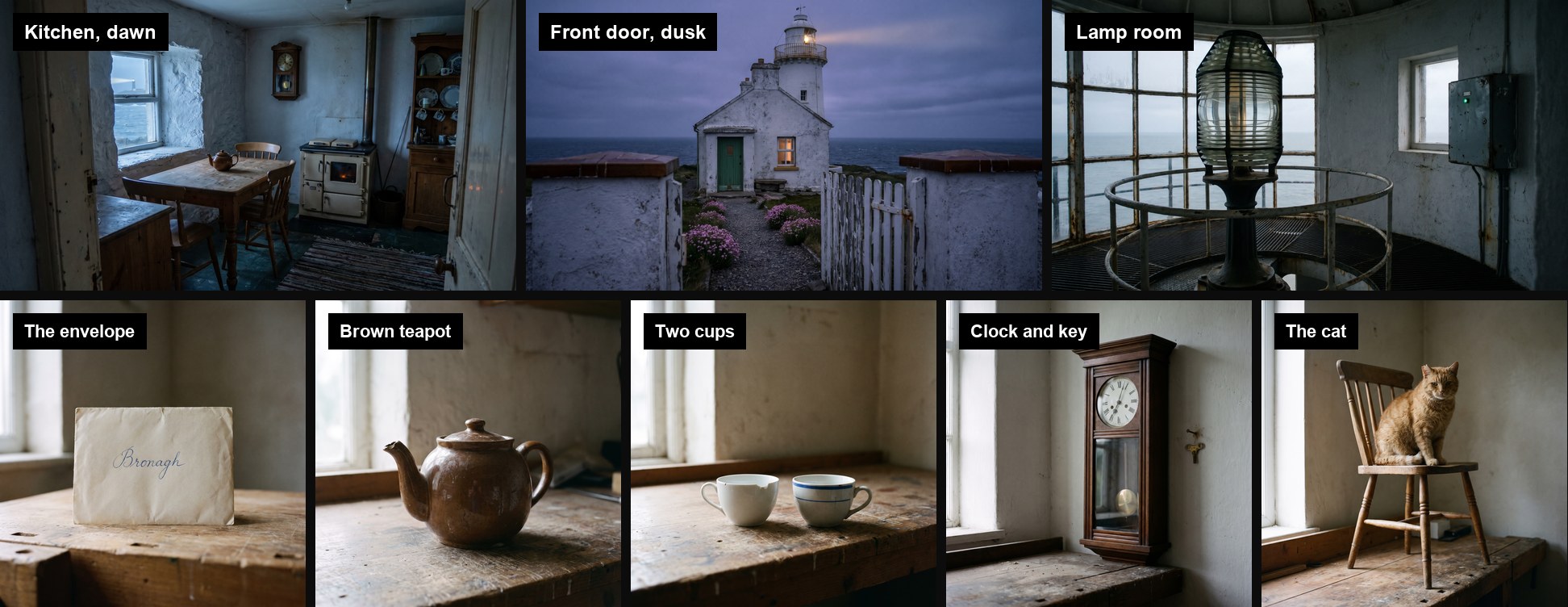
Every place, costume and prop is made once and kept, so the kitchen stays the kitchen and the teapot stays the teapot. A note changes one thing, and your own pictures can stand in for any of them.
Step 6: The storyboard
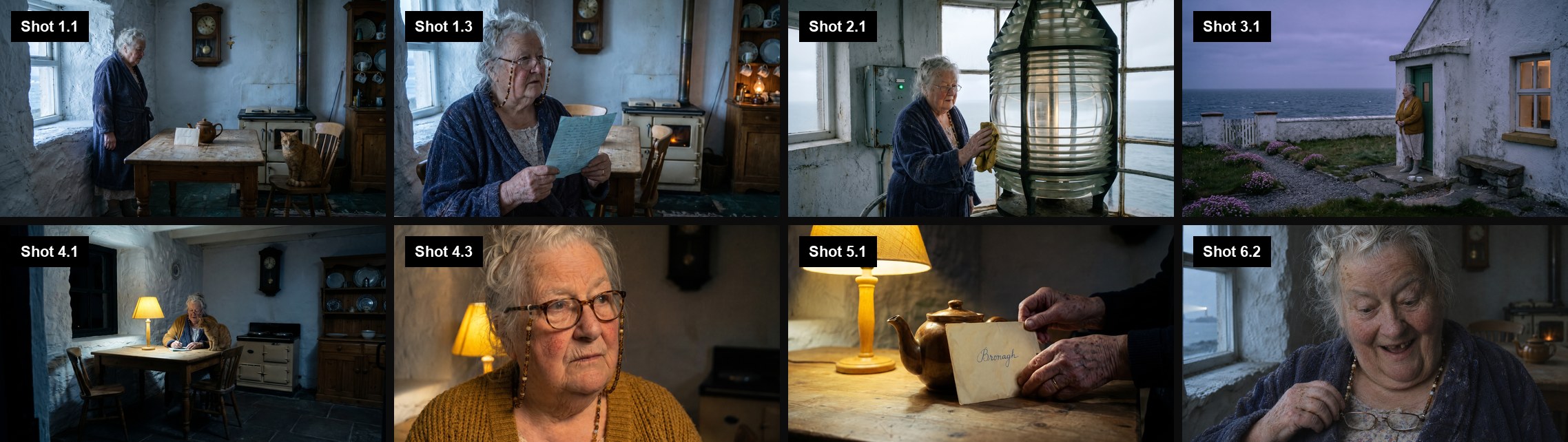
One picture for every shot, played back as a slideshow at the length of the film, so you see the whole movie before any video is made. A note redraws one frame, for example "put her glasses on".
Step 7: Film a test scene, then the rest
Director films the scene with the most dialogue first, as a 480p draft: the acting, the voices and the cuts in one take. It checks the frames and the words, but it can't hear, so you listen. Here is the opening scene of Tomorrow's Post as a 480p draft:
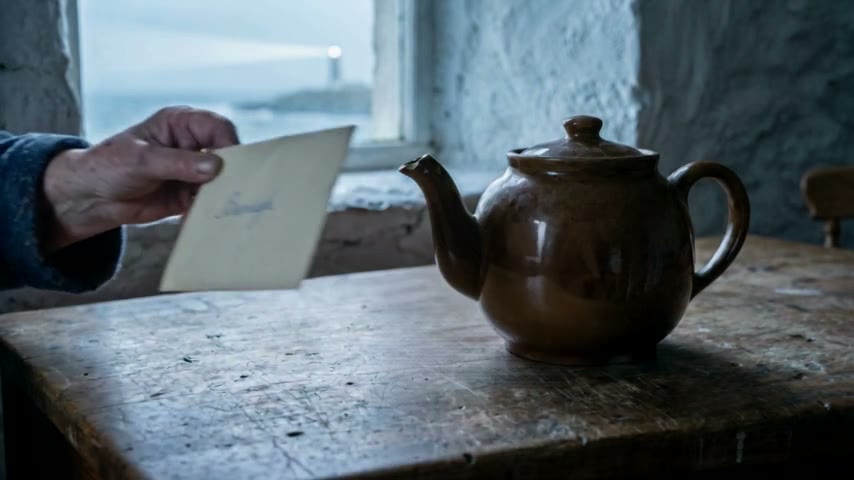
When the voices are right, they carry over to every other scene, and the rest are filmed on one priced button. Nothing more is spent on video until you press it.
Step 8: Music and sound
Director writes two or three versions of a song or a score, plus the sound effects, and you pick by ear. Or upload your own track. Tomorrow's Post got a piano score:
Tomorrow's Post, the score
Written in Director · first minute
Step 9: The cut and the finish
Director cuts the takes, the music, the joins between scenes and any title cards into the film. A note changes one thing; re-cutting is free apart from a small sound check (5 credits per started minute of film). You can download the 480p draft right there.
When you like the cut, finish it: 720p, 1080p, or 1080p filmed again, where every scene is rendered again at full 1080p from its draft. Tomorrow's Post was filmed again in 1080p. Then download it, share it by link, or make a free social version with a small watermark and a short end card.
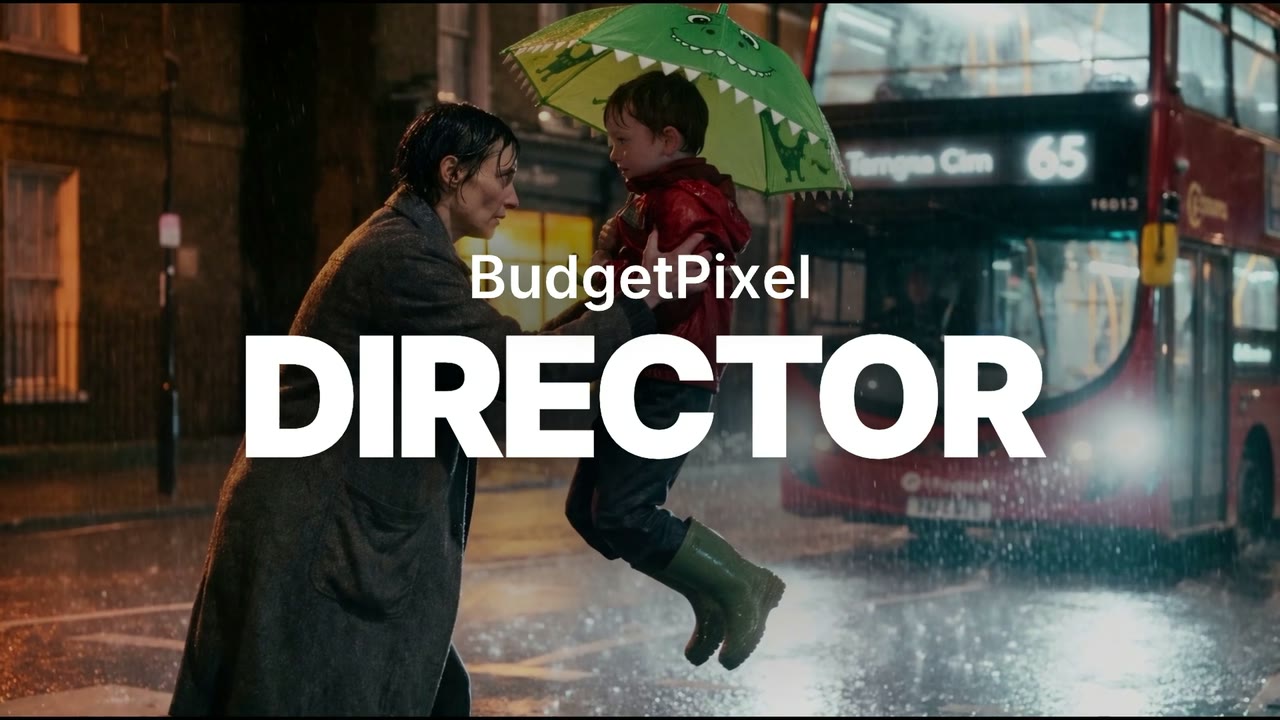
Here is Director's launch film, which replays Tomorrow's Post's steps from the first sentence to the finished film:
What it costs
There is no single price for a film, because films run from 10 seconds to 3 minutes. Instead, each step shows its price on its button before it runs. At standard prices:
| What | Credits |
|---|---|
| A face or a costume | 175 |
| A place, a prop or a storyboard frame | 120 (a close-up on a face: 175) |
| A second of 480p draft video | 150 |
| A song or a score | 200 |
| A second of sound effects | 5 |
| Finishing in 720p, per second of footage the cut uses | 8 |
| Finishing in 1080p, per second of footage the cut uses | 25 |
| Filming again in 1080p | priced at the cut |
- Talking with Director costs nothing up to a daily allowance; after that, each reply shows its price.
- Re-cutting is free apart from a small sound check (5 credits per started minute of film).
- Plans: Director comes with Premium ($22 a month, 25,000 credits), Pro ($55, 60,000) and Ultra ($125, 130,000). Ultra gets 10% off the draft video, filming again in 1080p, and places, props and most storyboard frames. See pricing.
How to get a better film
- Keep the story small. One or two people, one or two places. Director picked Tomorrow's Post partly because it was "one woman, one kitchen".
- Spend your notes on the storyboard. A redrawn frame costs 120 credits (175 for a close-up on a face); a re-filmed scene costs far more. Fix the picture before the video.
- Listen to the test scene with headphones. Director can't hear its own takes; the voices you approve there carry through the whole film.
- Use the length you need. 40 to 60 seconds is where most films land, and every extra second is another second of video.
- Bring your own pieces. Your photo as the lead, your product as a prop, your song as the score: Director builds around them.
Also made on BudgetPixel, the same way
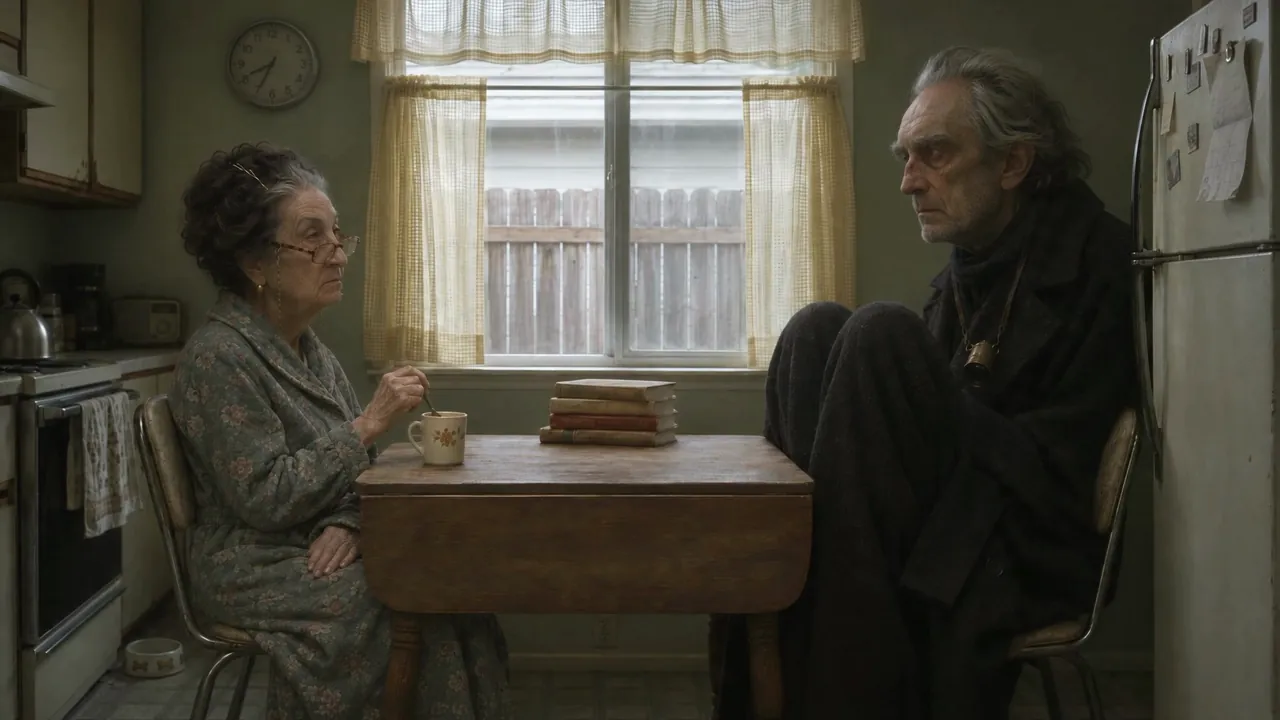
Not on a Sunday was made on BudgetPixel in the same steps Director follows: a woman in her seventies asks the greatest film director alive to make a movie about her neighbor's leaf blower, and he takes it dead seriously.
For planning hard camera moves before any video, see AI previs; for keeping one face across many pictures, see consistent character AI.
Sources: Tomorrow's Post's own record in Director (story options, script, cast, places, storyboard and scenes), and Director's prices and limits as shown in the app, checked November 15, 2026.
Questions people ask
Can AI make a whole movie?
AI can make a short film from start to finish if something keeps it together: the same faces, the same places, a script and a cut. That is what BudgetPixel Director does. It writes, casts, storyboards, films, scores and cuts films from 10 seconds to 3 minutes, and you approve each step.
What is an AI movie maker?
A tool that turns an idea into a finished film, not just one clip. A video generator gives you a few seconds from one prompt; an AI movie maker like BudgetPixel Director plans the story and every shot, keeps the cast and places the same from shot to shot, adds voices and music and cuts the result.
How long can a film made with Director be?
From 10 seconds to 3 minutes. The default is 60 seconds, and most films land between 40 and 60. Films can be 16:9, 9:16, 1:1 or 21:9.
How much does it cost to make an AI movie with Director?
Each step shows its price on its own button before anything is made. At standard prices a face or a costume costs 175 credits, a place, prop or storyboard frame 120 (175 for a close-up on a face), a second of 480p draft video 150, and a song 200. Finishing costs 8 credits per second of footage the cut uses for 720p, or 25 for 1080p; filming the film again in 1080p is priced at the cut. Talking with Director is free up to a daily allowance.
Which plans can use Director?
Premium, Pro and Ultra. If your plan ends, you can still watch, download and delete the films you made.
Can I put myself or my own characters in the film?
Yes. At the cast step you can pick one of the faces Director offers, cast one of your own characters or an official BudgetPixel character, or use your own photo. Once you pick a face, it stays the same in every shot.
Does Director make the voices and music?
Yes. The actors speak their lines inside each scene, and Director writes two or three versions of a song or a score for you to choose from by ear, plus sound effects. You can also upload your own music.
Can I download the film?
Yes. You can download the 480p draft from the cut, and the finished film once it is rendered in 720p or 1080p. You can also share it by link, or make a free social version with a small watermark and a short end card.
Try it yourself
On Premium, Pro and Ultra plans. Every step shows its price before it runs.