Montreal street market at sunset with charcuterie, breads, wine — AI art by @thewhiskeyjack
@thewhiskeyjack · 5/27/2026
QT - Universal Travel-Food Tourism Poster by @HappyPerson https://budgetpixel.com/p/41734 A taste of Canada—Montreal My birth city. Where I lived before moving to Tokyo. Still miss the food!
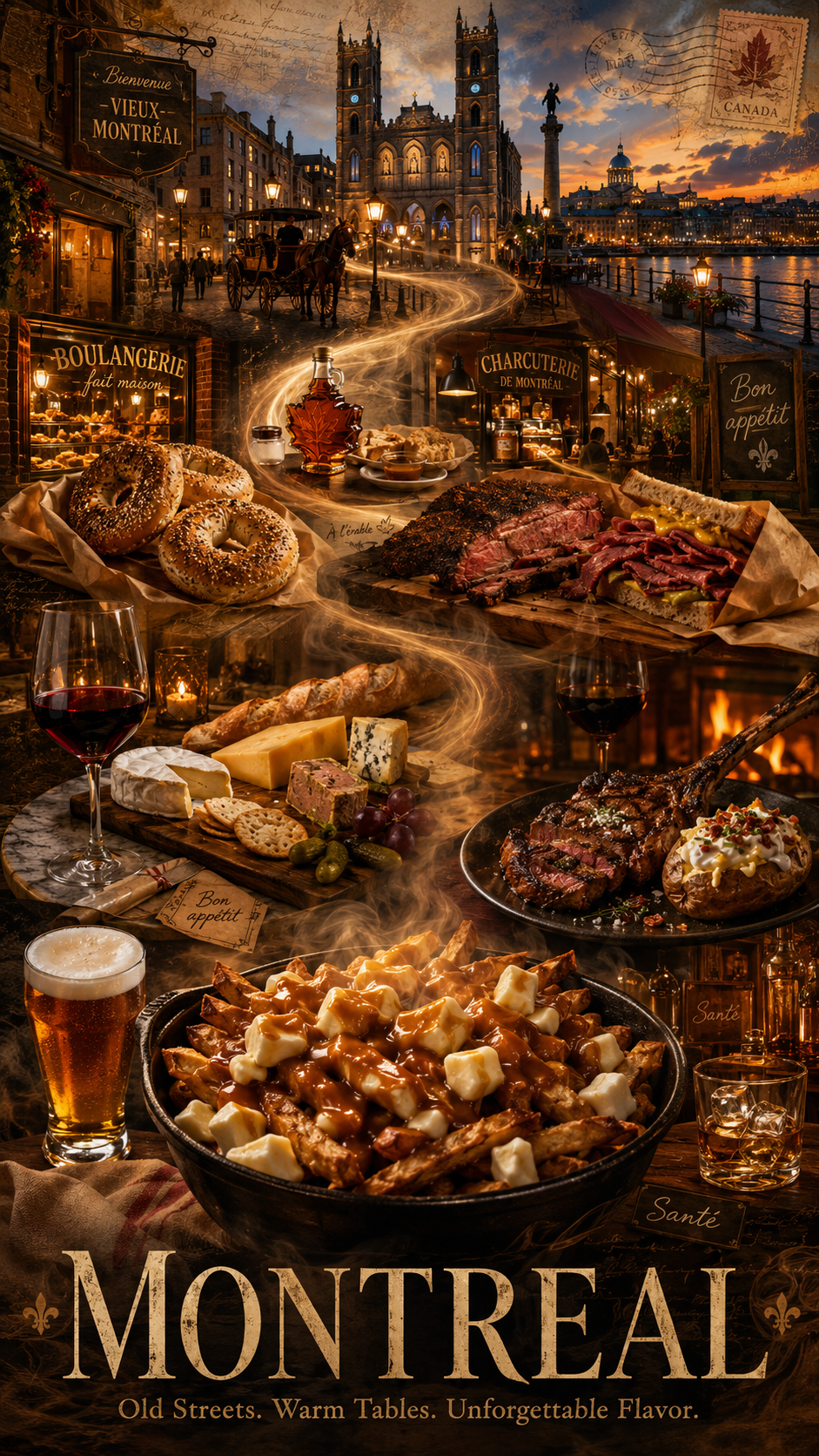
Tags: Montreal, Old Montréal, Montreal food, charcuterie, boulangerie, wine, cheese platter, bread, steak, riverside, sunset, Quebec cuisine, travel food, dining, market scene
AI Model: GPT-Image-2
Prompt: Create an ultra-premium 9:16 vertical culinary tourism poster of Old Montreal, Canada, designed like a warm luxury food-and-travel campaign and museum-quality destination artwork. The poster should feel rustic, cozy, atmospheric, artisanal, romantic, and deeply appetizing, celebrating Montreal through French-Canadian comfort food, old stone streets, historic architecture, café warmth, tavern culture, and rich culinary tradition. The image must be a tall vertical poster, not square and not horizontal. Build the composition as one continuous vertical culinary journey, not a divided poster. Avoid a clear split where the top is only city scenery and the bottom is only food. Food, drinks, cobblestone streets, warm windows, smoke, steam, lantern light, old architecture, and riverside atmosphere should blend naturally from bottom to top. The core visual structure should be a winding trail of steam, gravy warmth, woodsmoke, and golden bistro light that begins at the poutine in the lower foreground, curves upward through the middle of the poster, passes through cozy food scenes, old cafés, bakeries, deli counters, wine tables, taverns, and historic streets, then dissolves into the Old Port, Notre-Dame Basilica-inspired architecture, and warm evening sky. The whole poster should feel like walking through Old Montreal on a cool evening, following the smell of good food through narrow streets. At the bottom foreground, make poutine the clear anchor of the poster. Show a generous rustic bowl or cast-iron dish of crispy golden fries, squeaky white cheese curds, and rich glossy brown gravy, steaming heavily in warm light. The poutine should feel comforting, indulgent, iconic, and handmade, with crisp edges, melted curd texture, and thick gravy shine. This is the starting point of the Montreal journey. From the poutine, let steam, gravy glow, and painterly golden warmth rise upward like soft brush strokes. The rising trail should guide the viewer through the poster, connecting each food scene to the streets, lights, and architecture. It should feel organic and atmospheric, not like a clean food catalog. As the journey rises, integrate Montreal’s signature foods into the Old Montreal setting with carefully spaced, mid-sized food moments. Include Montreal-style bagels, honey-boiled and wood-fired, shown with glossy browned crusts, sesame seeds, and dense chewy texture. Place them near a warm bakery window or wood-fired oven glow, with flour dust, brown paper, and old stone walls. Include Montreal smoked meat, savory and spice-rubbed, shown in a rustic deli moment. It may appear as thick slices on a wooden board or a stacked smoked-meat sandwich on rye, with mustard, pickles, butcher paper, and warm deli counter lighting. It should feel hearty, soulful, and deeply local. Include a small maple syrup moment, with amber syrup glowing in a glass bottle or being poured lightly near rustic bread, breakfast details, or baked goods. It should feel Canadian and warm without becoming the main subject. Include a French-inspired bistro spread with crusty baguette, brie, cheddar, goat cheese, and other cheeses, plus liver pâté served with crackers and pieces of bread. Present it on a wooden board or marble-topped café table with rustic elegance. Add grapes, small pickles, or a linen napkin only if they help the composition. This scene should feel cozy, intimate, and Old Montreal. Include a premium tomahawk steak with loaded potato, shown as a rich tavern or steakhouse moment. The steak should be seared and juicy with charred edges, coarse salt, herbs, and warm firelit highlights. The loaded potato should feel indulgent, with butter, cream, chives, or melted cheese. Keep this as a powerful supporting scene, not larger than the poutine. Make drinks part of the journey, not a separate display. Sprinkle them naturally beside matching scenes: Red wine beside the cheese, pâté, baguette, or steak scene Beer beside poutine, smoked meat, tavern food, or a cozy pub table Whiskey near a dim old bar counter with amber reflections and polished wood The drinks should feel lived-in and inviting, with condensation, glass sparkle, warm amber light, wine reflections, and cozy tavern shadows. Do not line them up like a product display. The food and drinks should be layered into Old Montreal itself, near cobblestone streets, café terraces, bakery windows, bistro tables, wooden tavern counters, deli interiors, riverside walkways, stone façades, iron balconies, old street lamps, and warm window light. Do not place all food at the bottom. Do not create a menu layout. Food should feel discovered naturally while wandering through the city. Use Montreal landmarks and vistas as integrated atmosphere, not as a separate top panel. Include subtle impressions of Old Montreal, the Old Port, cobblestone alleys, historic stone buildings, riverside views, warm café terraces, horse-carriage-like old-world charm, church architecture inspired by Notre-Dame Basilica, and distant Mount Royal or skyline glow. These should appear behind and between the food moments, woven into the same vertical path. The poster should feel like Old Montreal through food, not a general landmark collage. Add rustic artistic texture throughout. Use vintage travel-poster warmth, parchment-like grain, painterly edges, soft charcoal sketch accents, old map textures, café chalkboard fragments, handwritten recipe-note details, postage-stamp accents, woodcut-inspired flourishes, and subtle French-Canadian decorative touches. The style should feel handmade, warm, European-influenced, and distinctly Montreal. Text should be minimal and elegant. Include a large refined city title: MONTREAL. Include one short tasteful English tagline such as: Where Comfort Meets Culture or Old Streets. Warm Tables. Unforgettable Flavor. Because the city is bilingual, include a few small French accents only as background atmosphere, such as tiny café signs, menu fragments, or handwritten notes like “Bienvenue,” “Vieux-Montréal,” “Bon appétit,” or “fait maison.” English should remain the main language. Do not place labels beside every dish. Do not include vertical side text. Avoid cluttered typography. The color palette should feel especially warm and rustic: maple amber, gravy brown, deep wine red, golden fry tones, creamy cheese white, bakery tan, toasted sesame brown, smoked-meat spice red, whiskey amber, beer gold, dark walnut wood, old stone gray, soft candlelight, and cozy evening blue. Lighting should be cinematic and mouthwatering: warm bistro glow, bakery oven light, tavern candlelight, streetlamp halos, soft steam, polished glass reflections, golden window light, river shimmer, cozy shadows, and rich highlights across the food. The food should look exceptionally delicious and premium, but balanced with the city atmosphere. Avoid oversized floating food. Avoid filling the entire poster with dishes. Leave visual breathing room through steam, cobblestone depth, old architecture, warm windows, dark negative space, riverside haze, and painterly transitions. The overall poster should feel like a rustic Old Montreal food journey unfolding upward from poutine: warm, cultured, comforting, romantic, social, artisanal, premium, atmospheric, and unforgettable. It should resemble a cinematic evening walk through Old Montreal, where every turn reveals another dish, drink, bakery, deli, tavern, terrace, or historic vista. Style references: rustic luxury culinary travel poster, Old Montreal food journey, French-Canadian destination campaign, vintage travel poster elegance, warm bistro atmosphere, old-world city charm, premium food editorial design, painterly urban collage, integrated food-and-city composition, emotional storytelling artwork, museum-quality mixed-media poster, ultra-detailed masterpiece. Create the image like a professional graphic designer with elegant visual hierarchy, warm cinematic lighting, highly appetizing food rendering, balanced negative space, cozy rustic atmosphere, strong Old Montreal identity, and unforgettable culinary storytelling.
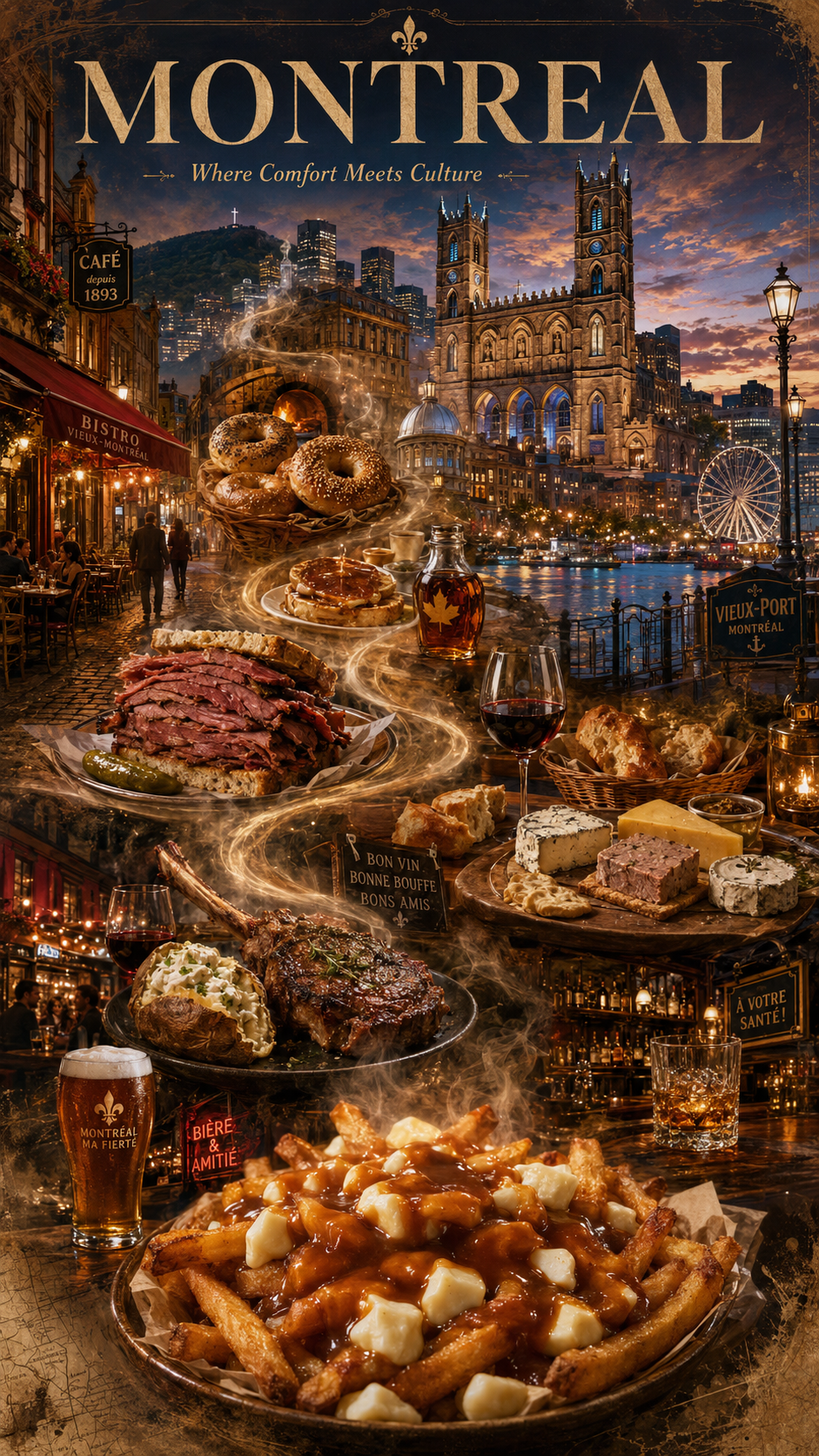
Tags: Montreal food, poutine, Quebec cuisine, Old Port Montreal, Montreal skyline, French Canada, bistro culture, travel photography, culinary montage, cityscape, gourmand, wine and cheese, iconic landmarks, Canada travel, foodie destination
AI Model: GPT-Image-2
Prompt: Create an ultra-premium 9:16 vertical culinary tourism poster of Montreal, Canada, designed like a world-class luxury culinary travel campaign and museum-quality destination artwork. The poster should feel like a warm, atmospheric culinary journey through Montreal, beginning with one iconic signature dish in the foreground and rising upward through old streets, café culture, riverside views, nightlife, French-Canadian charm, and layered food discoveries. The image must be a tall vertical poster, not square and not horizontal. Build the composition as one continuous vertical journey, not a divided poster. Avoid a clear split where the top half is only city scenery and the bottom half is only food. Food, drinks, streets, architecture, lights, smoke, brush-like motion, and landmarks should all blend together from bottom to top. The core visual structure should be a winding trail of steam, warmth, and painterly motion that begins at the poutine in the lower foreground, curves upward through the middle of the poster, passes through Montreal food and drink scenes, moves along the Old Port and historic streets, and finally dissolves into skyline glow, church architecture, and evening atmosphere. This path should make the poster feel like a journey through Montreal, not a food display. At the bottom foreground, make poutine the clear anchor of the poster. Show a luxurious, deeply appetizing bowl or plate of crispy golden fries, squeaky white cheese curds, and rich glossy brown gravy, steaming heavily and glowing with warmth. The poutine should feel indulgent, comforting, iconic, and irresistible. This is the starting point of the Montreal journey. From the poutine, let steam, warmth, gravy gloss, and painterly trails rise upward through the poster like elegant motion lines or soft brush strokes. The rising path should guide the viewer through Montreal’s food culture and atmosphere, weaving naturally between dishes, architecture, lights, and city vistas. As the journey rises, integrate Montreal’s signature foods into the city atmosphere with carefully spaced, mid-sized food moments rather than a crowded catalog. Include Montreal-style bagels, honey-boiled and wood-fired, shown with their glossy crust and dense texture, perhaps stacked or resting near a warm bakery scene with subtle oven glow. They should feel authentic, handmade, and deeply local. Include Montreal smoked meat, savory and spice-rubbed, shown in a rich deli moment — either piled high in a sandwich on rye or sliced thickly on a board — with warmth, texture, and a sense of tradition. It should feel soulful, iconic, and unmistakably Montreal. Include a refined maple syrup moment, woven naturally into the journey, perhaps near breakfast or bread elements, with amber syrup glow and a distinctly Canadian sense of place. Include a baguette and cheese moment with a casually elegant spread of brie, cheddar, goat cheese, and other artisanal cheeses, arranged with rustic refinement. Add liver pâté with crackers and pieces of bread, presented as a warm French-inspired bistro detail rather than a formal still life. This scene should feel intimate, cultured, and distinctly Montreal. Include a premium tomahawk steak moment with a loaded potato, rendered with rich caramelization, deep savory tones, and an indulgent steakhouse atmosphere. Keep this as a powerful supporting food moment, but smaller than the poutine anchor. Make drinks part of the journey, not a separate display. Sprinkle them naturally beside matching food scenes: Red wine near the cheese, pâté, baguette, or steak moment Beer near poutine, smoked meat, or casual street-food / pub scenes Whiskey near a polished late-night bar or upscale dining corner The drinks should feel lived-in and integrated, with reflections, warm highlights, glass sparkle, and a cozy social atmosphere. Do not line them up as a separate product display. The food and drinks should be layered into Montreal itself — near streets, terraces, bakery windows, bistro tables, deli counters, bar interiors, riverside walkways, and historic corners. Do not place all food at the bottom. Do not create a menu layout. Food should feel discovered naturally while moving through the city. Use Montreal landmarks and vistas as integrated atmosphere, not as a separate top panel. Include subtle impressions of Old Montreal, the Old Port, cobblestone streets, riverside views, historic façades, church architecture such as Notre-Dame Basilica, warm cafés, balconies, and perhaps distant views of Mount Royal or the skyline. These should appear behind and between the food moments, woven into the same vertical path. The city should feel unmistakably Montreal, but the food remains the main focus. The overall mood should blend French-Canadian warmth, old-world charm, urban culture, comfort food, café elegance, and late-evening hospitality. It should feel inviting, slightly romantic, artisanal, and rich with memory. Add subtle cultural and artistic texture throughout. Use hints of vintage travel-poster design, parchment-like grain, painterly edges, elegant brush motion, subtle map textures, old street signage, French café atmosphere, and a few tasteful decorative flourishes. You may include faint references to French lettering, culinary stamps, or antique market-style touches, but keep them subtle and elegant. The style should feel European-influenced yet unmistakably Montreal. Text should be minimal and elegant. Include a large refined city title: MONTREAL. Include one short tasteful tagline in English, such as: Where Comfort Meets Culture or A City of Flavor, Warmth, and Old-World Charm Because the city is bilingual, you may include small subtle French accents in decorative signage or tiny supporting text, such as café signs or menu fragments, but English should remain the main language. Do not include vertical side text. Do not place English labels beside every dish. Avoid cluttered typography. The color palette should feel warm, urban, and inviting: maple amber, deep wine red, warm brown, golden fry tones, creamy cheese white, gravy brown, whiskey amber, beer gold, charcoal black, soft stone gray, bakery tan, and cozy evening light. Use touches of cool twilight blue or muted river reflections to balance the warmth. Lighting should be cinematic and mouthwatering: warm bistro glow, deli warmth, bakery light, soft steam, polished glass reflections, golden street lamps, river shimmer, late-evening windows, cozy shadows, and rich highlights across the food. The food should look exceptionally delicious and premium, but should remain balanced with the city atmosphere. Avoid oversized floating food. Avoid filling the entire poster with dishes. Leave visual breathing room through steam, warm negative space, architecture, street depth, and scenic atmosphere. The overall poster should feel like a Montreal food journey unfolding upward from poutine: warm, cultured, social, comforting, premium, atmospheric, and unforgettable. It should resemble a cinematic walk through Montreal, where every turn reveals another dish, drink, street, bakery, deli, terrace, or historic vista. Style references: luxury culinary travel poster, Montreal food journey, French-Canadian destination campaign, painterly urban collage, vintage travel poster elegance, old-world city atmosphere, premium food editorial design, integrated food-and-city composition, emotional storytelling artwork, museum-quality mixed-media poster, ultra-detailed masterpiece. Create the image like a professional graphic designer with elegant visual hierarchy, warm cinematic lighting, highly appetizing food rendering, balanced negative space, strong city atmosphere, and a distinctive unforgettable Montreal culinary identity.
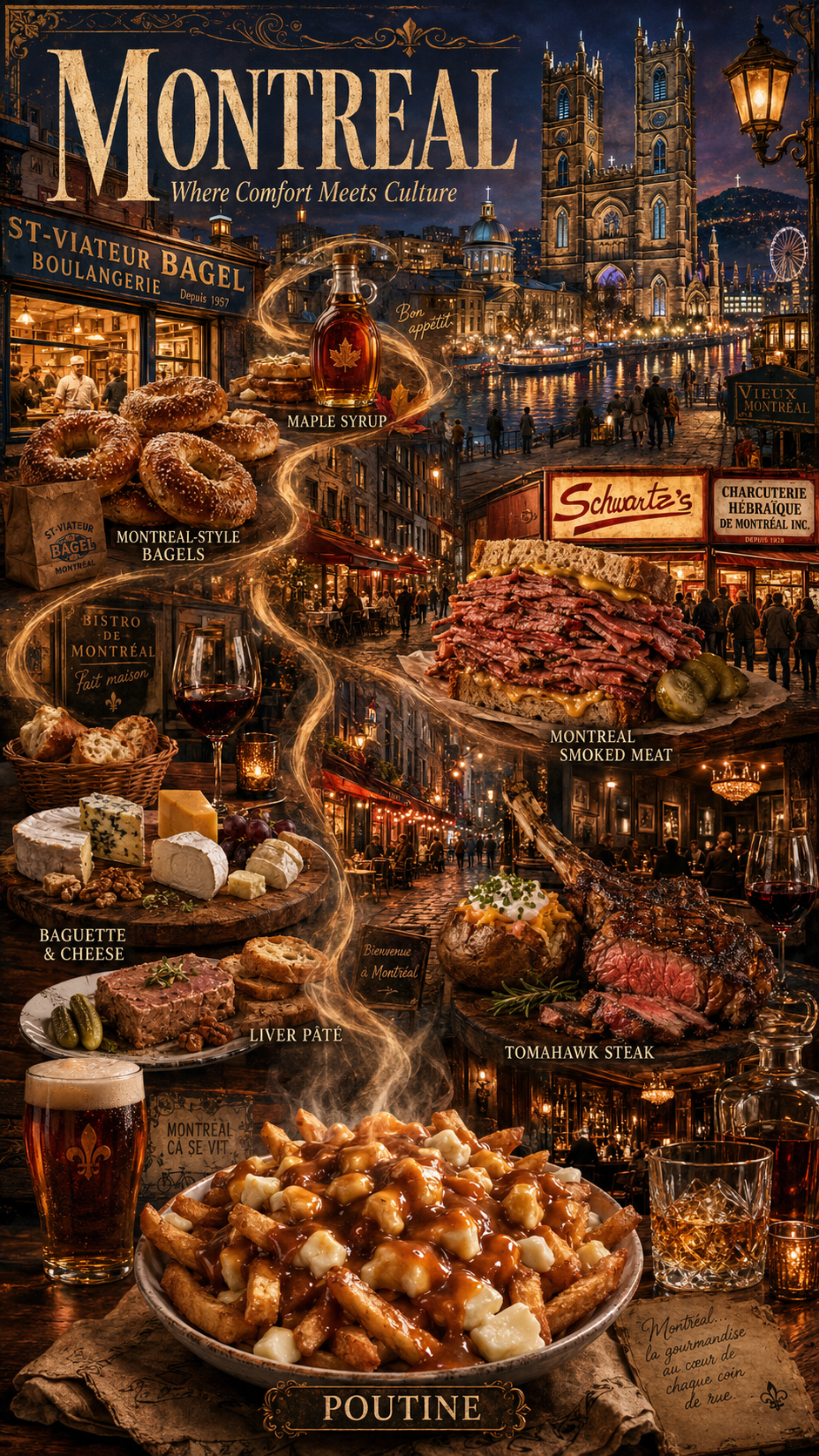
Tags: Montreal, poutine, smoked meat, bagels, bagel, boulangerie, Montreal food, Quebec cuisine, street food Montreal, travel poster, foodie, culinary tour, skyline, night market, maple syrup
AI Model: GPT-Image-2
Prompt: Create an ultra-premium 9:16 vertical culinary tourism poster of Montreal, Canada, designed like a world-class luxury food-and-travel campaign and museum-quality destination artwork. The poster should feel warm, inviting, refined, rustic, indulgent, social, and deeply appetizing, celebrating Montreal through a mix of iconic comfort food, French-Canadian tradition, old-world charm, upscale dining, lively tavern culture, famous local institutions, and cozy neighborhood food scenes. The image must be a tall vertical poster, not square and not horizontal. Build the composition as one continuous vertical culinary journey, not a divided poster. Avoid a clear split where the top is only city scenery and the bottom is only food. Food, drinks, old stone architecture, warm restaurant windows, polished bar interiors, café tables, riverside reflections, smoke, steam, and city lights should blend naturally from bottom to top. The core visual structure should be a winding trail of steam, gravy warmth, maple amber, wine reflections, whiskey glow, and golden bistro light that begins at the poutine in the lower foreground, curves upward through the middle of the poster, passes through Montreal food scenes, bakeries, delis, bistros, taverns, steakhouse warmth, wine tables, and Old Port streets, then dissolves into Notre-Dame Basilica-inspired architecture, riverside glow, old rooftops, and a refined evening sky. At the bottom foreground, make poutine the clear anchor of the poster. Show a generous but beautifully presented dish of crispy golden fries, squeaky white cheese curds, and rich glossy brown gravy, steaming heavily in warm light. The poutine should feel iconic, comforting, indulgent, handmade, and premium. Display the dish name clearly in elegant English text near it: POUTINE. The label should be tasteful, integrated into the design, and not oversized. From the poutine, let steam, gravy glow, maple warmth, and painterly golden motion rise upward like soft brush strokes. The rising trail should guide the viewer through the poster, connecting each food scene to Montreal’s streets, lights, and architecture. It should feel like a culinary walk through the city, not a clean food catalog. As the journey rises, integrate Montreal’s signature foods and upscale food moments with carefully spaced, mid-sized scenes. Each main dish should have a clear, tasteful English label placed nearby, while drinks should remain unlabeled. Include Montreal-style bagels, honey-boiled and wood-fired, with glossy browned crusts, sesame seeds, dense chewy texture, and warm bakery atmosphere. Make the visual connection unmistakably Montreal by placing the bagels near an old-style bakery storefront inspired by St-Viateur Bagel, with a warm oven glow, stacked paper bags, flour-dusted wood, neighborhood storefront charm, and cozy bakery light spilling onto the street. The storefront should feel iconic and recognizable as a Montreal bagel institution, but still integrated into the poster’s luxury travel-art style rather than looking like a flat advertisement. Add the label: MONTREAL-STYLE BAGELS. Include Montreal smoked meat, savory, spice-rubbed, and visually unmistakable. Show a towering smoked-meat sandwich on rye bread with thick layers of tender sliced beef, mustard, pickles, butcher paper, and warm deli lighting. Behind or beside the sandwich, include a classic deli storefront inspired by Schwartz’s Deli, with an old Montreal street feel, warm window light, queue-like silhouettes, vintage signage energy, and timeless deli atmosphere. The scene should feel iconic, soulful, local, and immediately recognizable as Montreal smoked meat culture, while still matching the upscale cinematic poster style. Add the label: MONTREAL SMOKED MEAT. Include a refined maple syrup moment, with amber syrup glowing in a glass bottle or being poured lightly near bread, breakfast details, warm baked goods, or a subtle Canadian tasting scene. The maple syrup should feel elegant and distinctly Canadian without becoming the main subject. Add the label: MAPLE SYRUP. Include a French-inspired bistro spread with crusty baguette, brie, cheddar, goat cheese, and other artisanal cheeses, plus liver pâté served with crackers and pieces of bread. Present it on dark walnut wood, marble, or a rustic café table with warm wine-bar lighting. This scene should feel cultured, intimate, and Old Montreal. Add two tasteful labels: BAGUETTE & CHEESE and LIVER PÂTÉ. Include a premium tomahawk steak with loaded potato, shown as an upscale steakhouse moment. The steak should be deeply seared, juicy, dramatic, and glossy with charred edges, coarse salt, herbs, rendered fat, and warm firelit highlights. The loaded potato should feel indulgent with butter, cream, chives, or melted cheese. Keep this as a strong supporting scene, not larger than the poutine anchor. Add the label: TOMAHAWK STEAK. Make drinks part of the journey, not a separate display. Sprinkle red wine, beer, and whiskey naturally beside matching scenes, but do not label the drinks. Red wine should appear near the cheese, pâté, baguette, or steak scene. Beer should appear near poutine, smoked meat, tavern food, or a cozy pub table. Whiskey should appear near a polished late-night bar scene with crystal glassware, amber reflections, and dark wood. The drinks should feel premium and lived-in, with glass sparkle, condensation, foam, deep red reflections, whiskey glow, and warm restaurant light. The food and drinks should be layered into Montreal itself, near elegant bistro tables, rustic tavern interiors, bakery windows, deli counters, polished bars, Old Port walkways, cobblestone streets, warm restaurant terraces, stone façades, iron balconies, historic street lamps, and riverfront reflections. Do not place all food at the bottom. Do not create a flat menu layout. Food should feel discovered naturally while moving through Montreal. Use Montreal landmarks and vistas as integrated atmosphere, not as a separate top panel. Include subtle impressions of Old Montreal, the Old Port, cobblestone streets, historic stone buildings, riverside views, warm café terraces, elegant night streets, church architecture inspired by Notre-Dame Basilica, distant Mount Royal, and skyline glow. These should appear behind and between the food moments, woven into the same vertical path. Include a few more direct Montreal culinary landmarks woven naturally into the journey: a storefront inspired by Schwartz’s Deli behind the smoked meat sandwich, and a storefront inspired by St-Viateur Bagel behind the bagels. These should not dominate the poster like advertisements. They should function as atmospheric city details, making the food locations feel authentic and unmistakably Montreal. The poster should feel like Montreal through both comfort food and fine dining. It should balance normal local favorites with upscale presentation: cozy poutine and smoked meat, handmade bagels, maple warmth, French-inspired cheese and pâté, drinks in warm taverns, and luxurious steakhouse energy. Add refined artistic texture throughout. Use luxury vintage travel-poster warmth, painterly edges, subtle parchment grain, old map textures, polished editorial collage, soft charcoal accents, gold linework, wine-stain hues, elegant French café details, antique market textures, and delicate French-Canadian decorative touches. The style should feel sophisticated, rustic, European-influenced, atmospheric, and distinctly Montreal. Text should be clean and controlled. Include a large refined city title: MONTREAL. Include one short tasteful English tagline such as Where Comfort Meets Culture or Old-World Flavor. Modern Warmth. Dish names should be displayed in English near the main food scenes, but avoid clutter. The dish labels should be elegant, readable, and integrated into the poster like premium travel-campaign typography. Do not label the drinks. Do not use vertical side text. Do not fill the poster with excessive typography. Because the city is bilingual, include a few small French accents only as background atmosphere, such as tiny café signs, menu fragments, or handwritten notes like “Bienvenue,” “Vieux-Montréal,” “Bon appétit,” “fait maison,” or “à votre santé.” English should remain the main language. The color palette should feel rich, warm, and upscale: maple amber, deep wine red, polished walnut brown, gravy brown, golden fry tones, creamy cheese white, toasted sesame brown, smoked-meat spice red, whiskey amber, beer gold, black marble, antique brass, old stone gray, candlelight ivory, and twilight blue. Lighting should be cinematic and mouthwatering: warm bistro glow, fine-dining highlights, bakery oven light, polished bar reflections, candlelit tables, soft steam, crystal glass sparkle, golden window light, river shimmer, cozy shadows, and rich highlights across the food. The food should look exceptionally delicious and premium, but balanced with the city atmosphere. Avoid oversized floating food. Avoid filling the entire poster with dishes. Leave visual breathing room through steam, polished negative space, stone architecture, warm windows, dark wood interiors, riverside haze, painterly transitions, and elegant city depth. The overall poster should feel like a Montreal food journey unfolding upward from poutine: warm, cultured, comforting, romantic, indulgent, social, premium, atmospheric, and unforgettable. It should resemble a cinematic walk through Montreal where every turn reveals another dish, drink, bakery, deli, tavern, terrace, steakhouse, or historic vista. Style references: luxury culinary travel poster, upscale Montreal food journey, French-Canadian destination campaign, elegant vintage travel-poster design, warm bistro atmosphere, old-world city charm, premium food editorial design, polished painterly urban collage, integrated food-and-city composition, readable premium food labels, emotional storytelling artwork, museum-quality mixed-media poster, ultra-detailed masterpiece. Create the image like a professional graphic designer with elegant visual hierarchy, warm cinematic lighting, highly appetizing food rendering, balanced negative space, refined yet cozy atmosphere, strong Montreal identity, tasteful, readable dish labels, and unforgettable culinary storytelling.
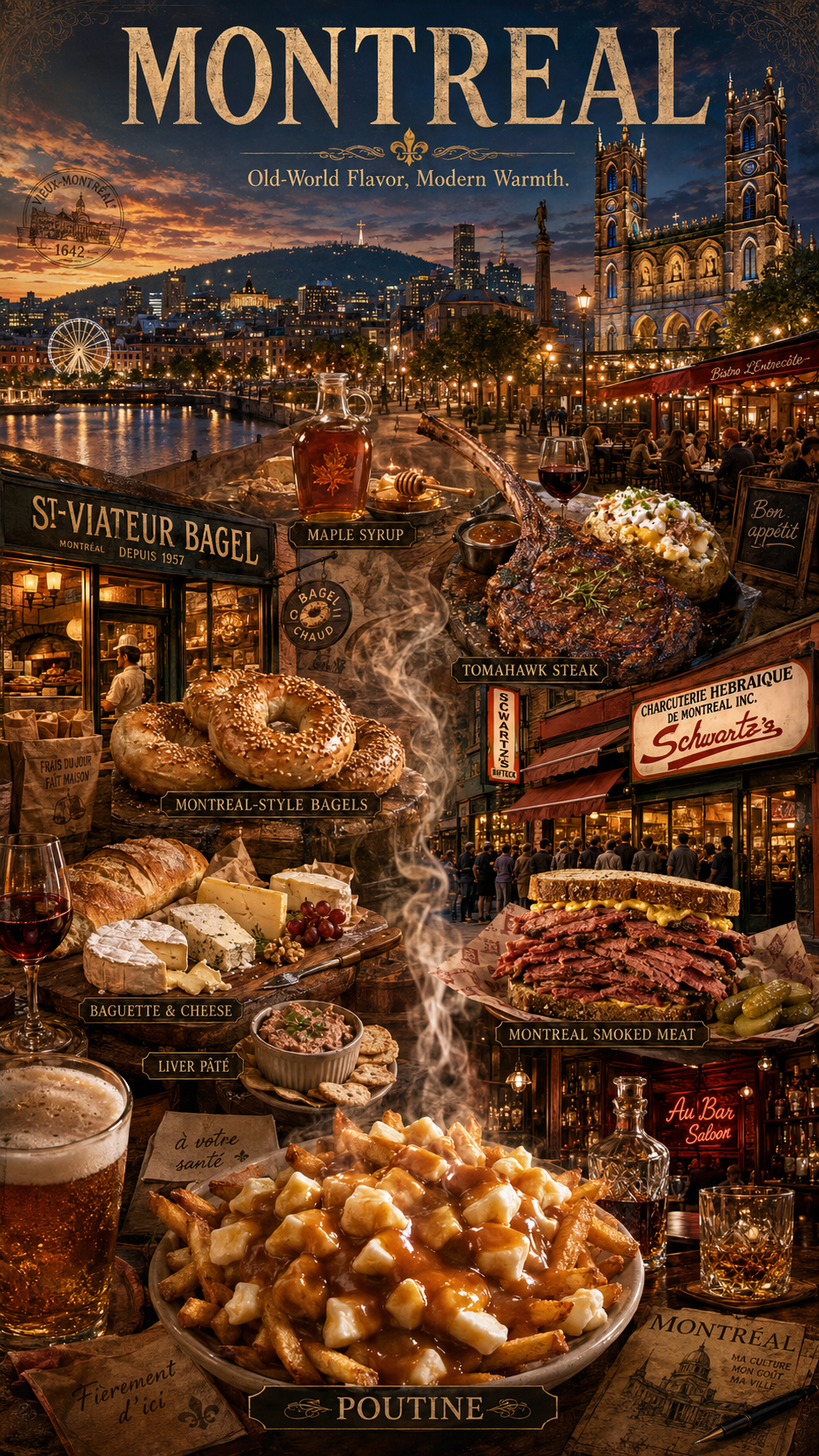
Tags: Montreal food, bagels, poutine, smoked meat, Montreal-style bagels, charcuterie, maple syrup, street food photography, Quebec cuisine, French Canadian food, travel cuisine, Canadian food, food collage, restaurant scene, dessert pastries
AI Model: GPT-Image-2
Prompt: Create an ultra-premium 9:16 vertical culinary tourism poster of Montreal, Canada, designed like a world-class luxury food-and-travel campaign and museum-quality destination artwork. The poster should feel warm, inviting, refined, rustic, indulgent, social, and deeply appetizing, celebrating Montreal through a mix of iconic comfort food, French-Canadian tradition, old-world charm, upscale dining, lively tavern culture, famous local institutions, and cozy neighborhood food scenes. The image must be a tall vertical poster, not square and not horizontal. Build the composition as one continuous vertical culinary journey, not a divided poster. Avoid a clear split where the top is only city scenery and the bottom is only food. Food, drinks, old stone architecture, warm restaurant windows, polished bar interiors, café tables, riverside reflections, smoke, steam, and city lights should blend naturally from bottom to top. The core visual structure should be a winding trail of steam, gravy warmth, maple amber, wine reflections, whiskey glow, and golden bistro light that begins at the poutine in the lower foreground, curves upward through the middle of the poster, passes through Montreal food scenes, bakeries, delis, bistros, taverns, steakhouse warmth, wine tables, and Old Port streets, then dissolves into Notre-Dame Basilica-inspired architecture, riverside glow, old rooftops, and a refined evening sky. At the bottom foreground, make poutine the clear anchor of the poster. Show a generous but beautifully presented dish of crispy golden fries, squeaky white cheese curds, and rich glossy brown gravy, steaming heavily in warm light. The poutine should feel iconic, comforting, indulgent, handmade, and premium. Display the dish name clearly in elegant English text near it: POUTINE. The label should be tasteful, integrated into the design, and not oversized. From the poutine, let steam, gravy glow, maple warmth, and painterly golden motion rise upward like soft brush strokes. The rising trail should guide the viewer through the poster, connecting each food scene to Montreal’s streets, lights, and architecture. It should feel like a culinary walk through the city, not a clean food catalog. As the journey rises, integrate Montreal’s signature foods and upscale food moments with carefully spaced, mid-sized scenes. Each main dish should have a clear, tasteful English label placed nearby, while drinks should remain unlabeled. Include Montreal-style bagels, honey-boiled and wood-fired, with glossy browned crusts, sesame seeds, dense chewy texture, and warm bakery atmosphere. Make the visual connection unmistakably Montreal by placing the bagels near an old-style bakery storefront inspired by St-Viateur Bagel, with a warm oven glow, stacked paper bags, flour-dusted wood, neighborhood storefront charm, and cozy bakery light spilling onto the street. The storefront should feel iconic and recognizable as a Montreal bagel institution, but still integrated into the poster’s luxury travel-art style rather than looking like a flat advertisement. Add the label: MONTREAL-STYLE BAGELS. Include Montreal smoked meat, savory, spice-rubbed, and visually unmistakable. Show a towering smoked-meat sandwich on rye bread with thick layers of tender sliced beef, mustard, pickles, butcher paper, and warm deli lighting. Behind or beside the sandwich, include a classic deli storefront inspired by Schwartz’s Deli, with an old Montreal street feel, warm window light, queue-like silhouettes, vintage signage energy, and timeless deli atmosphere. The scene should feel iconic, soulful, local, and immediately recognizable as Montreal smoked meat culture, while still matching the upscale cinematic poster style. Add the label: MONTREAL SMOKED MEAT. Include a refined maple syrup moment, with amber syrup glowing in a glass bottle or being poured lightly near bread, breakfast details, warm baked goods, or a subtle Canadian tasting scene. The maple syrup should feel elegant and distinctly Canadian without becoming the main subject. Add the label: MAPLE SYRUP. Include a French-inspired bistro spread with crusty baguette, brie, cheddar, goat cheese, and other artisanal cheeses, plus liver pâté served with crackers and pieces of bread. Present it on dark walnut wood, marble, or a rustic café table with warm wine-bar lighting. This scene should feel cultured, intimate, and Old Montreal. Add two tasteful labels: BAGUETTE & CHEESE and LIVER PÂTÉ. Include a premium tomahawk steak with loaded potato, shown as an upscale steakhouse moment. The steak should be deeply seared, juicy, dramatic, and glossy with charred edges, coarse salt, herbs, rendered fat, and warm firelit highlights. The loaded potato should feel indulgent with butter, cream, chives, or melted cheese. Keep this as a strong supporting scene, not larger than the poutine anchor. Add the label: TOMAHAWK STEAK. Make drinks part of the journey, not a separate display. Sprinkle red wine, beer, and whiskey naturally beside matching scenes, but do not label the drinks. Red wine should appear near the cheese, pâté, baguette, or steak scene. Beer should appear near poutine, smoked meat, tavern food, or a cozy pub table. Whiskey should appear near a polished late-night bar scene with crystal glassware, amber reflections, and dark wood. The drinks should feel premium and lived-in, with glass sparkle, condensation, foam, deep red reflections, whiskey glow, and warm restaurant light. The food and drinks should be layered into Montreal itself, near elegant bistro tables, rustic tavern interiors, bakery windows, deli counters, polished bars, Old Port walkways, cobblestone streets, warm restaurant terraces, stone façades, iron balconies, historic street lamps, and riverfront reflections. Do not place all food at the bottom. Do not create a flat menu layout. Food should feel discovered naturally while moving through Montreal. Use Montreal landmarks and vistas as integrated atmosphere, not as a separate top panel. Include subtle impressions of Old Montreal, the Old Port, cobblestone streets, historic stone buildings, riverside views, warm café terraces, elegant night streets, church architecture inspired by Notre-Dame Basilica, distant Mount Royal, and skyline glow. These should appear behind and between the food moments, woven into the same vertical path. Include a few more direct Montreal culinary landmarks woven naturally into the journey: a storefront inspired by Schwartz’s Deli behind the smoked meat sandwich, and a storefront inspired by St-Viateur Bagel behind the bagels. These should not dominate the poster like advertisements. They should function as atmospheric city details, making the food locations feel authentic and unmistakably Montreal. The poster should feel like Montreal through both comfort food and fine dining. It should balance normal local favorites with upscale presentation: cozy poutine and smoked meat, handmade bagels, maple warmth, French-inspired cheese and pâté, drinks in warm taverns, and luxurious steakhouse energy. Add refined artistic texture throughout. Use luxury vintage travel-poster warmth, painterly edges, subtle parchment grain, old map textures, polished editorial collage, soft charcoal accents, gold linework, wine-stain hues, elegant French café details, antique market textures, and delicate French-Canadian decorative touches. The style should feel sophisticated, rustic, European-influenced, atmospheric, and distinctly Montreal. Text should be clean and controlled. Include a large refined city title: MONTREAL. Include one short tasteful English tagline: Old-World Flavor, Modern Warmth. Dish names should be displayed in English near the main food scenes, but avoid clutter. The dish labels should be elegant, readable, and integrated into the poster like premium travel-campaign typography. Do not label the drinks. Do not use vertical side text. Do not fill the poster with excessive typography. Because the city is bilingual, include a few small French accents only as background atmosphere, such as tiny café signs, menu fragments, or handwritten notes like “Bienvenue,” “Vieux-Montréal,” “Bon appétit,” “fait maison,” or “à votre santé.” English should remain the main language. The color palette should feel rich, warm, and upscale: maple amber, deep wine red, polished walnut brown, gravy brown, golden fry tones, creamy cheese white, toasted sesame brown, smoked-meat spice red, whiskey amber, beer gold, black marble, antique brass, old stone gray, candlelight ivory, and twilight blue. Lighting should be cinematic and mouthwatering: warm bistro glow, fine-dining highlights, bakery oven light, polished bar reflections, candlelit tables, soft steam, crystal glass sparkle, golden window light, river shimmer, cozy shadows, and rich highlights across the food. The food should look exceptionally delicious and premium, but balanced with the city atmosphere. Avoid oversized floating food. Avoid filling the entire poster with dishes. Leave visual breathing room through steam, polished negative space, stone architecture, warm windows, dark wood interiors, riverside haze, painterly transitions, and elegant city depth. The overall poster should feel like a Montreal food journey unfolding upward from poutine: warm, cultured, comforting, romantic, indulgent, social, premium, atmospheric, and unforgettable. It should resemble a cinematic walk through Montreal where every turn reveals another dish, drink, bakery, deli, tavern, terrace, steakhouse, or historic vista. Style references: luxury culinary travel poster, upscale Montreal food journey, French-Canadian destination campaign, elegant vintage travel-poster design, warm bistro atmosphere, old-world city charm, premium food editorial design, polished painterly urban collage, integrated food-and-city composition, readable premium food labels, emotional storytelling artwork, museum-quality mixed-media poster, ultra-detailed masterpiece. Create the image like a professional graphic designer with elegant visual hierarchy, warm cinematic lighting, highly appetizing food rendering, balanced negative space, refined yet cozy atmosphere, strong Montreal identity, tasteful, readable dish labels, and unforgettable culinary storytelling.
Comments
HappyPerson
Fantastic Creativity ..love this creation🙂
archangeltara
All amazing series love these
thewhiskeyjack
@EternaSky @antares @aqualemonade @archangeltara @base451121 @beastsg @Belinda @bic_revelation @Biscuit @bleepunc @CaylaCatz @charlypalermo @Cheinia @ChildNerd @chris70 @cocoayoc @Colossus @DavidP @dirty_biker @dovonko @elkanthe @elysian @EternaSky @fantasydesignink @germancowboy @gman @gummiefish @humtum8182 @IndoAIArtist @justrob @King @kirito @mim86 @nametaker @NickWolf @NielsCarlsen @panos @PabloArtStation @paulie @pocahontas @Sealine @sonny001 @southamericanmyth @standartis @sr92 @strixowl-47 @suga2309 @TheBard @thedreamcatcher @thewhiskeyjack @To4kawa @Troxley @TTRPG_Player @TesaranJ @underman @Unleashed @vrieming @winter_witch @archangeltara Interested to join or wish to be removed from this list? Leave a comment in for inclusion or exclusion https://budgetpixel.com/blog/enjoy-creating-and-join-the-qt-masterlist